Evaluating the Diagnostic Role of the Testosterone-to-Prostate-Specific Antigen Ratio in Pre-Biopsy Risk Stratification of Prostate Cancer
Georgios Tsakaldimis, Dimitrios Diamantidis, Stavros Lailisidis, Charalampos Kafalis, Nikolaos Panagiotopoulos, Chrysostomos Georgellis, Stavros Giannopoulos, Chousein Chousein, Marios Spounos, Evangelia Deligeorgiou, Stilianos Giannakopoulos, Christos Kalaitzis

TL;DR
This study evaluates how the testosterone-to-PSA ratio helps distinguish prostate cancer from benign conditions before biopsy, aiming to reduce unnecessary procedures.
Contribution
The study introduces the testosterone-to-PSA ratio as a new diagnostic tool for prostate cancer risk stratification.
Findings
The T/PSA ratio had good diagnostic performance with an AUC of 0.75 and high specificity.
In patients with PSA ≤10 ng/mL, T/PSA showed strong discriminatory ability with an AUC of 0.76.
PSA density (PSAD) showed the highest diagnostic accuracy with an AUC of 0.813.
Abstract
Background: The testosterone-to-PSA (T/PSA) ratio has been proposed as a novel biomarker to enhance the diagnostic specificity of prostate-specific antigen (PSA) in prostate cancer (PCa) detection. The objective of this study was to evaluate the diagnostic performance of the T/PSA ratio in distinguishing PCa from benign conditions in men undergoing prostate biopsy. Materials and Methods: Eighty men who underwent systematic and targeted transrectal prostate biopsy were retrospectively studied. Clinical variables included serum PSA, testosterone, prostate volume, PSA density (PSAD), and the T/PSA ratio. Diagnostic accuracy was assessed using Receiver Operating Characteristic (ROC) curve analysis. Optimal cutoffs were determined using Youden’s index. Results: PCa was diagnosed in 53 patients (66.3%). Median T/PSA was significantly lower in PCa versus non-PCa patients (0.46 vs. 0.86; p <…
Genes, proteins, chemicals, diseases, species, mutations and cell lines named across the full text — each resolved to its canonical identifier and authoritative record.
Click any figure to enlarge with its caption.
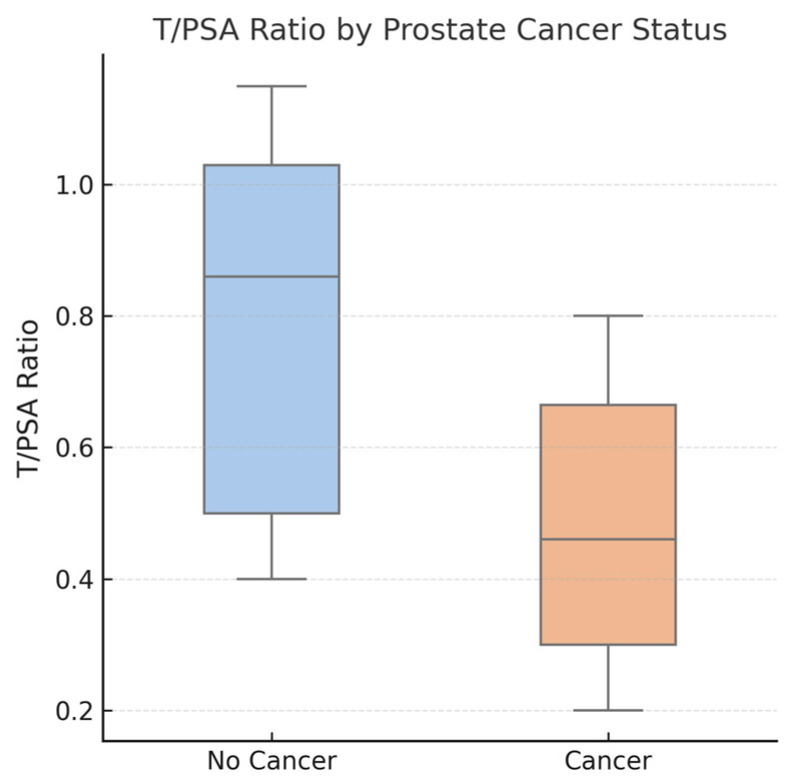 Figure 1
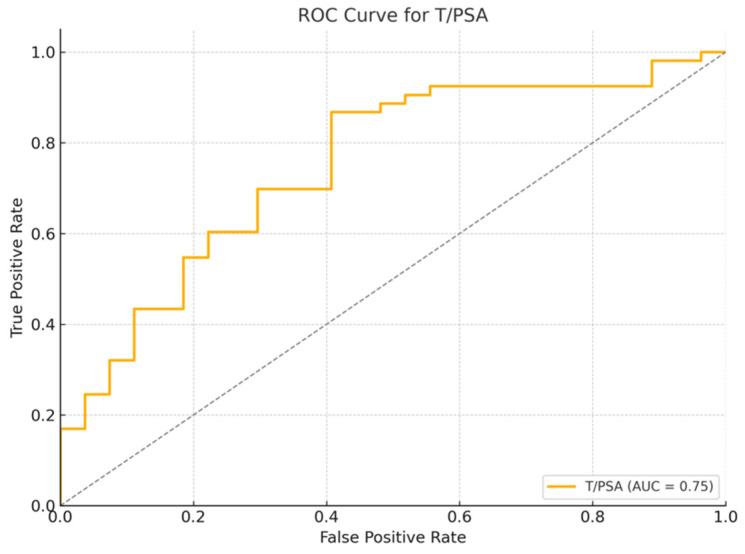 Figure 2
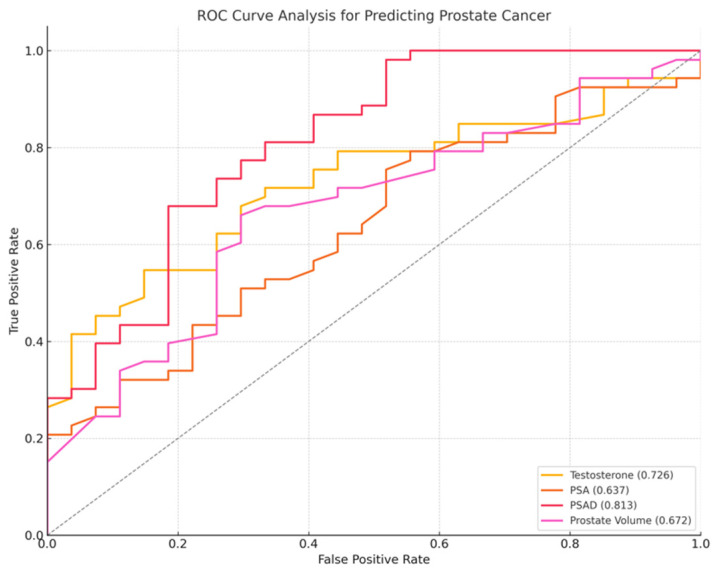 Figure 3
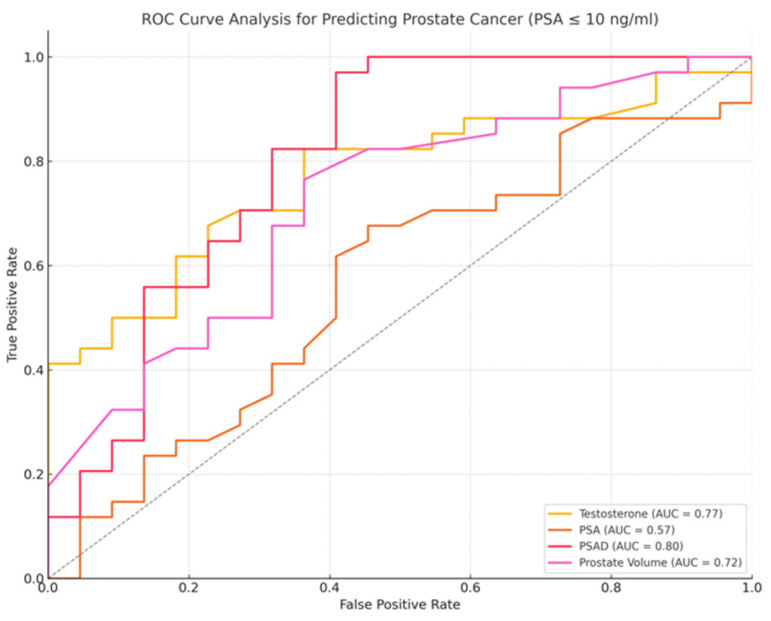 Figure 4
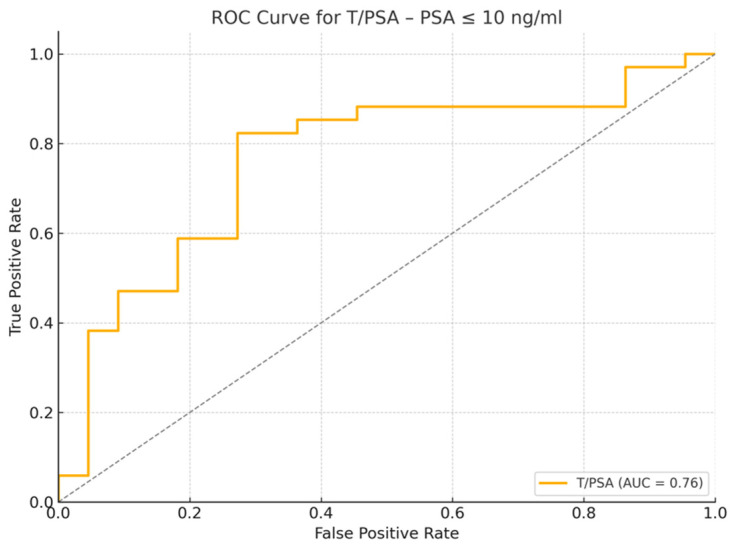 Figure 5
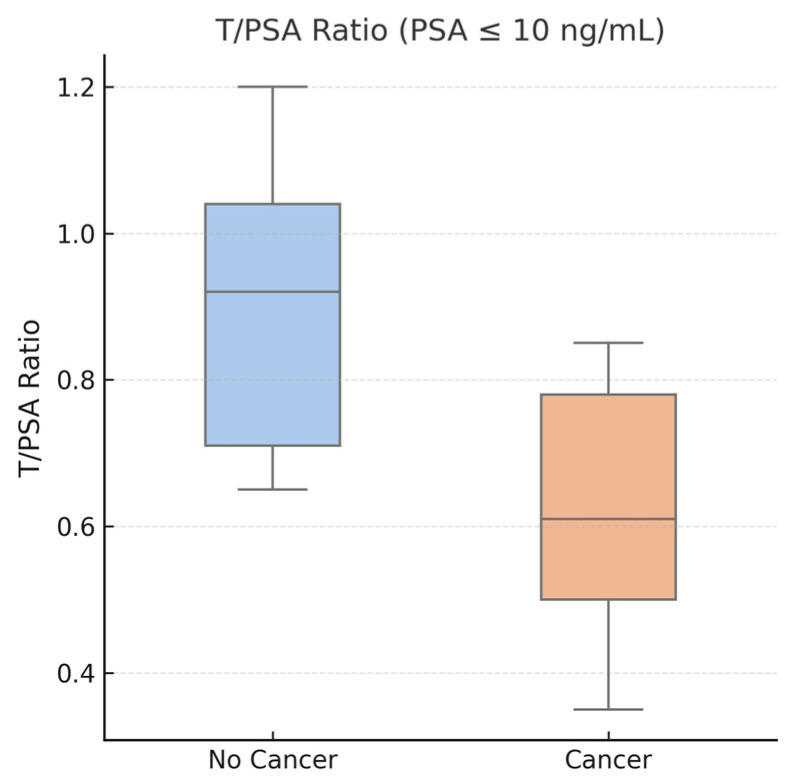 Figure 6
 Figure 7
Peer Reviews
No public reviews on file for this paper yet. If you reviewed it on a platform where reviews are public (OpenReview, ICLR, NeurIPS, ICML), you can paste yours below so the community can read it here.
Videos
No videos yet. Explain this paper in a talk, walkthrough, or lecture? Add one.
Taxonomy
TopicsProstate Cancer Treatment and Research · Prostate Cancer Diagnosis and Treatment · Hormonal and reproductive studies