Compounds Derived from Tryptophan Metabolism in Torulaspora delbrueckii CBS1146T and Zygosaccharomyces bailii ATCC36947T
Alessandra Di Canito, Michele Dei Cas, Sara Vitalini, Marcello Iriti, Rita Paroni, Ileana Vigentini, Roberto Foschino

TL;DR
This study explores how two non-Saccharomyces yeasts produce tryptophan-derived compounds in wine fermentation, revealing strain-specific differences and the impact of the fermentation environment.
Contribution
The study reports the first identification of tryptophan-ethylester isomers in these yeasts and highlights the influence of the fermentation matrix on metabolite production.
Findings
Torulaspora delbrueckii produced significant amounts of tryptophan-ethylester, linked to dTRP consumption.
Zygosaccharomyces bailii synthesized diverse metabolites like 5OH-tryptophan and kynurenic acid.
The fermentation matrix strongly influenced dTRP biosynthesis, enhancing TEE and kynurenic acid accumulation.
Abstract
Yeast metabolism significantly contributes to functional beverage production by generating bioactive compounds such as tryptophan derivatives (dTRPs). While Saccharomyces cerevisiae is traditionally used, non-Saccharomyces yeasts like Torulaspora delbrueckii and Zygosaccharomyces bailii are gaining interest for their ability to enhance aroma profiles and influence metabolite synthesis. This study evaluated the dTRP production of T. delbrueckii CBS1146T and Z. bailii ATCC36947T in synthetic medium and Cabernet Sauvignon must supplemented with 100 mg/L tryptophan. LC-MS/MS analysis revealed strain-dependent differences in metabolite profiles, with a predominance of kynurenine pathway compounds and the first identification of two tryptophan-ethylester (TEE) isomers. T. delbrueckii exhibited significant TEE production, correlating with the consumption of dTRPs; conversely, Z. bailii…
Genes, proteins, chemicals, diseases, species, mutations and cell lines named across the full text — each resolved to its canonical identifier and authoritative record.
Click any figure to enlarge with its caption.
 Figure 1
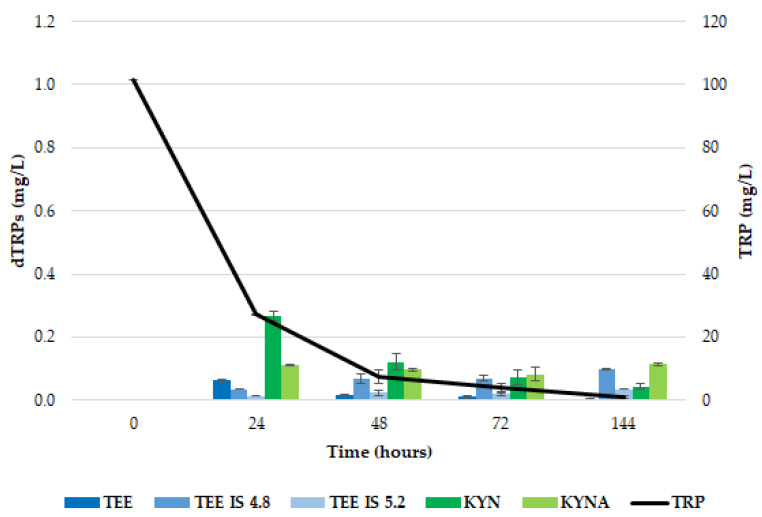 Figure 2
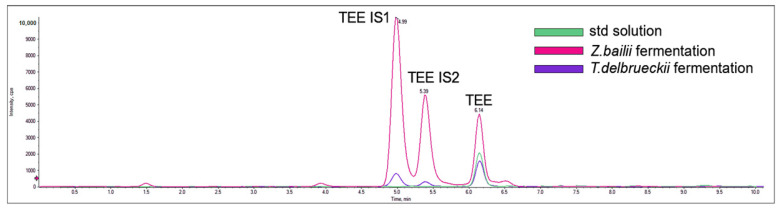 Figure 3
 Figure 4
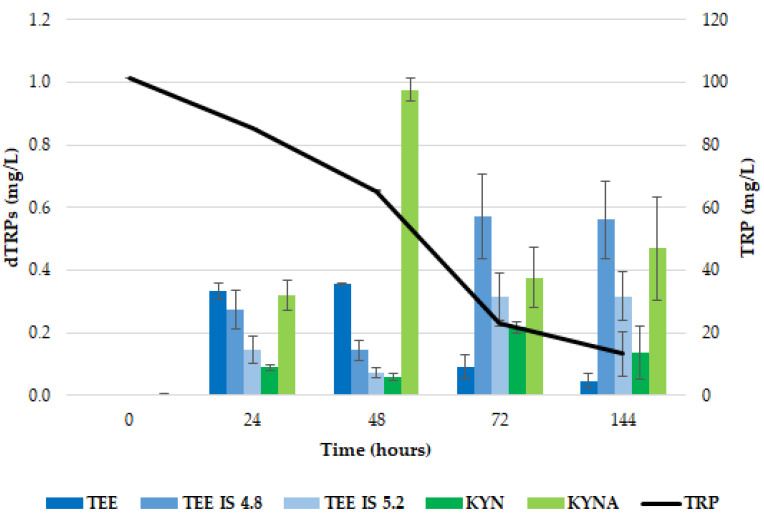 Figure 5
 Figure 6
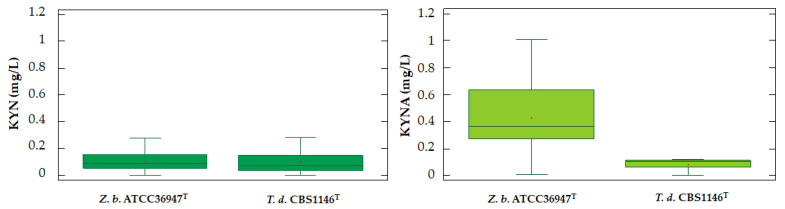 Figure 7
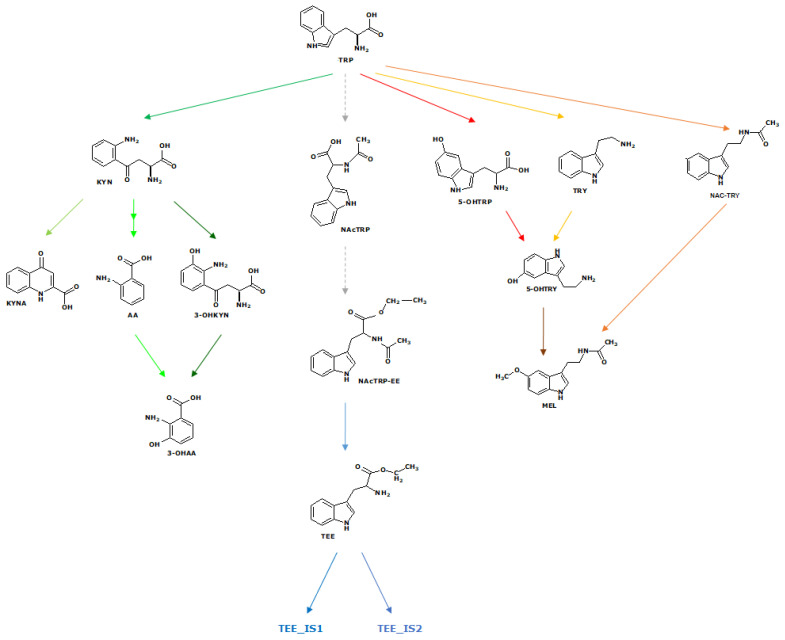 Figure 8
Peer Reviews
No public reviews on file for this paper yet. If you reviewed it on a platform where reviews are public (OpenReview, ICLR, NeurIPS, ICML), you can paste yours below so the community can read it here.
Videos
No videos yet. Explain this paper in a talk, walkthrough, or lecture? Add one.
Taxonomy
TopicsFermentation and Sensory Analysis · Tea Polyphenols and Effects · Tryptophan and brain disorders