The Role of Periarticular Knee Muscle Torques in Ensuring the Body Balance of Older Adults with Balance Disturbances
Piotr Prochor, Łukasz Magnuszewski, Paulina Zalewska, Michał Świętek, Zyta Beata Wojszel, Szczepan Piszczatowski

TL;DR
This study shows that knee muscle strength, especially extensors, plays a key role in balance for older adults with balance issues.
Contribution
The study identifies knee extensor muscle torques as a novel predictor of balance disorders in older adults.
Findings
Knee extensor muscle torques significantly predict changes in the center of pressure in older adults with balance disorders.
Participants with balance disorders showed significant differences in DHI, GDS, FES-I, and POMA test results.
Diff SMM, derived from skeletal muscle mass, differed significantly between groups with balance disorders and controls.
Abstract
Background: The role of the periarticular muscles of the knee joint in ensuring body balance is still ambiguous. Therefore, we conducted clinical and biomechanical assessments on 52 older adults (36 women and 16 men, age of 67.58 ± 7.30 years, body weight of 75.10 ± 13.42 kg, and height of 163.92 ± 8.80 cm) to determine the role of the knee muscles in balance maintenance. Methods: The clinical examination included the Dizziness Handicap Inventory (DHI), the Geriatric Depression Scale (GDS), the Performance-Oriented Mobility Assessment (POMA), the Functional Reach Test (FRT), the Falls Efficacy Scale—International (FES-I), and bioimpedance parameters (skeletal muscle mass—SMM—and its derived parameter—Diff SMM). The biomechanical assessment involved parameters that characterize muscle torques of knee joint extensors and flexors in isokinetic and isometric conditions, as well as changes…
Genes, proteins, chemicals, diseases, species, mutations and cell lines named across the full text — each resolved to its canonical identifier and authoritative record.
Click any figure to enlarge with its caption.
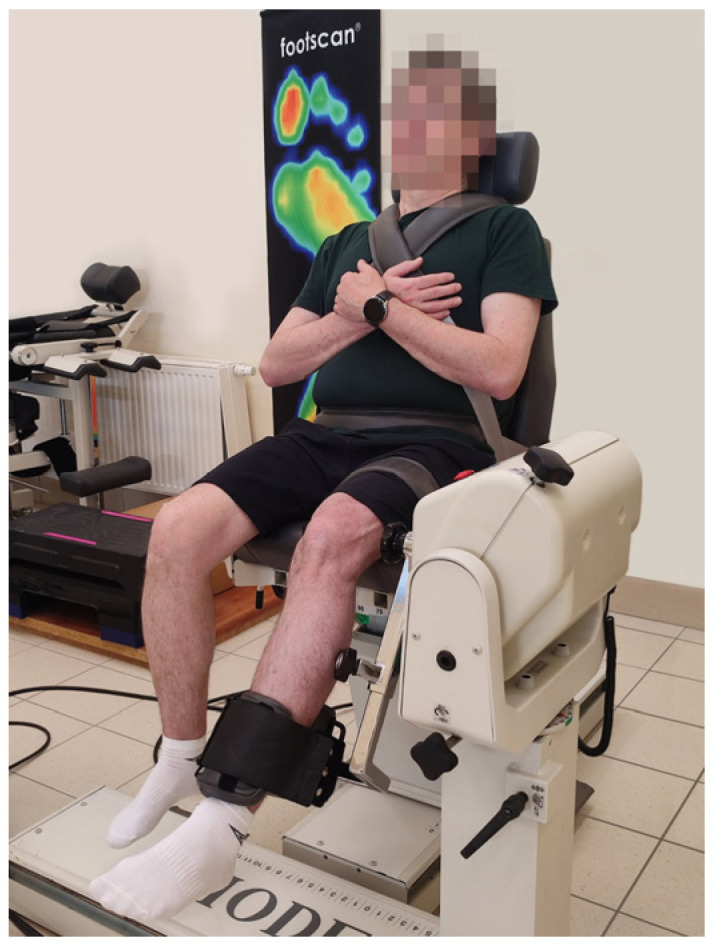 Figure 1
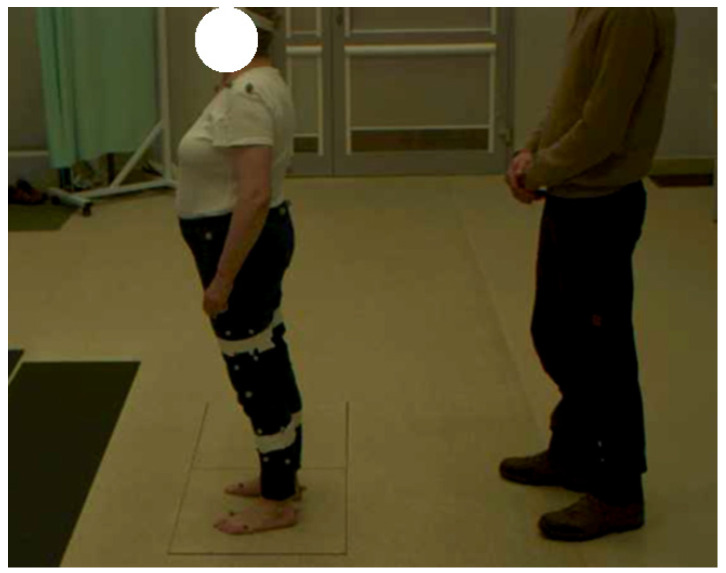 Figure 2
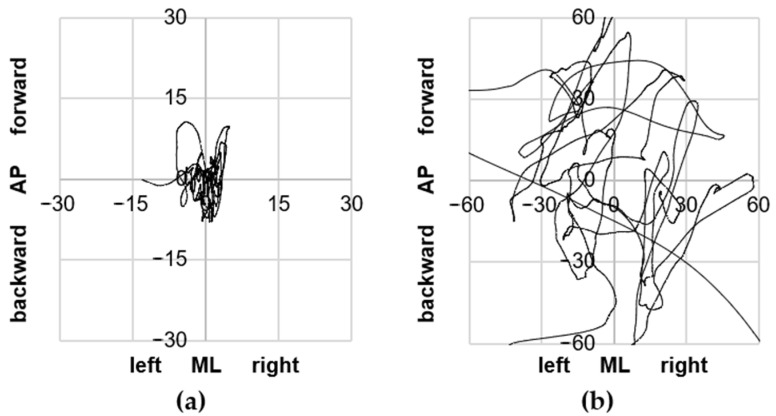 Figure 3
Peer Reviews
No public reviews on file for this paper yet. If you reviewed it on a platform where reviews are public (OpenReview, ICLR, NeurIPS, ICML), you can paste yours below so the community can read it here.
Videos
No videos yet. Explain this paper in a talk, walkthrough, or lecture? Add one.
Taxonomy
TopicsBalance, Gait, and Falls Prevention · Cerebral Palsy and Movement Disorders · Diabetic Foot Ulcer Assessment and Management