A Novel Homozygous 9385 bp Deletion in the FERMT1 (KIND1) Gene in a Malaysian Family with Kindler Epidermolysis bullosa and a Review of Large Deletions
Alfred Klausegger, Fabian Leditzky, Susanne Krämer, Francis Palisson, María Joao Yubero, Sebastián Véliz, Mark Jean Aan Koh, Ene-Choo Tan, Martin Laimer, Johann Wolfgang Bauer, Ignacia Fuentes

TL;DR
A new large deletion in the FERMT1 gene is identified in a Malaysian family with Kindler Epidermolysis bullosa, a rare skin disorder.
Contribution
A novel homozygous 9.4 kb deletion in the FERMT1 gene is reported, expanding the known genetic variants associated with KEB.
Findings
A 9.4 kb homozygous deletion in exons 7 to 9 of the FERMT1 gene was identified in a patient with KEB.
The deletion causes a frameshift mutation, likely leading to a non-functional kindlin-1 protein.
Abstract
Kindler Epidermolysis bullosa (KEB; OMIM 173650) is a rare autosomal recessive genodermatosis characterized by bullous poikiloderma and photosensitivity. Additional presentations include blistering, poor wound healing, skin atrophy, and increased risk of skin cancer. Most cases of KEB result from aberrations in the FERMT1 (Fermitin family member 1) gene encoding kindlin-1 and include nonsense, frameshift, splicing, and missense variants. Large deletion variants have been reported in nine cases to date. Most variants are predicted to lead to premature termination of translation and to loss of kindlin-1 function. In this study, we report on a 33-year-old male patient who presented with typical clinical manifestations of KEB. As routine molecular testing failed to obtain a diagnosis, Next Generation Sequencing (NGS) of an Epidermolysis Bullosa (EB)-specific panel was carried out followed…
Genes, proteins, chemicals, diseases, species, mutations and cell lines named across the full text — each resolved to its canonical identifier and authoritative record.
Click any figure to enlarge with its caption.
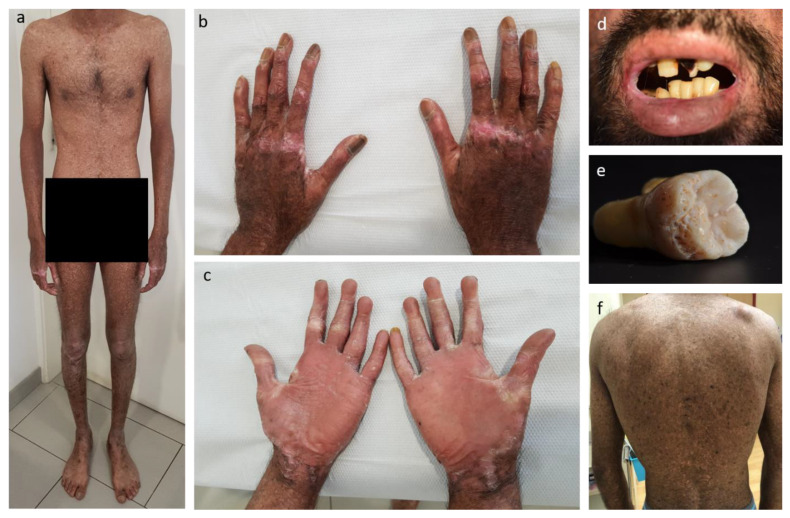 Figure 1
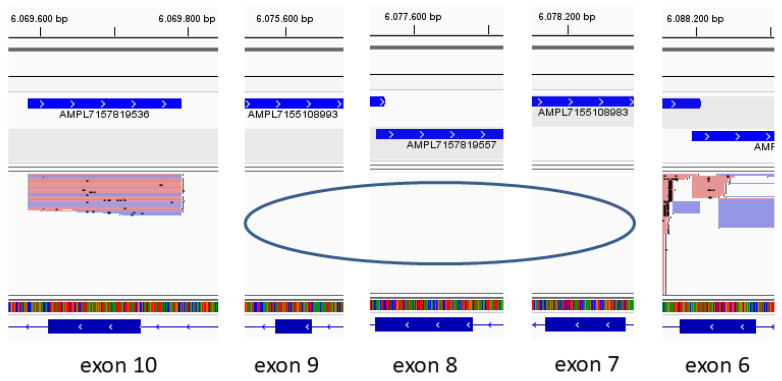 Figure 2
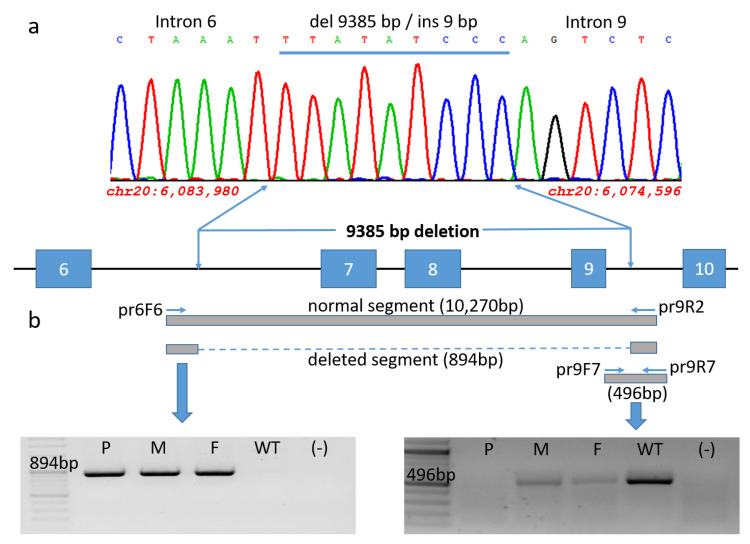 Figure 3
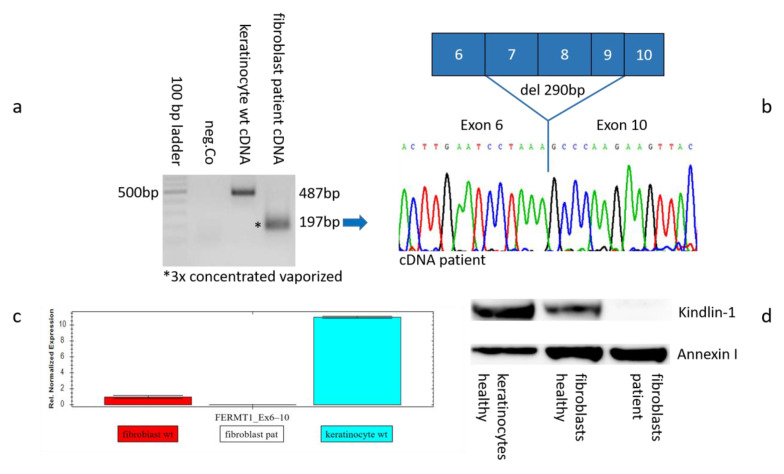 Figure 4
Peer Reviews
No public reviews on file for this paper yet. If you reviewed it on a platform where reviews are public (OpenReview, ICLR, NeurIPS, ICML), you can paste yours below so the community can read it here.
Videos
No videos yet. Explain this paper in a talk, walkthrough, or lecture? Add one.
Taxonomy
TopicsSkin and Cellular Biology Research · Wnt/β-catenin signaling in development and cancer · Plant Reproductive Biology