A Novel Small Molecule Enhances Stable Dopamine Delivery to the Brain in Models of Parkinson’s Disease
Xiaoguang Liu, Michaeline L. Hebron, Max Stevenson, Charbel Moussa

TL;DR
A new small molecule called Pegasus shows promise in delivering stable dopamine to the brain and reducing Parkinson’s disease symptoms in animal models.
Contribution
Pegasus is a novel small molecule that delivers stable dopamine and reduces alpha-synuclein pathology in Parkinson’s disease models.
Findings
Pegasus reduces soluble and insoluble alpha-synuclein levels and protects dopamine neurons in A53T mice.
Pegasus improves motor function and reduces anxiety-like behavior in Parkinson’s disease models.
Pegasus metabolizes into dopamine and tetracycline derivatives with abundant brain and plasma levels.
Abstract
Levodopa is the gold standard symptomatic treatment for Parkinson’s disease. Disease progression due to alpha-synuclein accumulation, brain inflammation, and the loss of dopamine neurons, as well as motor fluctuations, due to variations in levodopa plasma levels, remain a significant problem for Parkinson’s patients. Developing a therapeutic option that can simultaneously reduce the neuropathology associated with alpha-synuclein aggregation, attenuate oxidative stress and inflammation, and overcome variations in levodopa plasma levels is an unmet need to treat Parkinson’s disease. We determined the pharmacokinetics and pharmacodynamics of a small molecule, dubbed Pegasus, that conjugates dopamine with a nonantibiotic doxycycline derivative via a molecular linker. Mice harboring the human A53T mutation of alpha-synuclein or treated with MPTP were injected once daily with 50 mg/kg Pegasus…
Genes, proteins, chemicals, diseases, species, mutations and cell lines named across the full text — each resolved to its canonical identifier and authoritative record.
Click any figure to enlarge with its caption.
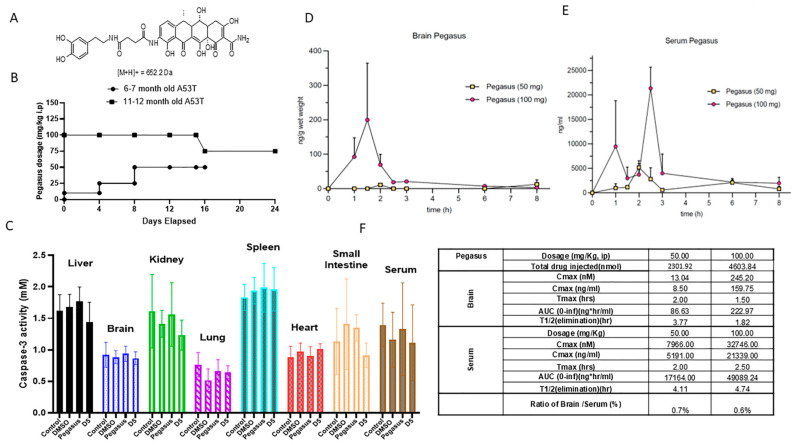 Figure 1
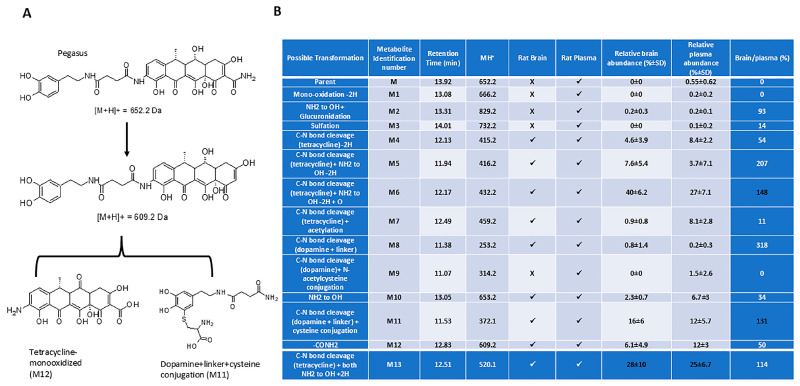 Figure 2
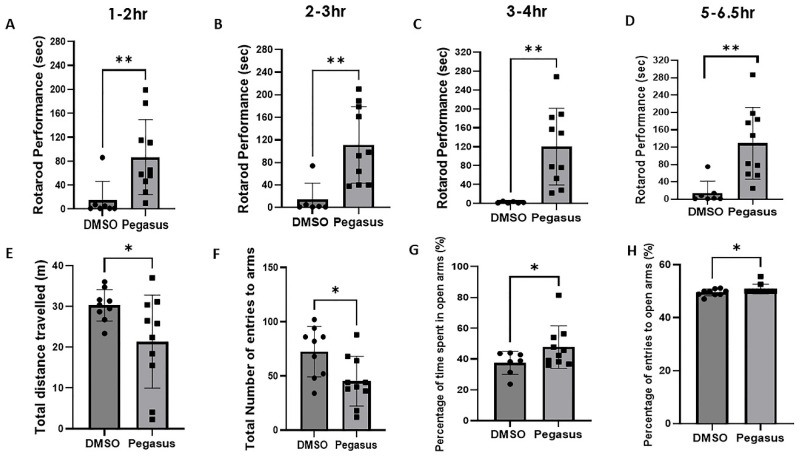 Figure 3
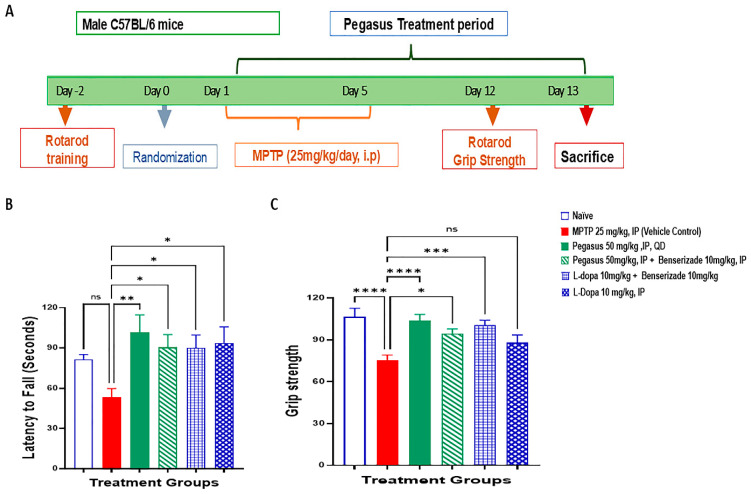 Figure 4
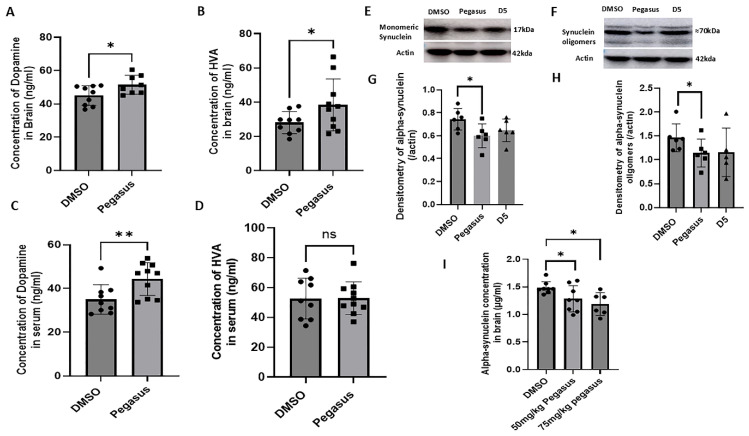 Figure 5
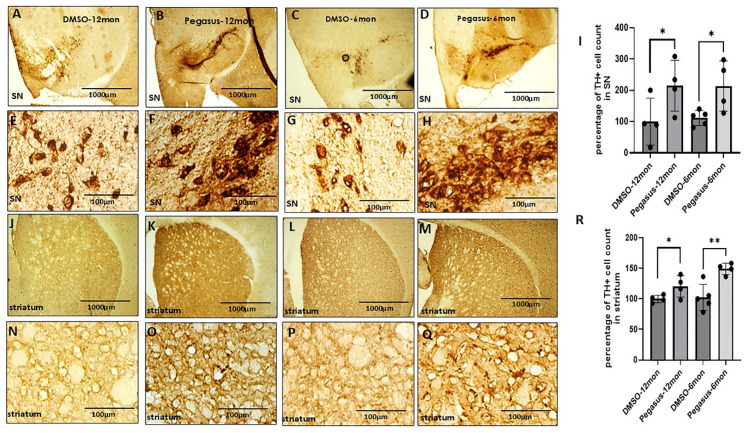 Figure 6
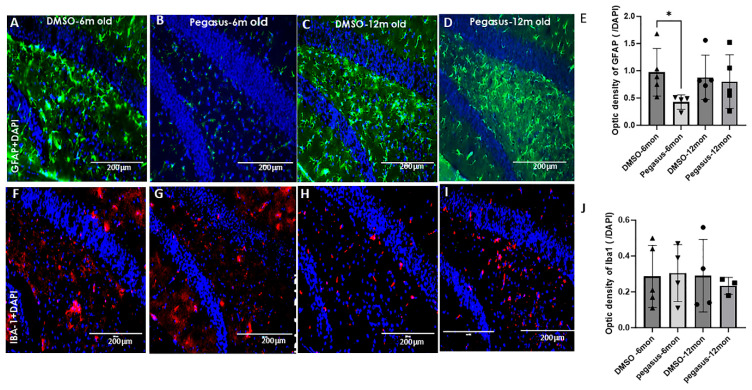 Figure 7
Peer Reviews
No public reviews on file for this paper yet. If you reviewed it on a platform where reviews are public (OpenReview, ICLR, NeurIPS, ICML), you can paste yours below so the community can read it here.
Videos
No videos yet. Explain this paper in a talk, walkthrough, or lecture? Add one.
Taxonomy
TopicsParkinson's Disease Mechanisms and Treatments · Neurological disorders and treatments · Nuclear Receptors and Signaling