Ilex latifolia Improves the Anti-Tumor Effectiveness of Rapamycin Against Breast Cancer In Vitro and In Vivo
Zhengnan Ren, Yikuan Wu, Xiaoying Guo, Haizhi Tian, Hongjing Ou, Zihan Xiong, Yu Xiao, Longquan Xiao, Jing Li, Haibo Wu, Xinhui Wang

TL;DR
This study shows that combining Ilex latifolia with rapamycin improves breast cancer treatment by reducing side effects and enhancing anti-tumor effects.
Contribution
The novel finding is that Ilex latifolia synergizes with low-dose rapamycin to enhance anti-tumor efficacy while reducing metabolic side effects.
Findings
Ilex latifolia combined with low-dose rapamycin synergistically inhibited tumor proliferation and induced apoptosis in breast cancer cells.
In vivo, Ilex latifolia reduced rapamycin-induced lipid disturbances and tumor growth while enhancing apoptosis and reducing inflammation.
Ilex latifolia shows promise as a dietary adjunct to improve the safety and effectiveness of rapamycin in breast cancer treatment.
Abstract
Breast cancer remains one of the leading causes of cancer-related mortality among women worldwide. Although the mTOR inhibitor rapamycin exhibits notable anti-tumor activity, its clinical application is limited by metabolic side effects, particularly dyslipidemia. This study aimed to investigate the potential of Ilex latifolia (I. latifolia, large-leaf kudingcha), a traditional Chinese tea known for its lipid-lowering properties, to enhance the therapeutic efficacy of rapamycin in breast cancer. The combined effects of I. latifolia and low-dose rapamycin on tumor cell proliferation, cell cycle progression, apoptosis, and inflammation were assessed in four breast cancer cell lines and a murine breast cancer model. While low-dose I. latifolia alone exhibited limited anti-tumor activity, its combination with low-dose rapamycin synergistically inhibited tumor proliferation, induced cell…
Genes, proteins, chemicals, diseases, species, mutations and cell lines named across the full text — each resolved to its canonical identifier and authoritative record.
Click any figure to enlarge with its caption.
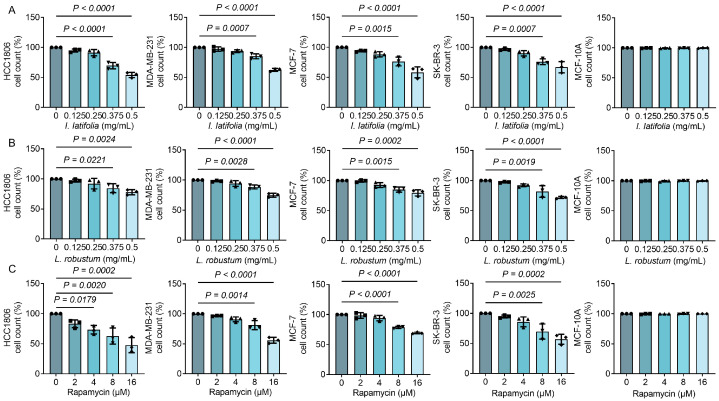 Figure 1
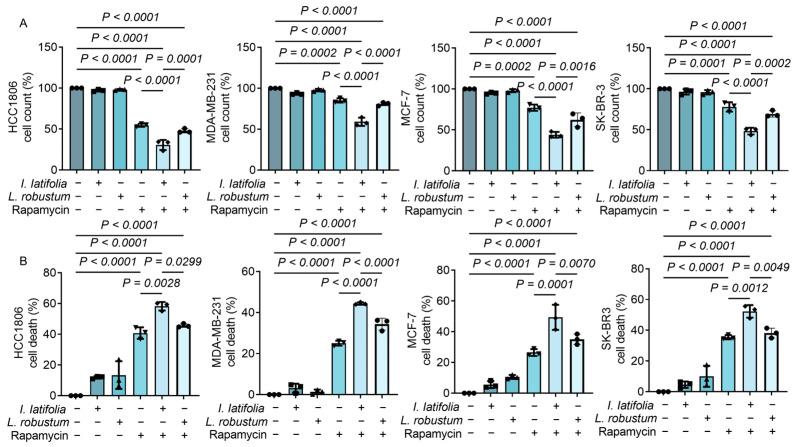 Figure 2
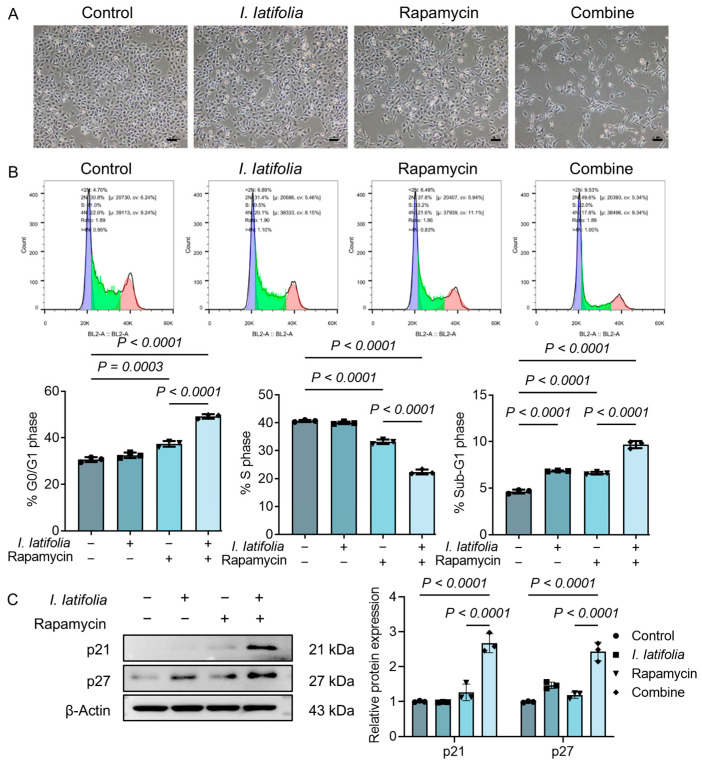 Figure 3
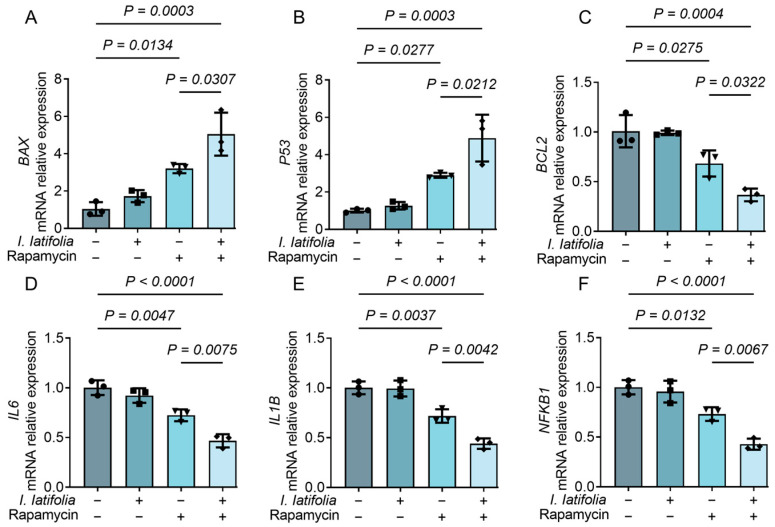 Figure 4
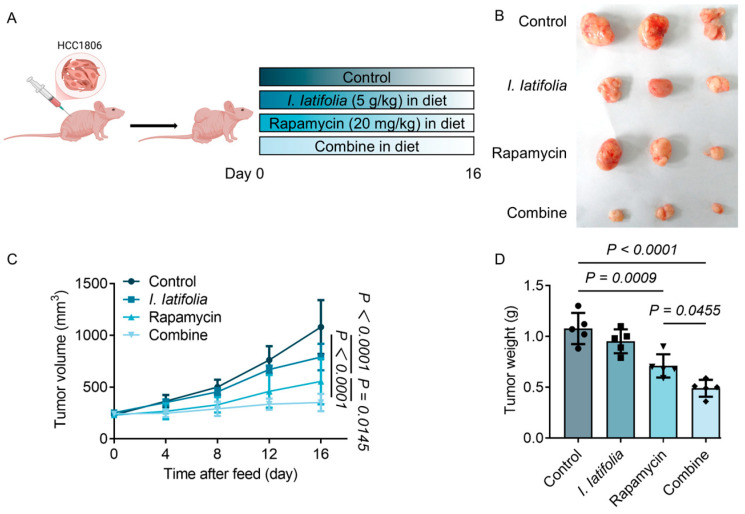 Figure 5
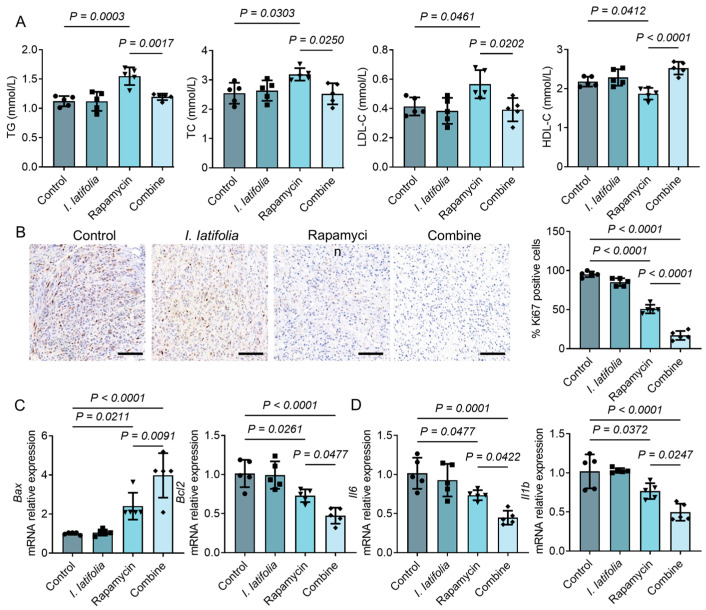 Figure 6
Peer Reviews
No public reviews on file for this paper yet. If you reviewed it on a platform where reviews are public (OpenReview, ICLR, NeurIPS, ICML), you can paste yours below so the community can read it here.
Videos
No videos yet. Explain this paper in a talk, walkthrough, or lecture? Add one.
Taxonomy
TopicsBioactive Compounds and Antitumor Agents · Tea Polyphenols and Effects · Cancer, Lipids, and Metabolism