Spatial Study of TLR4, TLR5 and TLR9 in Gastric Premalignant Lesions Before and After Helicobacter pylori Eradication
Franz Villarroel-Espíndola, Leyla Jaupi, Joaquín Reyes, Carlos Barrientos, Celia Podestá, Carolina Selman, Carolina Bizama, Alejandro Corvalan, Roxana Gonzalez-Stegmaier, Sergio Jara-Rosales, Pia Bascur

TL;DR
This study examines how TLR4, TLR5, and TLR9 proteins in the stomach change before and after Helicobacter pylori eradication, linking them to cancer risk.
Contribution
The study introduces a new multiplex immunohistochemistry/immunofluorescence method to detect TLR4, TLR5, and TLR9 simultaneously in gastric tissue.
Findings
TLR4 and TLR9 are significantly associated with Helicobacter pylori infection.
TLR9 is positively related to the presence of intestinal metaplasia.
TLR5 is mainly found in goblet cells but is not linked to H. pylori or intestinal metaplasia.
Abstract
The histological changes in the gastric epithelium are crucial in the progression from premalignant to neoplastic lesions. TLR4, TLR5 and TLR9 have been localized in the gastric epithelium and studied separately using conventional histological techniques without a focus on the protein or cell interactions within the microenvironment. Therefore, we developed a multiplex immunohistochemistry/immunofluorescence (mIHC/IF) technology for the simultaneous detection of TLR4, TLR5 and TLR9 on a single tissue section of human gastric biopsies from 10 paired cases collected in two independent visits, and its correlation with the OLGA/OLGIM scoring and H. pylori status after eradication. The results confirmed that mIHC/IF is useful for simultaneously interrogating six biomarkers and demonstrated that TLR4 and TLR9 are significantly associated with H. pylori infection. However, only TLR9 is…
Genes, proteins, chemicals, diseases, species, mutations and cell lines named across the full text — each resolved to its canonical identifier and authoritative record.
Click any figure to enlarge with its caption.
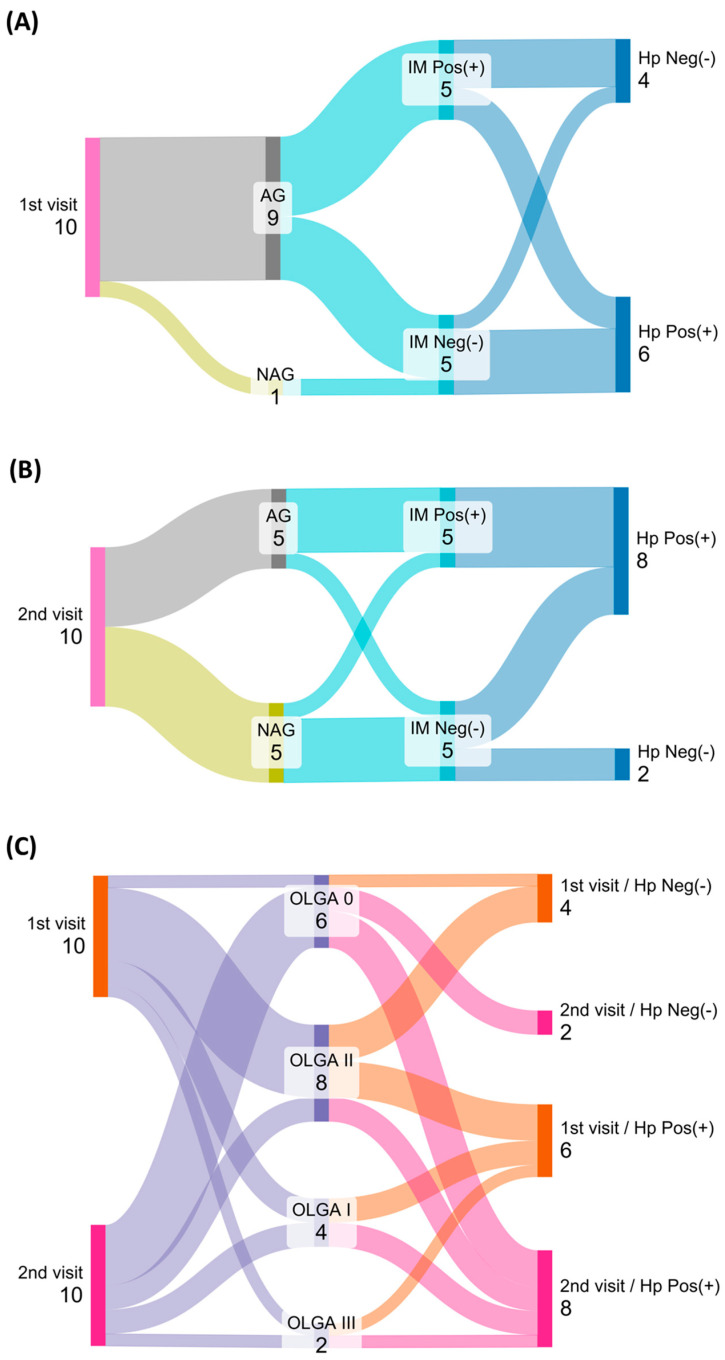 Figure 1
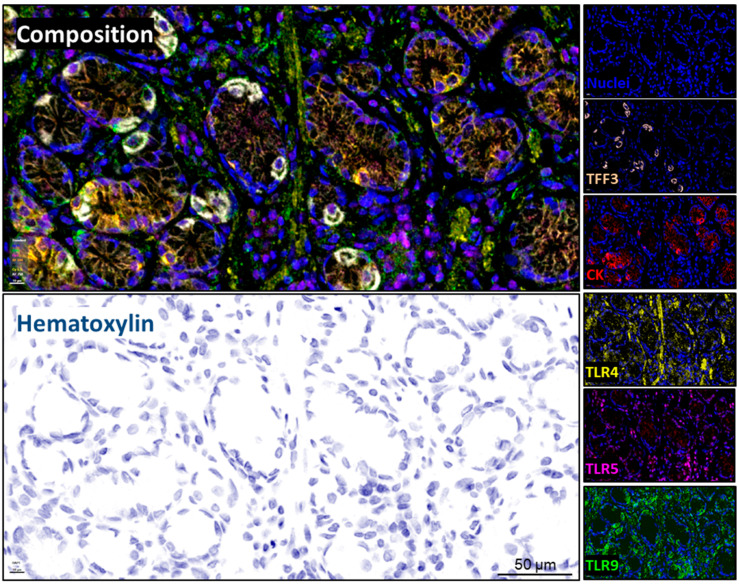 Figure 2
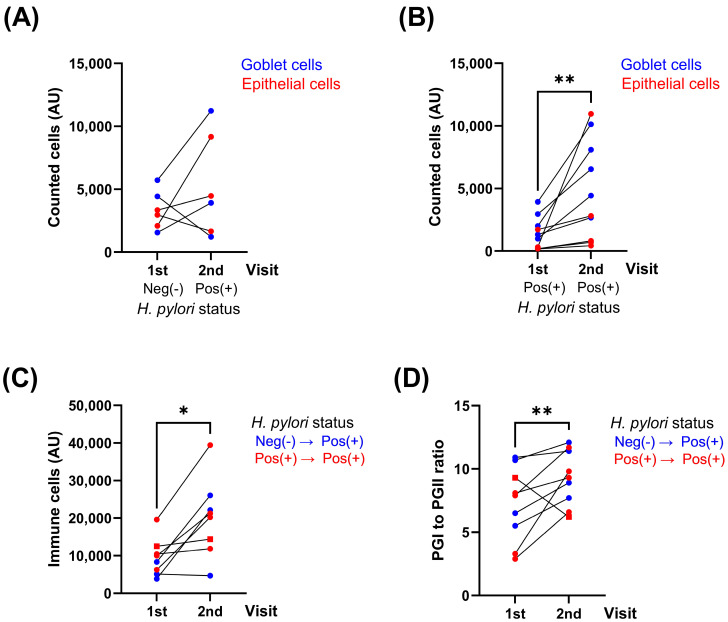 Figure 3
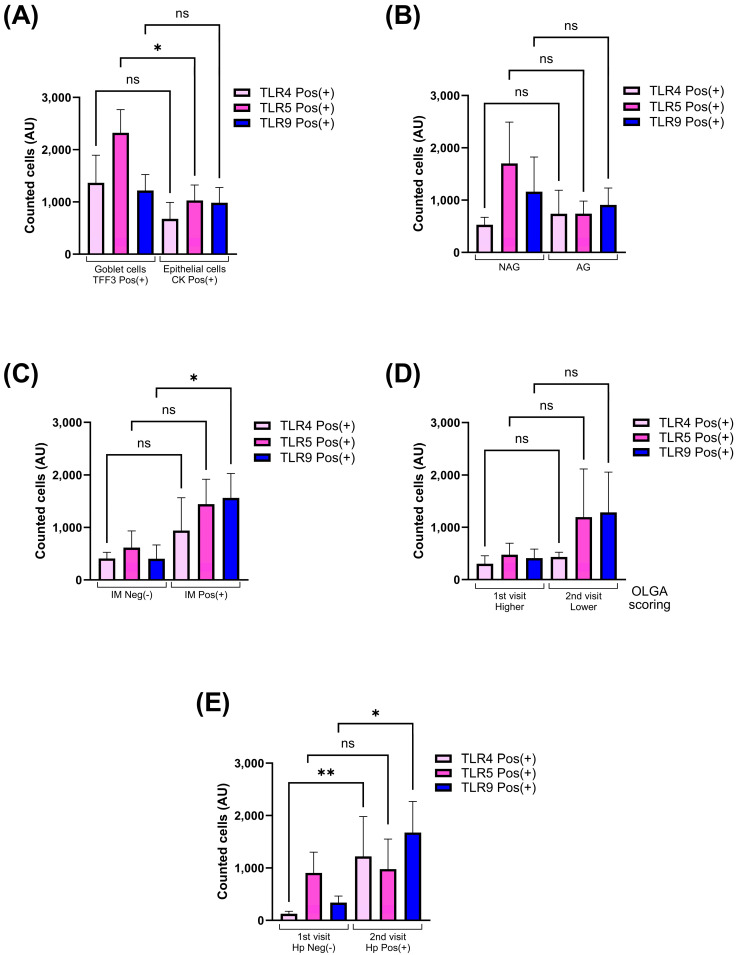 Figure 4
Peer Reviews
No public reviews on file for this paper yet. If you reviewed it on a platform where reviews are public (OpenReview, ICLR, NeurIPS, ICML), you can paste yours below so the community can read it here.
Videos
No videos yet. Explain this paper in a talk, walkthrough, or lecture? Add one.
Taxonomy
TopicsHelicobacter pylori-related gastroenterology studies · Veterinary medicine and infectious diseases · Mycobacterium research and diagnosis