The Role of Gamma Knife Surgery in the Treatment of Rare Sellar Neoplasms: A Report of Nine Cases
Michele Longhi, Riccardo Lavezzo, Valeria Barresi, Giorgia Bulgarelli, Anna D’Amico, Antonella Lombardo, Emanuele Zivelonghi, Paolo Maria Polloniato, Giuseppe Kenneth Ricciardi, Francesco Sala, Angelo Musumeci, Giampietro Pinna, Antonio Nicolato

TL;DR
Gamma Knife Surgery is shown to be a safe and effective treatment for rare sellar-region tumors, based on a study of nine patients with varied diagnoses.
Contribution
This is the largest reported series of rare sellar lesions treated with Gamma Knife Radiosurgery at a single center.
Findings
All nine patients showed favorable clinical and radiological responses after Gamma Knife Radiosurgery.
Gamma Knife Surgery demonstrated very low toxicity in treating rare sellar-region lesions.
The study suggests Gamma Knife Surgery could be an effective non-invasive treatment option for these rare tumors.
Abstract
This study evaluated the long-term outcomes of Gamma Knife Radiosurgery (GKRS) in treating rare sellar-region lesions at a single high-volume center. Nine patients treated between 2004 and 2015 were retrospectively analyzed. The lesions included hypothalamic hamartoma, Rathke’s cleft cyst, Langerhans cell histiocytosis, spindle cell oncocytoma, choroid plexus papilloma, and ossifying fibroma. Diagnosis was histologically confirmed in six patients, while three were diagnosed based on clinical and radiological features. All cases showed favorable clinical and radiological responses after GKRS, with very low toxicity. These findings suggest that GKRS is a safe and effective non-invasive treatment option even for rare sellar lesions. This represents the largest reported series of such cases treated with GKRS. However, further studies with larger patient cohorts are needed to determine if…
Genes, proteins, chemicals, diseases, species, mutations and cell lines named across the full text — each resolved to its canonical identifier and authoritative record.
Click any figure to enlarge with its caption.
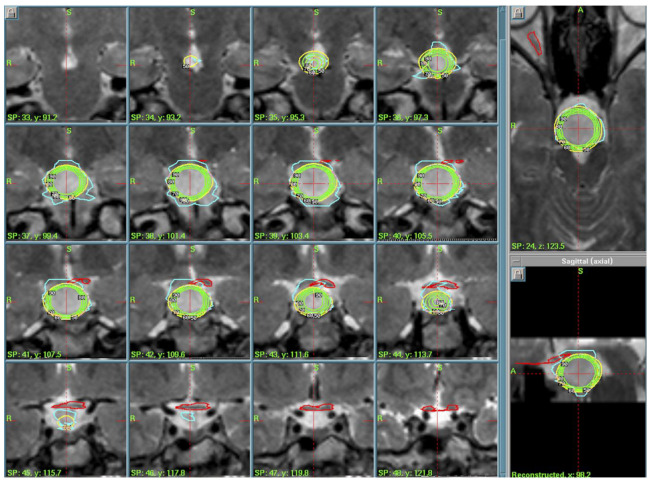 Figure 1
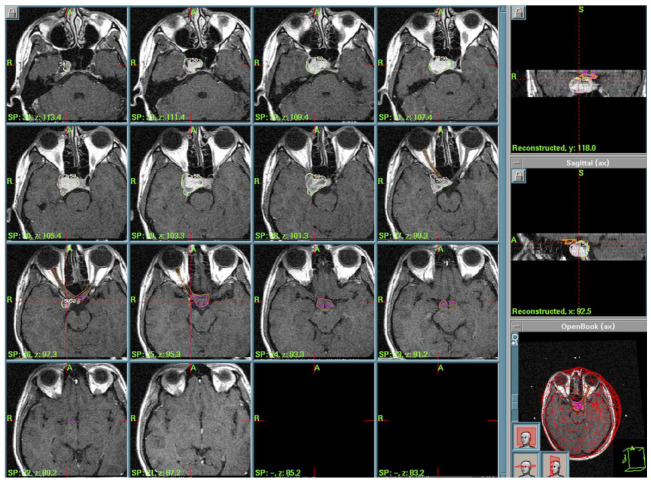 Figure 2
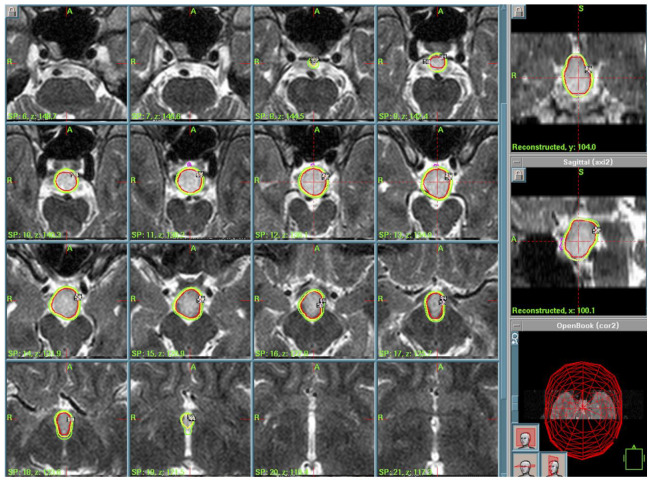 Figure 3
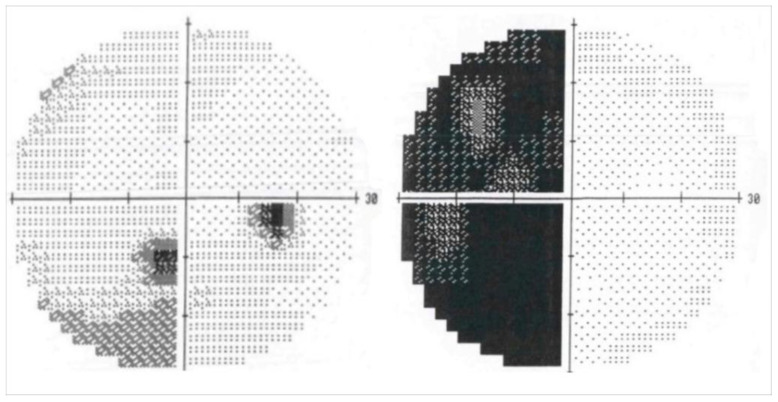 Figure 4
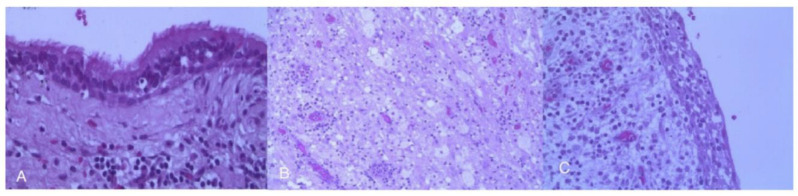 Figure 5
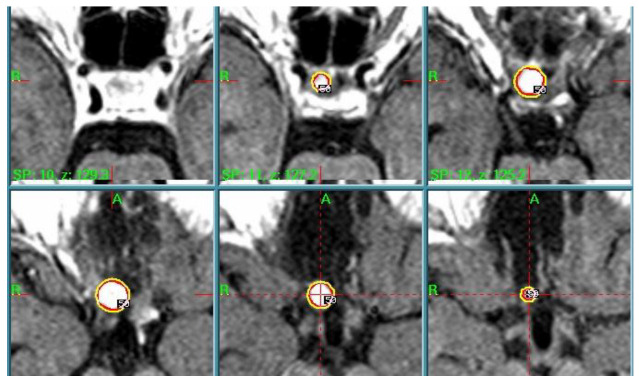 Figure 6
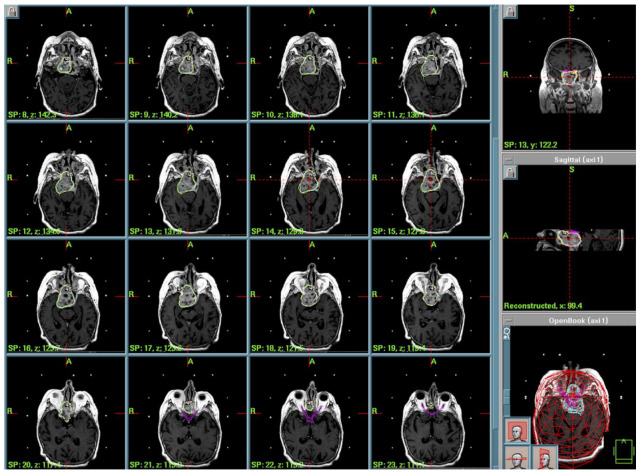 Figure 7
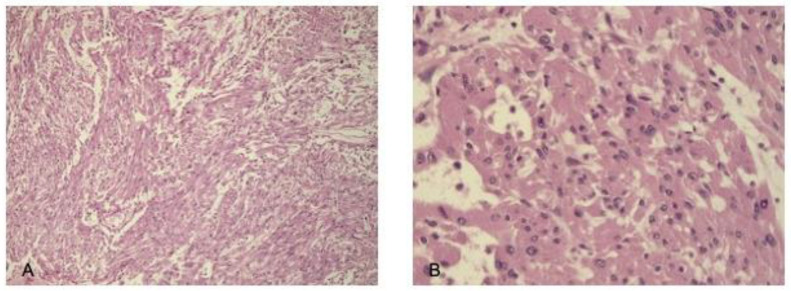 Figure 8
Peer Reviews
No public reviews on file for this paper yet. If you reviewed it on a platform where reviews are public (OpenReview, ICLR, NeurIPS, ICML), you can paste yours below so the community can read it here.
Videos
No videos yet. Explain this paper in a talk, walkthrough, or lecture? Add one.
Taxonomy
TopicsHead and Neck Surgical Oncology · Pituitary Gland Disorders and Treatments · Glioma Diagnosis and Treatment