Clinical and Electrophysiological Predictors of Isthmus Dependency in Atrial Flutter
Lyuboslav Katov, Sonja Reiländer, Alyssa Schlarb, Federica Diofano, Deniz Aktolga, Yannick Teumer, Carlo Bothner, Wolfgang Rottbauer, Karolina Weinmann-Emhardt

TL;DR
This study identifies clinical and electrophysiological factors that help predict whether atrial flutter relies on the cavotricuspid isthmus, improving diagnosis and treatment planning.
Contribution
The study introduces new predictors for isthmus dependency in atrial flutter, enhancing prediction accuracy beyond ECG findings alone.
Findings
CTI dependence was more common in type I ECG patients (90.3%) than in type II ECG patients (45.2%).
Predictors for CTI dependence included younger age, male gender, and absence of certain comorbidities and medications.
Longer atrial cycle length was a significant predictor for CTI dependence in type II ECG patients.
Abstract
Background: Atrial flutter (AFL) is a macro-reentrant tachycardia classified as cavotricuspid isthmus (CTI)-dependent or non-CTI-dependent based on its reliance on the CTI for conduction. CTI dependence can present as type I ECG (sawtooth flutter waves in inferior leads and positive P-waves in V1) or type II ECG (absence of these characteristics). This study aimed to identify clinical and electrophysiological parameters to improve CTI dependence prediction in AFL. Methods: Patients at the Ulm University Heart Center between 2010 and 2019 with AFL undergoing electrophysiological studies and ablation were enrolled. Clinical and electrophysiological parameters such as age, gender, prior comorbidities, interventions, and medication use were analyzed. Results: The study included 383 patients, with 70% presenting with type I ECG AFL. CTI dependence was observed in 242 (90.3%) type I ECG…
Genes, proteins, chemicals, diseases, species, mutations and cell lines named across the full text — each resolved to its canonical identifier and authoritative record.
Click any figure to enlarge with its caption.
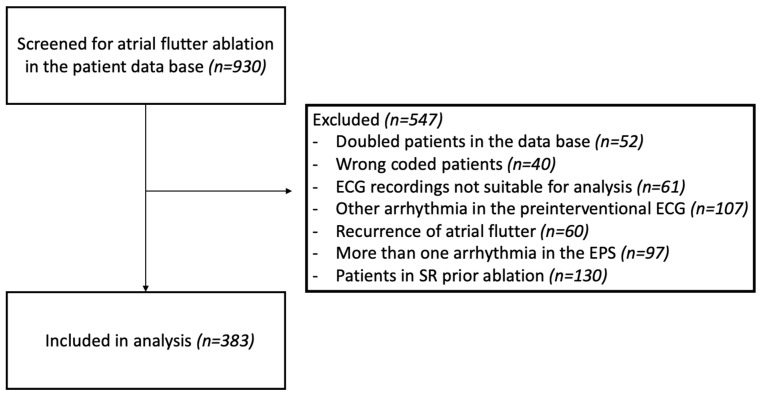 Figure 1
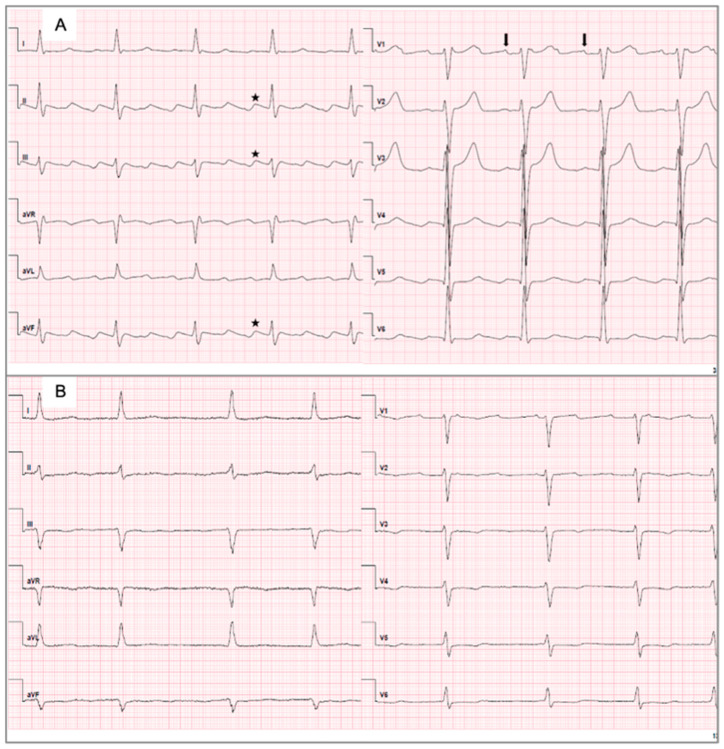 Figure 2
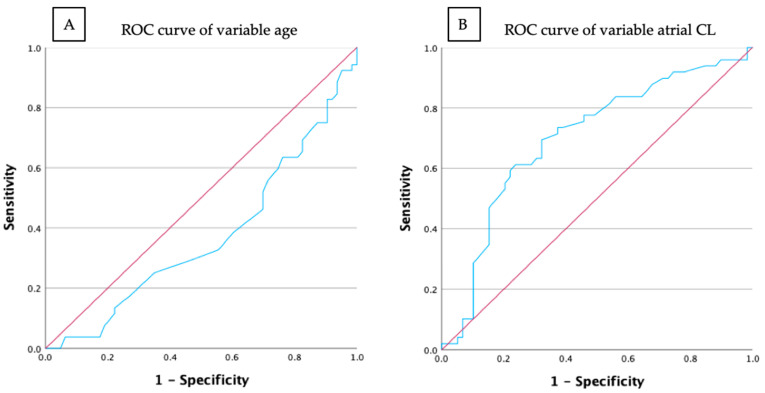 Figure 3
Peer Reviews
No public reviews on file for this paper yet. If you reviewed it on a platform where reviews are public (OpenReview, ICLR, NeurIPS, ICML), you can paste yours below so the community can read it here.
Videos
No videos yet. Explain this paper in a talk, walkthrough, or lecture? Add one.
Taxonomy
TopicsCardiac Arrhythmias and Treatments · Atrial Fibrillation Management and Outcomes · Cardiac electrophysiology and arrhythmias