Cell-Autonomous Immunity: From Cytosolic Sensing to Self-Defense
Danlin Han, Bozheng Zhang, Zhe Wang, Yang Mi

TL;DR
Non-immune cells can detect and fight intracellular pathogens through cell-autonomous immunity, using specific sensors and signaling pathways.
Contribution
This review provides a comprehensive analysis of cytosolic sensing mechanisms and their roles in disease pathogenesis.
Findings
Cytosolic sensors like cGAS-STING and RIG-I-like receptors detect pathogen-associated molecular patterns.
Cell-autonomous immunity pathways contribute to autoimmune and inflammatory diseases.
These pathways represent potential therapeutic targets for various conditions.
Abstract
As an evolutionarily conserved and ubiquitous mechanism of host defense, non-immune cells in vertebrates possess the intrinsic ability to autonomously detect and combat intracellular pathogens. This process, termed cell-autonomous immunity, is distinct from classical innate immunity. In this review, we comprehensively examine the defense mechanisms employed by non-immune cells in response to intracellular pathogen invasion. We provide a detailed analysis of the cytosolic sensors that recognize aberrant nucleic acids, lipopolysaccharide (LPS), and other pathogen-associated molecular patterns (PAMPs). Specifically, we elucidate the molecular mechanisms underlying key signaling pathways, including the cyclic GMP-AMP synthase (cGAS)-stimulator of interferon genes (STING) pathway, the retinoic acid-inducible gene I (RIG-I)-like receptors (RLRs)-mitochondrial antiviral signaling (MAVS) axis,…
Genes, proteins, chemicals, diseases, species, mutations and cell lines named across the full text — each resolved to its canonical identifier and authoritative record.
Click any figure to enlarge with its caption.
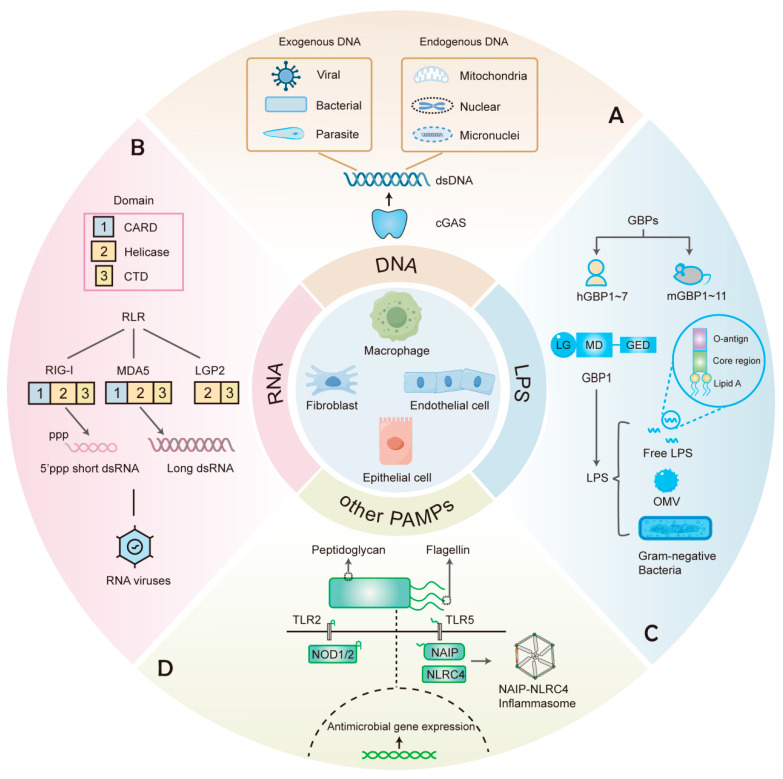 Figure 1
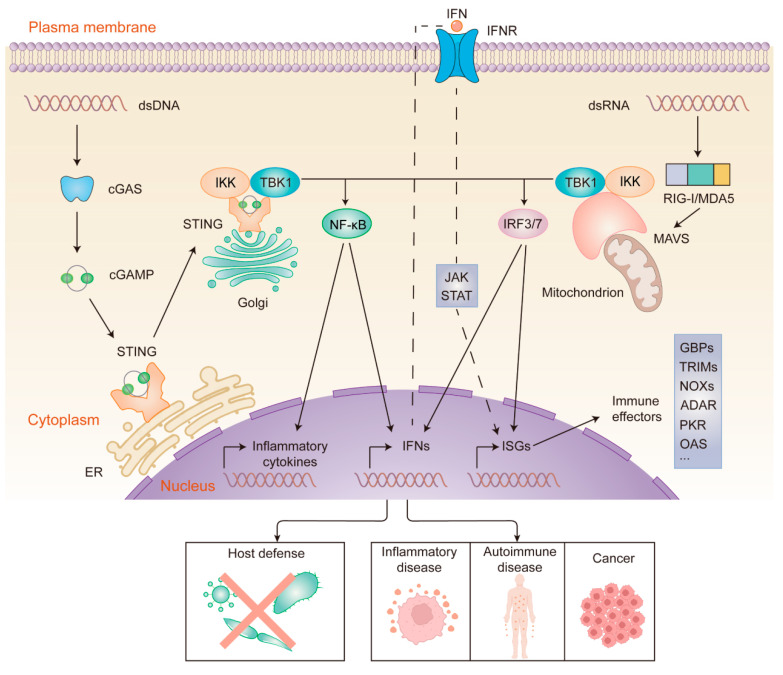 Figure 2
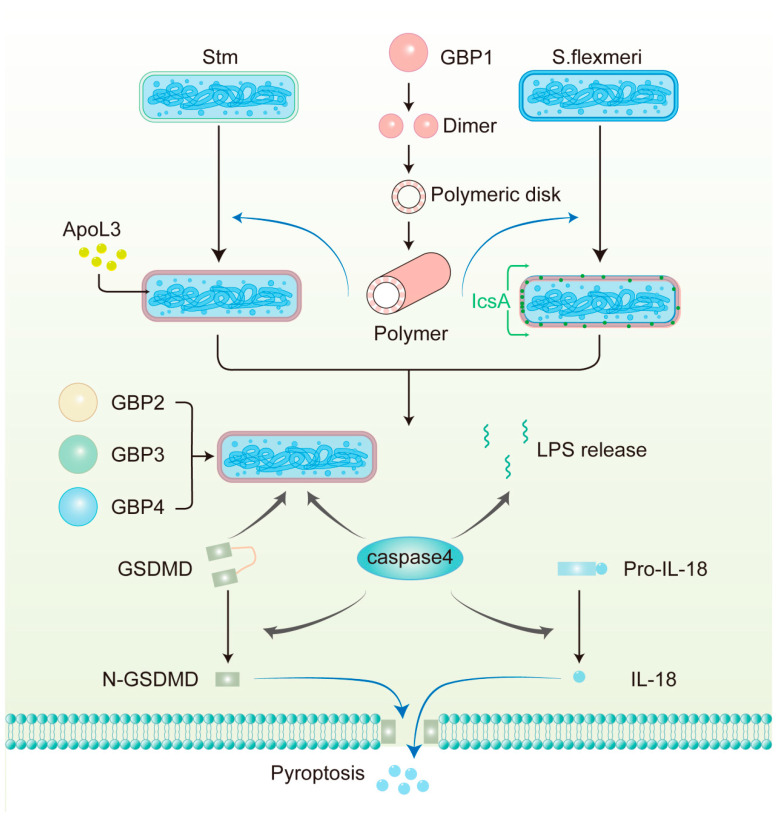 Figure 3
Peer Reviews
No public reviews on file for this paper yet. If you reviewed it on a platform where reviews are public (OpenReview, ICLR, NeurIPS, ICML), you can paste yours below so the community can read it here.
Videos
No videos yet. Explain this paper in a talk, walkthrough, or lecture? Add one.
Taxonomy
Topicsinterferon and immune responses · Inflammasome and immune disorders · Immune Response and Inflammation