Beyond Infection: The Role of Secreted Viral Proteins in Pathogenesis, Disease Severity and Diagnostic Applications
Luis Herrera-Moro Huitron, Víctor Javier Cruz-Holguin, José Manuel Ulloa-Aguilar, Luis Adrián De Jesús-González, Juan Fidel Osuna-Ramos, Mario Guzmán-Huerta, Mercedes Piedad de León-Bautista, Guadalupe León-Reyes, Julio García-Cordero, Leticia Cedillo-Barrón

TL;DR
This paper reviews how secreted viral proteins influence disease severity, immune evasion, and diagnostic potential by altering host environments and signaling pathways.
Contribution
The paper provides a comprehensive review of secreted viral proteins' roles in pathogenesis and their applications in diagnostics and therapies.
Findings
Secreted viral proteins can suppress immune responses and promote disease progression.
Examples like BARF1 and NS1 demonstrate their roles in cancer and early diagnosis.
These proteins offer new targets for antiviral therapies and biosensing technologies.
Abstract
Secreted viral proteins are crucial in virus–host interactions, as they modify the host microenvironment to promote infection. These secreted proteins could alter immune and inflammatory responses, allowing viruses to evade defense mechanisms such as cytotoxic T cell activation and antibody neutralization. Some secreted proteins mimic host molecules to suppress antiviral responses, making them valuable targets for antivirals and diagnostics. Notable examples include BARF1 from Epstein–Barr virus, associated with gastric cancer; vIL-10 from Epstein–Barr virus, which regulates immune responses and contributes to autoimmune diseases; NS1 from dengue virus, associated with vascular permeability and early diagnosis; and NSP4 from rotavirus as an enterotoxin, among others. The study of these proteins improves our understanding of viral pathogenesis and helps to develop innovative treatments…
Genes, proteins, chemicals, diseases, species, mutations and cell lines named across the full text — each resolved to its canonical identifier and authoritative record.
Click any figure to enlarge with its caption.
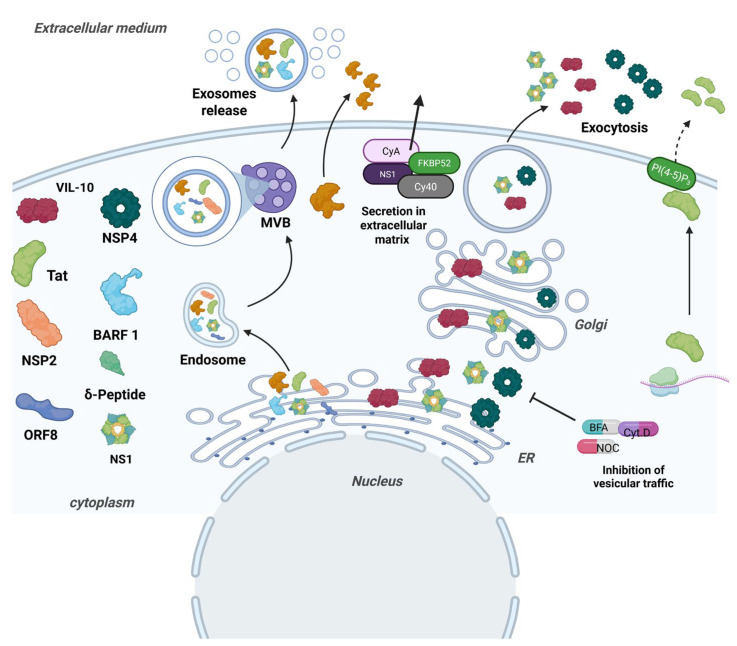 Figure 1
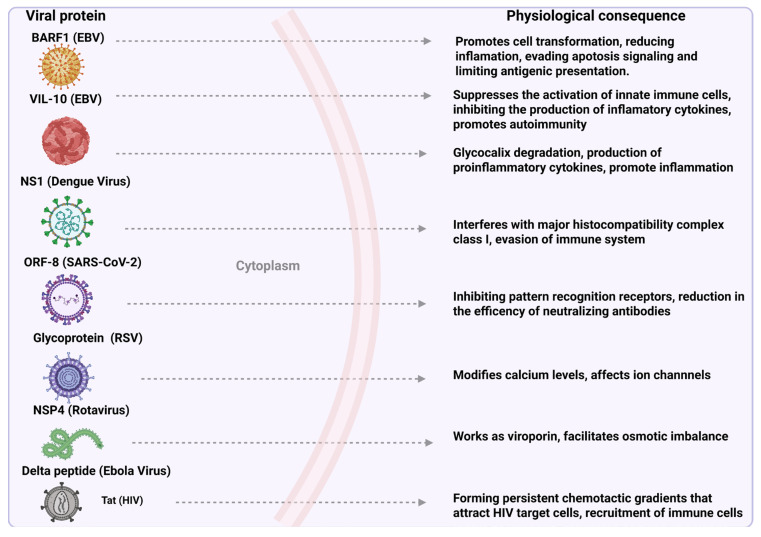 Figure 2
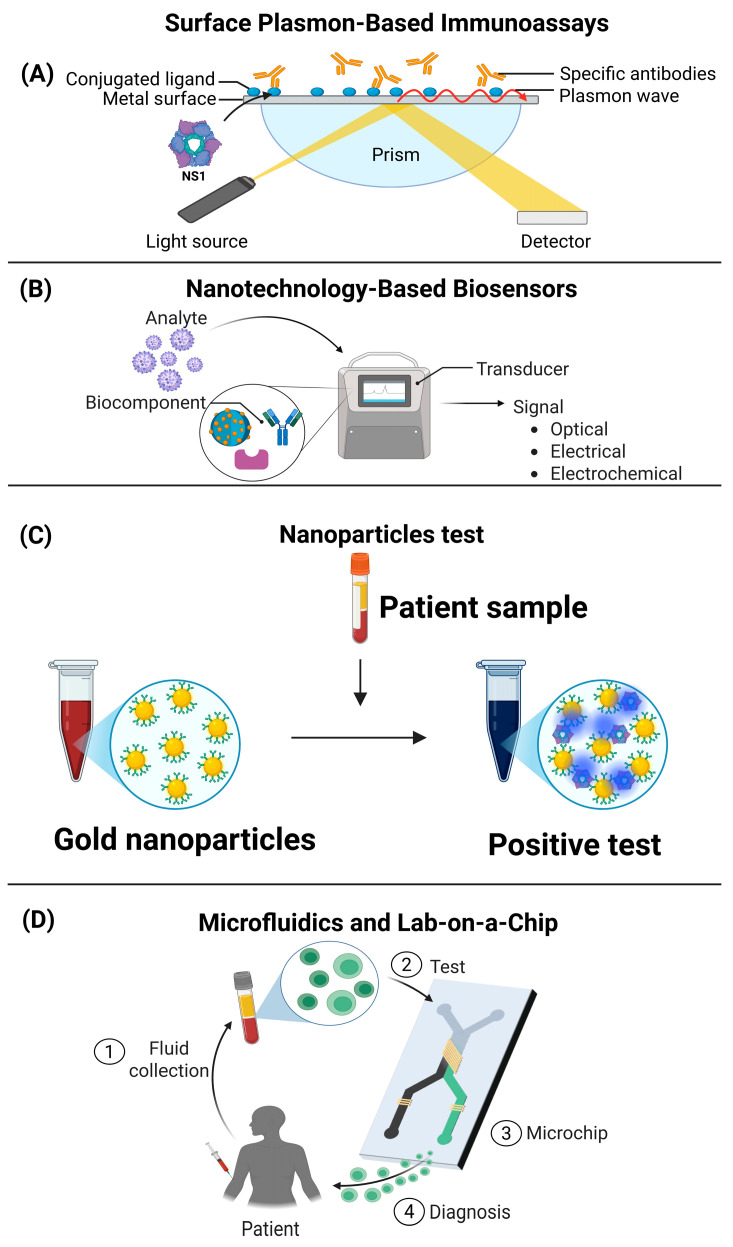 Figure 3
Peer Reviews
No public reviews on file for this paper yet. If you reviewed it on a platform where reviews are public (OpenReview, ICLR, NeurIPS, ICML), you can paste yours below so the community can read it here.
Videos
No videos yet. Explain this paper in a talk, walkthrough, or lecture? Add one.
Taxonomy
TopicsCytomegalovirus and herpesvirus research · Viral-associated cancers and disorders · Virus-based gene therapy research