Sensitivity of Various Indicators in a Mouse Sensitive Skin Model Treatment with 4-tert-Butylcyclohexanol and Pimecrolimus
Xueting Tang, Xueer Wang, Yarui Zhang, Qimei Chen, Shan Zhao, Xunhong Xu, Xinyu Yang, Xiaoran Liu, Lin Zhang, Min Zhang

TL;DR
This study tests how a mouse model of sensitive skin responds to two treatments, 4-TBLH and pimecrolimus, measuring various skin sensitivity indicators.
Contribution
The study introduces a detailed evaluation of a sensitive mouse skin model's responsiveness to different treatment timing and substances.
Findings
4-TBLH and pimecrolimus showed distinct effects on skin sensitivity indicators like TEWL, capillary dilation, and mast cell activity.
Prophylactic and therapeutic applications of both treatments revealed varied impacts on skin hydration, itching, and epidermal thickness.
The model demonstrated robust sensitivity to treatment factors, supporting its use for developing sensitive skin medications.
Abstract
The etiopathogenesis and treatment response of sensitive skin remain poorly understood. We used 4-tert-butylcyclohexanol (4-TBLH) and 1% pimecrolimus ointment to treat sensitive skin in mice models constructed using tape stripping, propylene glycol, and capsaicin. This study aimed to further investigate the sensitivity and responsiveness of this sensitive mouse skin model. Sensitivity and responsiveness were assessed by measuring transepidermal water loss (TEWL), skin hydration, skin flakes, vascular dilatation, itching, stinging, and histological changes, including mast cell, lymphocyte, and granulocyte infiltration, tumor necrosis factor-α (TNF-α) expression, and transient receptor potential vanilloid 1 receptor (TRPV1) expression. The application of 4-TBLH and pimecrolimus revealed distinct responses in skin sensitivity indicators, including TEWL, capillary dilation, and mass cell…
Genes, proteins, chemicals, diseases, species, mutations and cell lines named across the full text — each resolved to its canonical identifier and authoritative record.
Click any figure to enlarge with its caption.
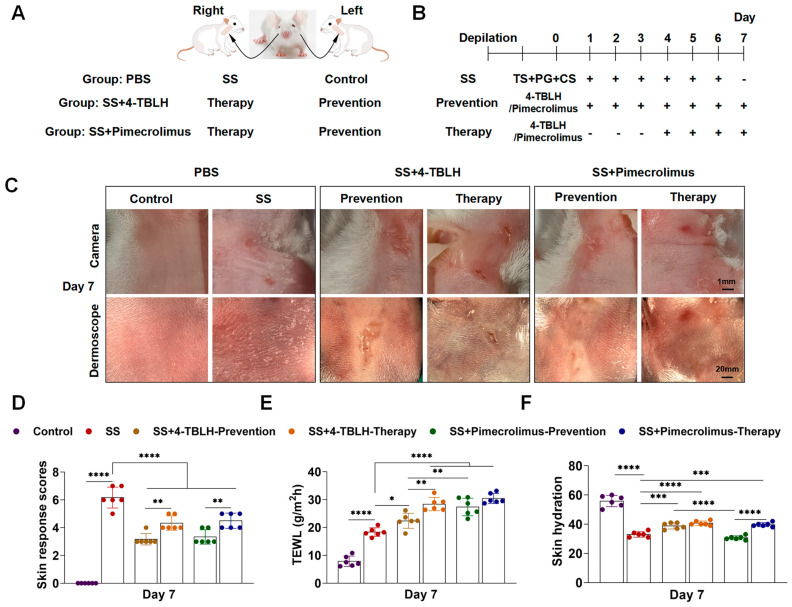 Figure 1
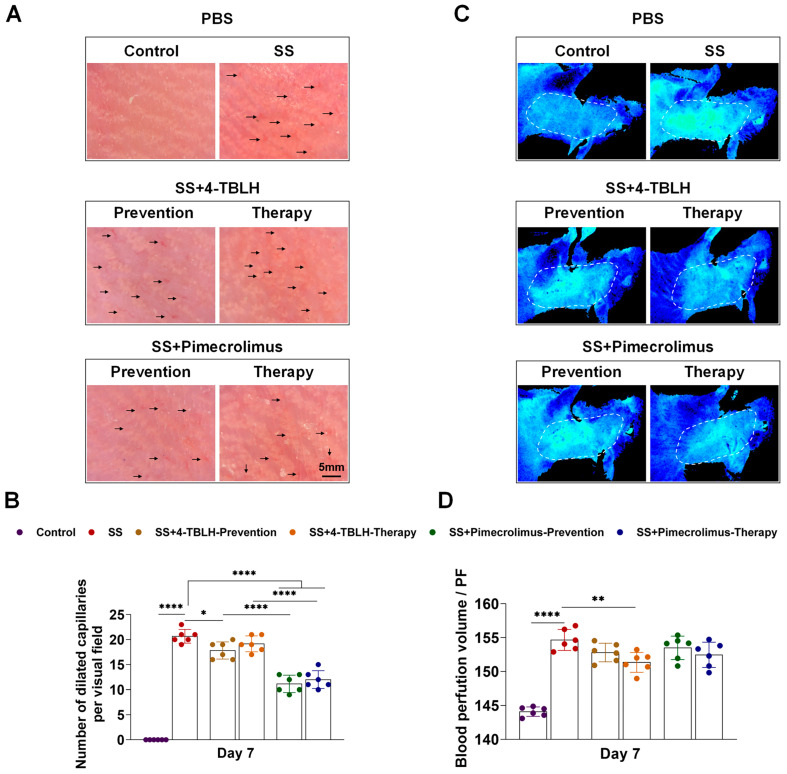 Figure 2
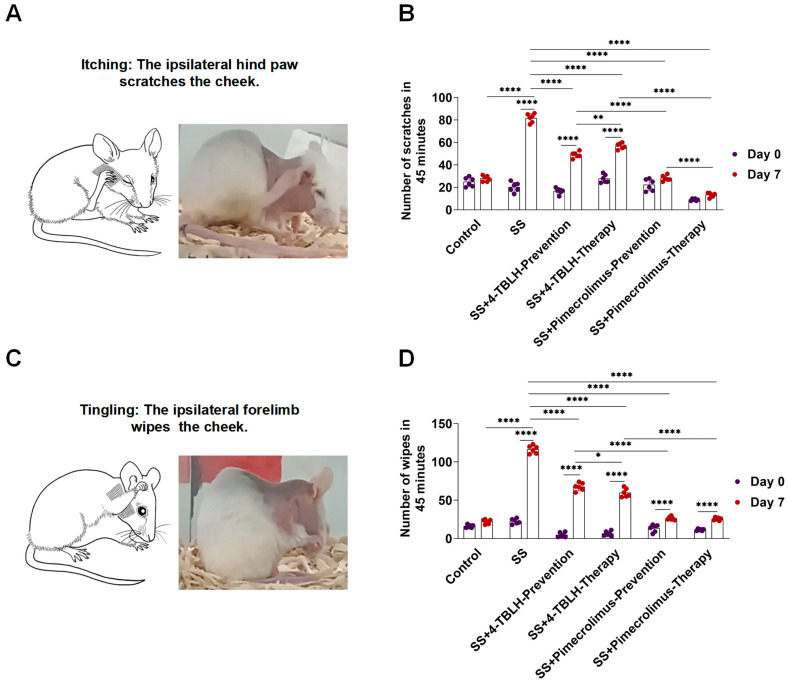 Figure 3
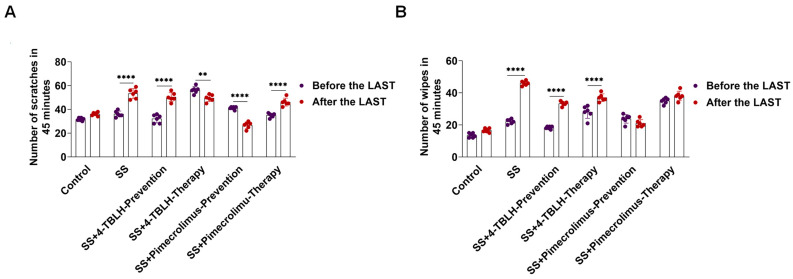 Figure 4
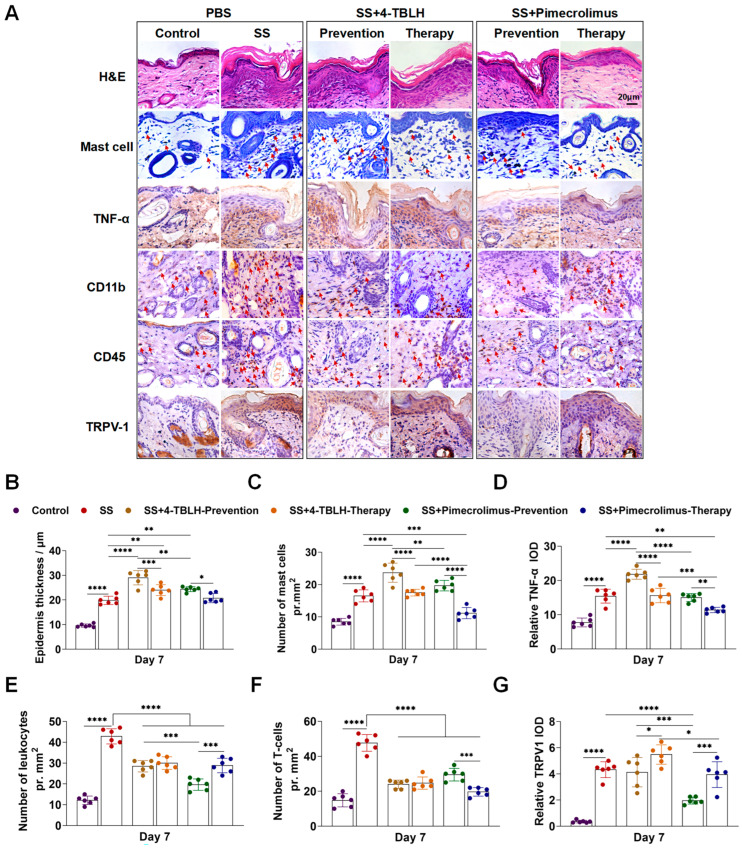 Figure 5
Peer Reviews
No public reviews on file for this paper yet. If you reviewed it on a platform where reviews are public (OpenReview, ICLR, NeurIPS, ICML), you can paste yours below so the community can read it here.
Videos
No videos yet. Explain this paper in a talk, walkthrough, or lecture? Add one.
Taxonomy
TopicsDermatology and Skin Diseases · Advancements in Transdermal Drug Delivery · Skin Protection and Aging