Efficacy and Safety of Percutaneous Transhepatic Lithotripsy Using SpyGlassDSTM Cholangioscopy for the Treatment of Difficult Stones
Salvatore Alessio Angileri, Giuseppe Pellegrino, Carolina Lanza, Jacopo Pozzi, Marco Costa, Matilde Pavan, Pierpaolo Biondetti, Serena Carriero, Velio Ascenti, Gaetano Valerio Davide Amato, Pierluca Torcia, Anna Maria Ierardi, Gianpaolo Carrafiello

TL;DR
This study shows that using SpyGlassDSTM cholangioscopy for difficult gallstones is both safe and effective, with high success rates and minimal complications.
Contribution
Demonstrates the safety and efficacy of SpyGlassDSTM cholangioscopy for treating difficult gallstones via percutaneous transhepatic lithotripsy.
Findings
Technical and clinical success was achieved in all 10 patients.
60% of patients required re-treatment but still achieved secondary success.
Only 9% of procedures resulted in mild complications within 30 days.
Abstract
Background/Objectives: the aim of this study was to evaluate the safety and efficacy of percutaneous transhepatic lithotripsy using the SpyGlassDSTM cholangioscopy system for the treatment of difficult stones. Methods: Retrospectively, all patients treated with percutaneous transhepatic lithotripsy using SpyGlassDSTM cholangioscopy system were analyzed. As primary outcome measures, the following data were assessed: the presence of a previous history of the hepatobiliary disease, location of stones, reasons for the choice of the procedure, previous balloon bilioplasty, type of pre-procedural imaging, procedural time, technical success, clinical success, and post-procedural complications (according to CIRSE classification). Clinical success was considered “primary” when achieved with a single treatment, and “secondary” if more than one treatment was required in the duration of follow-up.…
Genes, proteins, chemicals, diseases, species, mutations and cell lines named across the full text — each resolved to its canonical identifier and authoritative record.
Click any figure to enlarge with its caption.
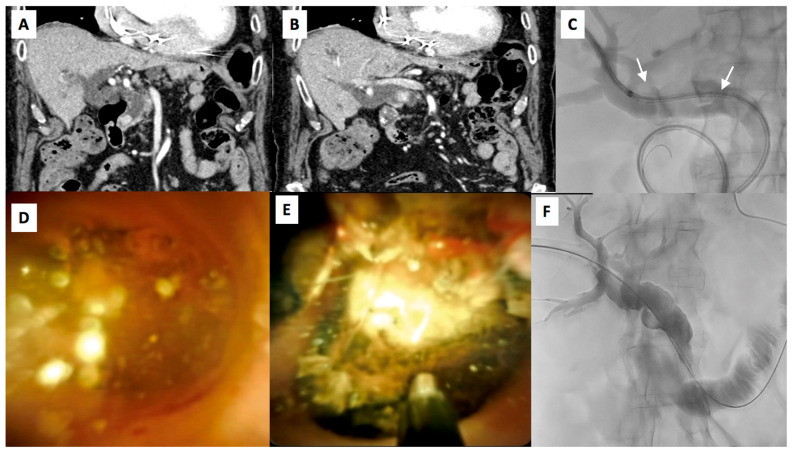 Figure 1
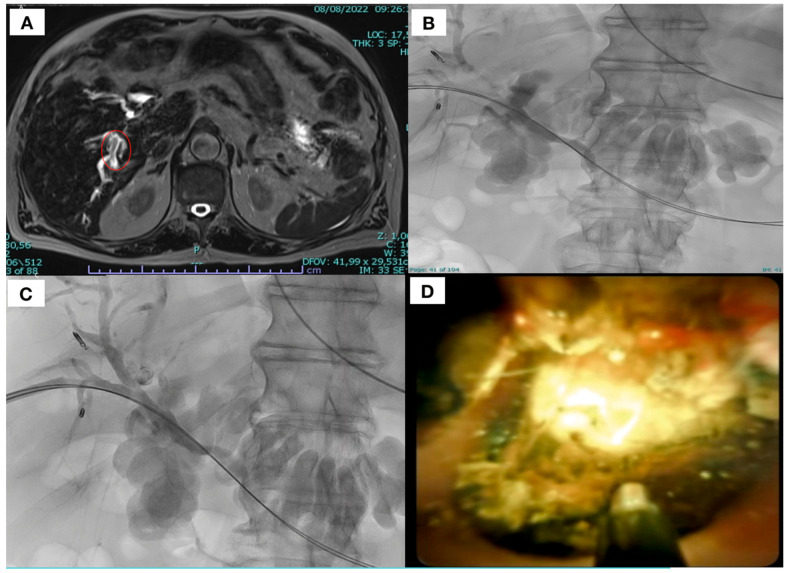 Figure 2
Peer Reviews
No public reviews on file for this paper yet. If you reviewed it on a platform where reviews are public (OpenReview, ICLR, NeurIPS, ICML), you can paste yours below so the community can read it here.
Videos
No videos yet. Explain this paper in a talk, walkthrough, or lecture? Add one.
Taxonomy
TopicsGallbladder and Bile Duct Disorders · Pediatric Hepatobiliary Diseases and Treatments · Pancreatic and Hepatic Oncology Research