Five Cellular Genes as Candidates for Cervical Adenocarcinoma Molecular Markers
Isui Abril García-Montoya, Karla Berenice López-Córdova, Daniel Marrero-Rodríguez, Mauricio Salcedo-Vargas, Claudia Lucía Vargas-Requena, Angélica Maria Escárcega-Avila, Santos Adriana Martel-Estrada, Florinda Jiménez-Vega

TL;DR
This study identifies five genes that could serve as molecular markers for cervical adenocarcinoma, a type of cervical cancer linked to HPV infection.
Contribution
The study proposes a novel five-gene panel as potential molecular markers for HPV-associated cervical adenocarcinoma.
Findings
Five genes (RARβ, MACC1, BCL2, HOXC8, and E6/E7/HPV) showed higher statistical significance in cervical adenocarcinoma samples.
These genes could serve as a molecular tool for detecting HPV-associated cervical adenocarcinoma.
Bioinformatic analysis and RT-PCR validation identified differentially expressed genes in cervical cancer.
Abstract
This study describes the search for and evaluation of cervical adenocarcinoma molecular markers in a population of Ciudad Juárez, Chihuahua, México. Bioinformatic analysis of the NCBI database and 161 transcriptomic libraries was performed. The expression of selected genes was analyzed using semi-quantitative RT-PCR in samples from fresh cervical adenocarcinoma and cervical normal tissues. Five genes presented higher amplification frequency with a statistically significant difference, making them possible molecular markers for cervical cancer. Background/Aim: Cervical adenocarcinoma associated with Human Papillomavirus (HPV) infection represents 85–90% of all adenocarcinomas that have poor prognostic factors and is an important health public concern. Currently, cervical adenocarcinoma molecular markers are scarce. This study searched databases and the literature regarding candidate…
Genes, proteins, chemicals, diseases, species, mutations and cell lines named across the full text — each resolved to its canonical identifier and authoritative record.
Click any figure to enlarge with its caption.
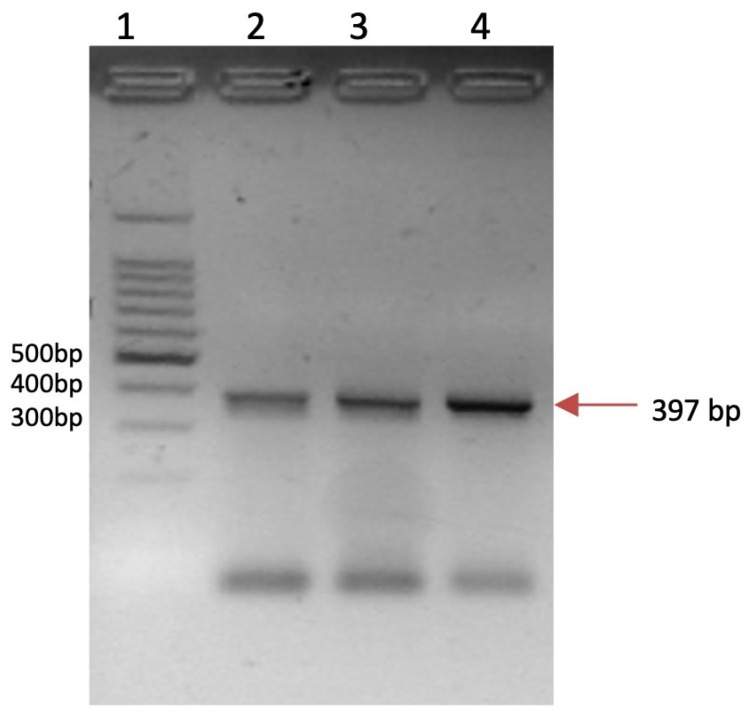 Figure 1
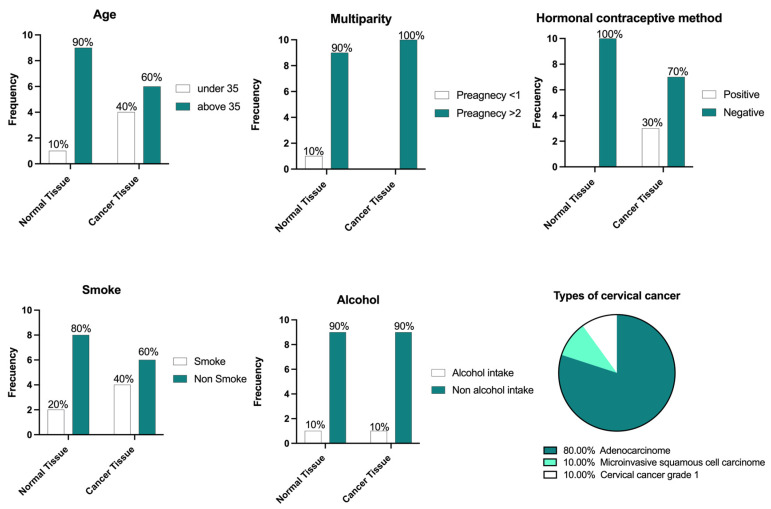 Figure 2
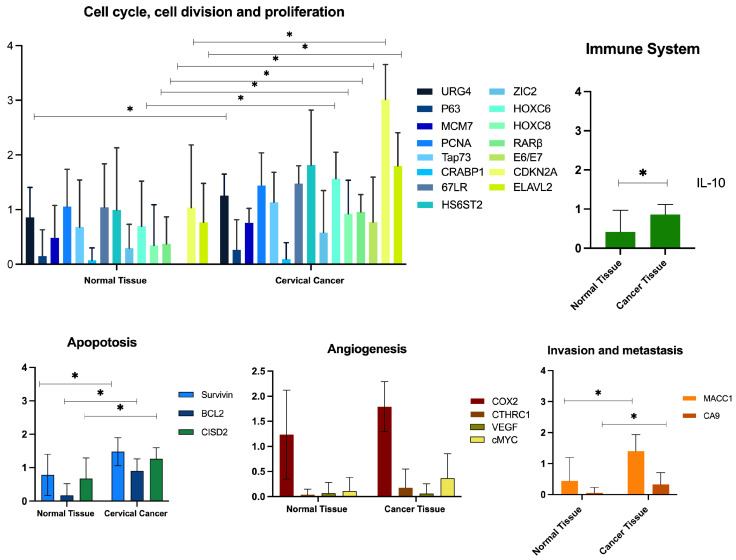 Figure 3
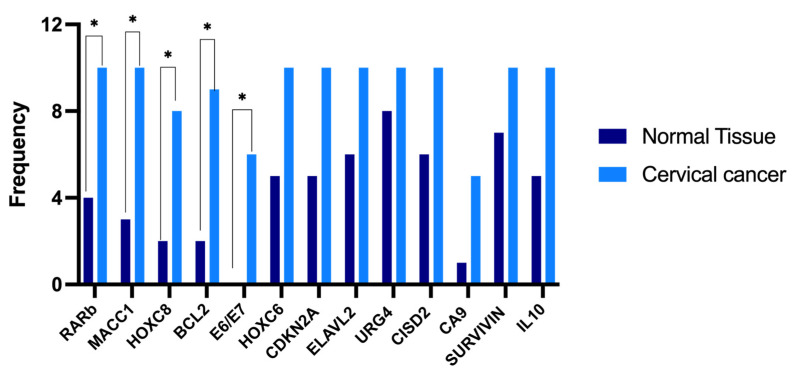 Figure 4
Peer Reviews
No public reviews on file for this paper yet. If you reviewed it on a platform where reviews are public (OpenReview, ICLR, NeurIPS, ICML), you can paste yours below so the community can read it here.
Videos
No videos yet. Explain this paper in a talk, walkthrough, or lecture? Add one.
Taxonomy
TopicsCervical Cancer and HPV Research · Cancer-related molecular mechanisms research · Endometrial and Cervical Cancer Treatments