Sestrins in Carcinogenesis—The Firefighters That Sometimes Stoke the Fire
Alexander Haidurov, Andrei V. Budanov

TL;DR
Sestrins are stress proteins that can both prevent and promote cancer, depending on the context, and may serve as potential diagnostic and therapeutic tools.
Contribution
This review clarifies the dual roles of Sestrins in cancer and evaluates their potential as diagnostic and therapeutic targets.
Findings
Sestrin downregulation is commonly observed in cancers and linked to poor prognosis.
Sestrins inhibit mTORC1 and reduce oxidative stress, which can suppress tumor growth.
In some contexts, Sestrins promote tumor survival via pathways like AKT signaling.
Abstract
Sestrins (SESN1-3) are a family of stress-responsive proteins that serve as direct targets of several transcription factors, including tumour suppressor protein p53. Structural studies have identified three core molecular functions of Sestrins: scavenging of reactive oxygen species (ROS), inhibition of mTORC1 signalling, and leucine binding. As leucine-dependent mTORC1 inhibitors and antioxidants, Sestrins regulate metabolism and redox balance, both of which are frequently dysregulated in cancer. Dysregulation of Sestrin expression, most commonly downregulation, is widely observed in cancers and is often associated with increased tumour growth and poor prognosis. However, in certain contexts, Sestrin overexpression may promote tumour survival, and this review explores the molecular mechanisms underlying these seemingly contradictory effects on carcinogenesis, evaluates the evidence for…
Genes, proteins, chemicals, diseases, species, mutations and cell lines named across the full text — each resolved to its canonical identifier and authoritative record.
Click any figure to enlarge with its caption.
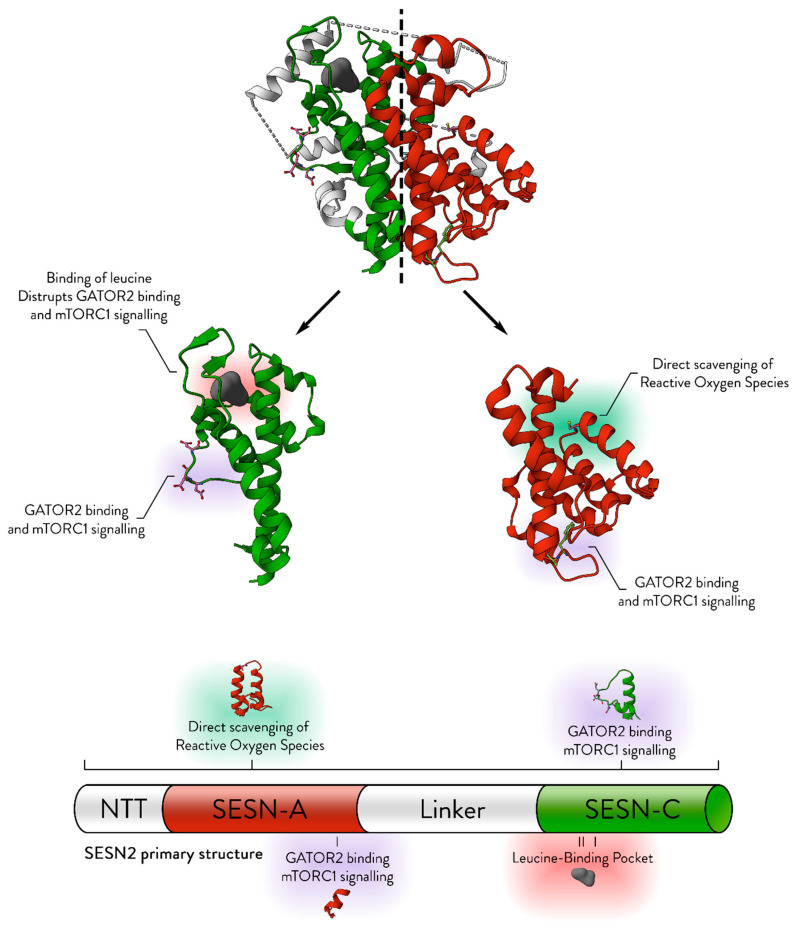 Figure 1
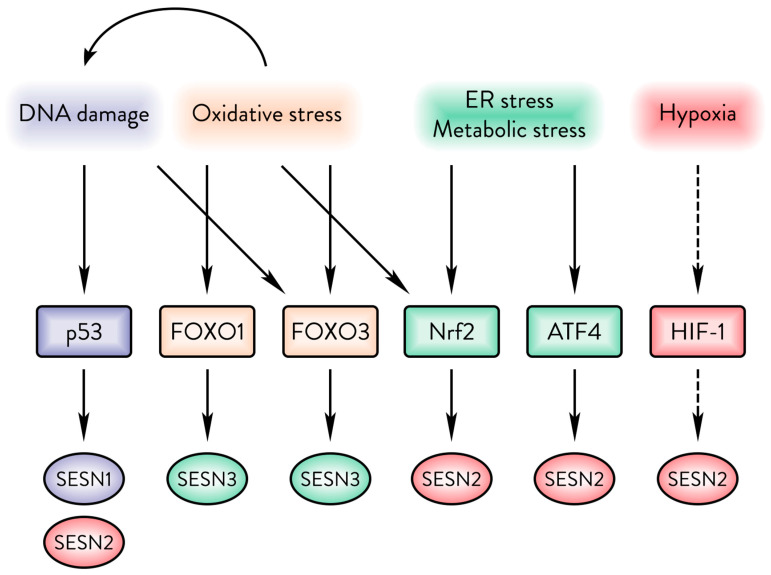 Figure 2
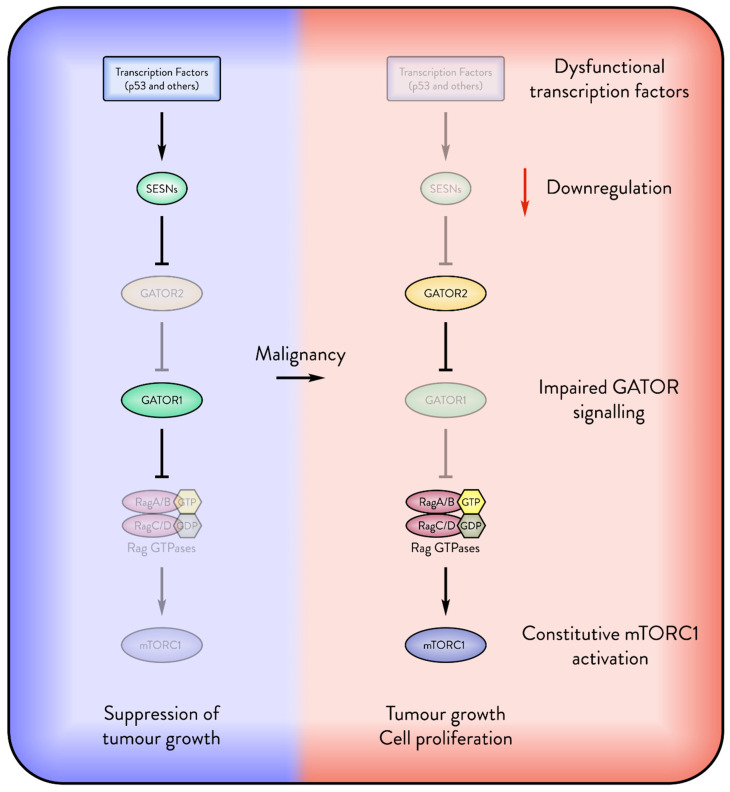 Figure 3
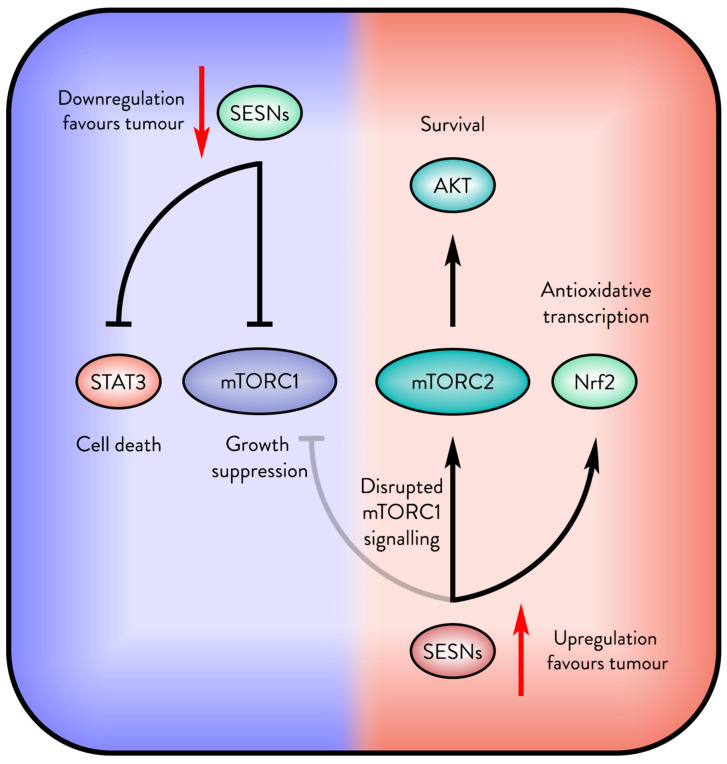 Figure 4
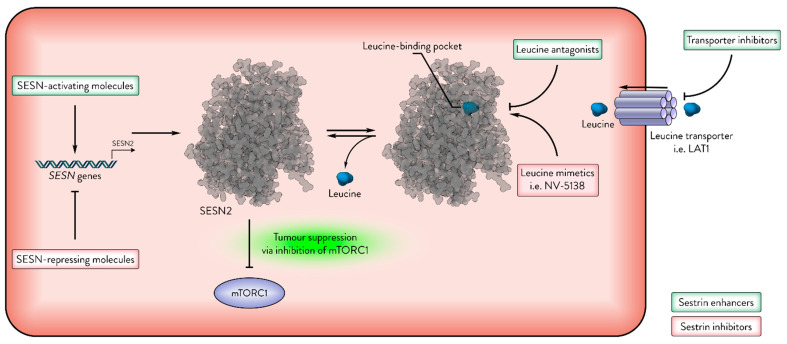 Figure 5
Peer Reviews
No public reviews on file for this paper yet. If you reviewed it on a platform where reviews are public (OpenReview, ICLR, NeurIPS, ICML), you can paste yours below so the community can read it here.
Videos
No videos yet. Explain this paper in a talk, walkthrough, or lecture? Add one.
Taxonomy
TopicsPI3K/AKT/mTOR signaling in cancer · Polyamine Metabolism and Applications · Genomics, phytochemicals, and oxidative stress