The Contribution of the Double Rib Contour Sign and the Rib Index to the Study of Scoliogeny, Thoracic Deformity, Progression, Outcome of Treatments and Costoplasty for Idiopathic Scoliosis
Theodoros B. Grivas, Anastasios G. Christodoulou, Evangelos A. Christodoulou, Galateia Katzouraki, Marios G. Lykissas, Panayiotis J. Papagelopoulos, Elias C. Papadopoulos, Sotirios Papastefanou, Nikolaos Sekouris, Panayotis N. Soucacos, Konstantinos C. Soultanis, Elias Vasiliadis

TL;DR
This paper discusses the use of the double rib contour sign and rib index in studying and treating idiopathic scoliosis, focusing on their clinical and diagnostic value.
Contribution
The paper introduces the Segmental Rib Index and explores the clinical utility of the double rib contour sign and rib index in scoliosis.
Findings
The rib index is a strong surrogate for scoliometric readings in idiopathic scoliosis.
The rib index is useful for assessing physiotherapy and brace treatment outcomes.
The rib index helps in pre- and post-operative assessments of thoracic deformity correction.
Abstract
This opinion article refers to the “double rib contour sign” and to the rib index (DRCS and RI), to their reliability study results in the chest radiographs of a control group and to their validity study results. These two parameters were introduced by the first author in this report. The introduction of the Segmental Rib Index (SRI) and its relation to spinal deformity is also discussed. The RI has been confirmed to be a strong surrogate for scoliometric readings in idiopathic scoliosis (IS). The clinical applications of the RI are analyzed for the following: (a) the documentation of deformity; (b) the assessment of physiotherapy outcomes (PSSEs); (c) the documentation of the outcomes of brace treatment; (d) the documentation of the pre- and post-operative assessment of thoracic deformity correction in different types of instrumentation; (e) its usage in prognosticating accelerated…
Genes, proteins, chemicals, diseases, species, mutations and cell lines named across the full text — each resolved to its canonical identifier and authoritative record.
Click any figure to enlarge with its caption.
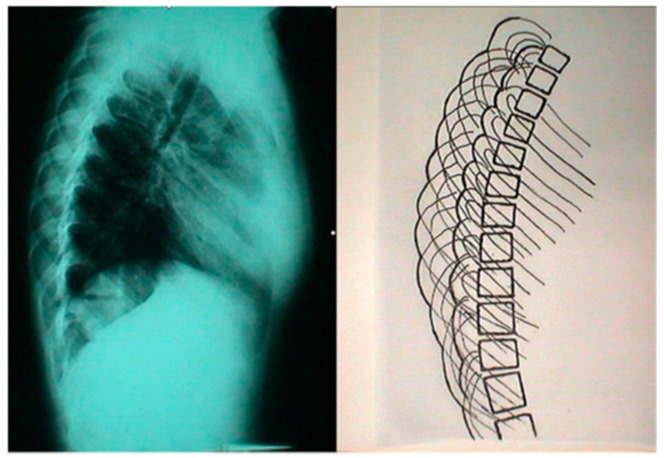 Figure 1
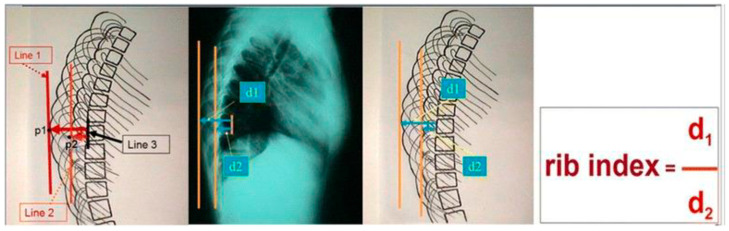 Figure 2
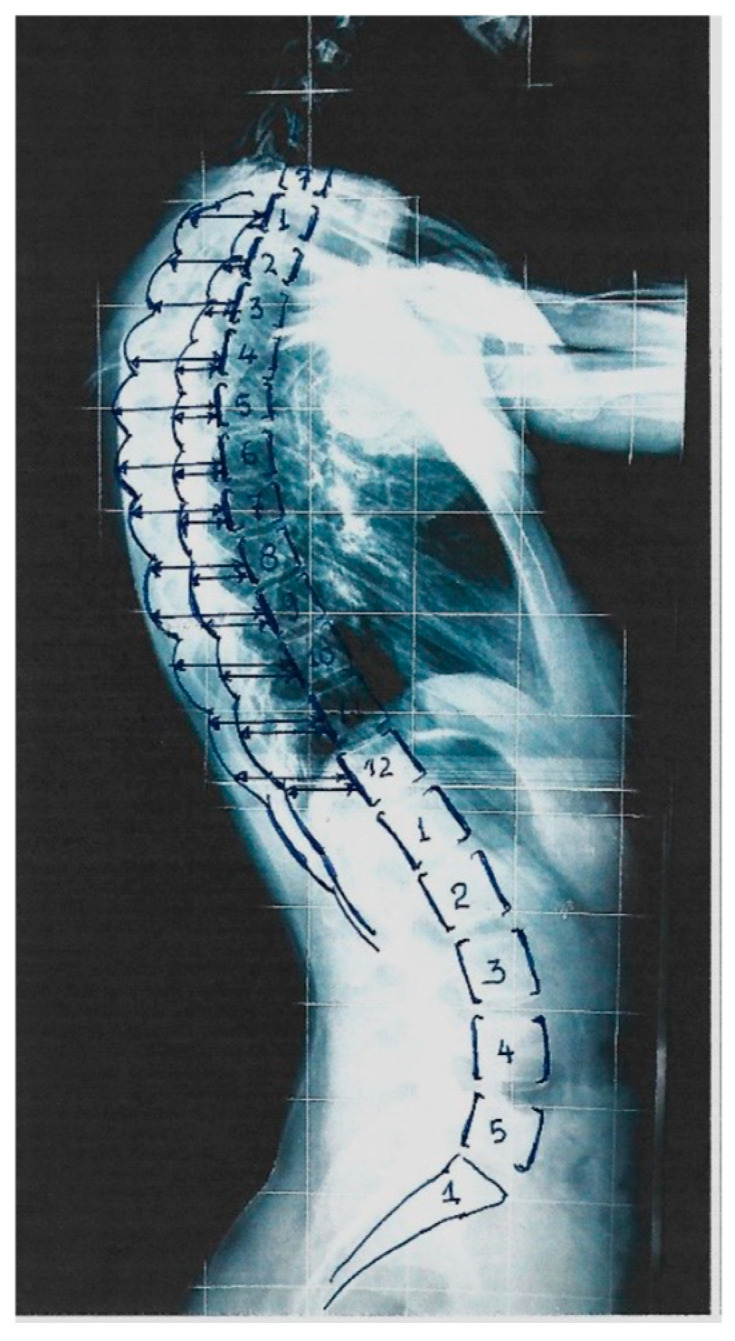 Figure 3
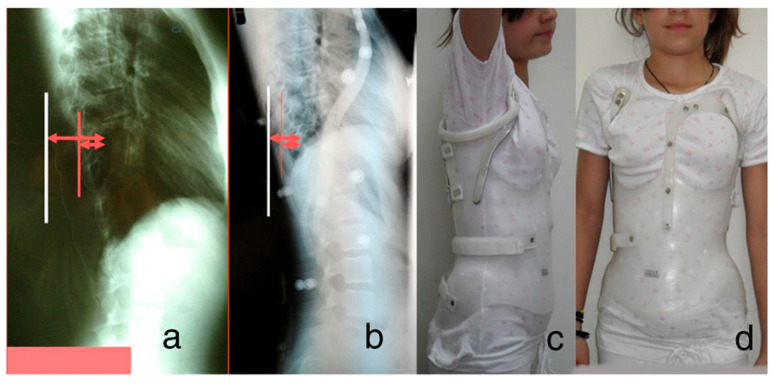 Figure 4
Peer Reviews
No public reviews on file for this paper yet. If you reviewed it on a platform where reviews are public (OpenReview, ICLR, NeurIPS, ICML), you can paste yours below so the community can read it here.
Videos
No videos yet. Explain this paper in a talk, walkthrough, or lecture? Add one.
Taxonomy
TopicsScoliosis diagnosis and treatment · Spinal Fractures and Fixation Techniques · Hip disorders and treatments