The Impact of Maladaptive Coping Styles on Psychological Outcomes in Tuberculosis Patients
Ion Papava, Ana-Maria Cristina Daescu, Liana Dehelean, Ana-Cristina Bredicean, Adrian Cosmin Ilie, Sorin Ursoniu, Mariana Bondrescu, Ion Radu, Andrei Daescu, Alexandru-Ioan Gaitoane, Cristian Oancea

TL;DR
This study explores how different coping styles affect psychological outcomes in tuberculosis patients, finding that problem-focused coping is linked to better recovery.
Contribution
The study identifies specific coping styles as predictors of psychological outcomes in TB patients and suggests tailoring mental health interventions accordingly.
Findings
Anxiety and depression significantly improved during hospitalization (PHQ9 and GAD7 scores both p < 0.001).
Problem-focused coping was associated with better psychological recovery, while social-support-focused coping was linked to persistent distress.
Age and marital status were significant predictors of problem-focused coping (β = 0.08, p = 0.008).
Abstract
Background/Objective: Tuberculosis (TB) is associated with significant psychological distress, including anxiety and depression, which may be influenced by coping styles. This study aimed to evaluate the relationship between coping mechanisms, psychological outcomes, and sociodemographic factors in TB patients. Methods: A total of 100 TB patients admitted to the Victor Babeș Clinical Hospital of Infectious Diseases and Pneumophtisiology, Timișoara, were assessed using the COPE questionnaire for coping styles and the GAD7 and PHQ9 scales for anxiety and depression. The Wilcoxon signed-rank test analyzed the changes in the psychological scores between admission and discharge. Results: Multinomial and linear regression analyses identified the predictors of coping styles based on psychological and sociodemographic factors. Anxiety and depression significantly improved during hospitalization…
Genes, proteins, chemicals, diseases, species, mutations and cell lines named across the full text — each resolved to its canonical identifier and authoritative record.
Click any figure to enlarge with its caption.
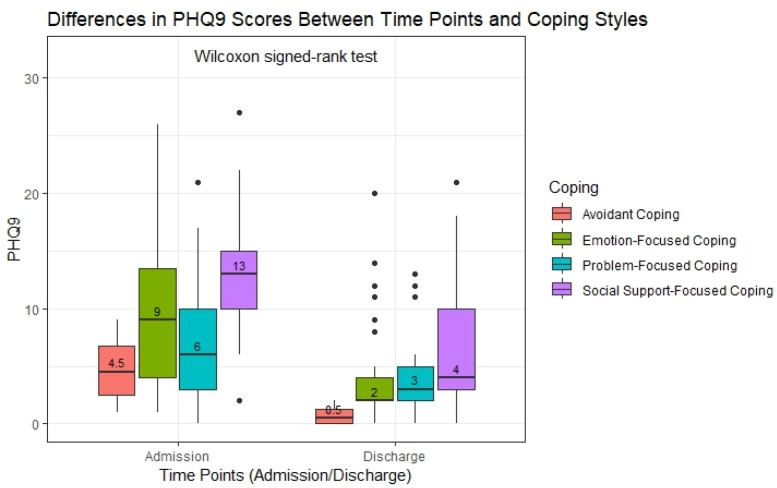 Figure 1
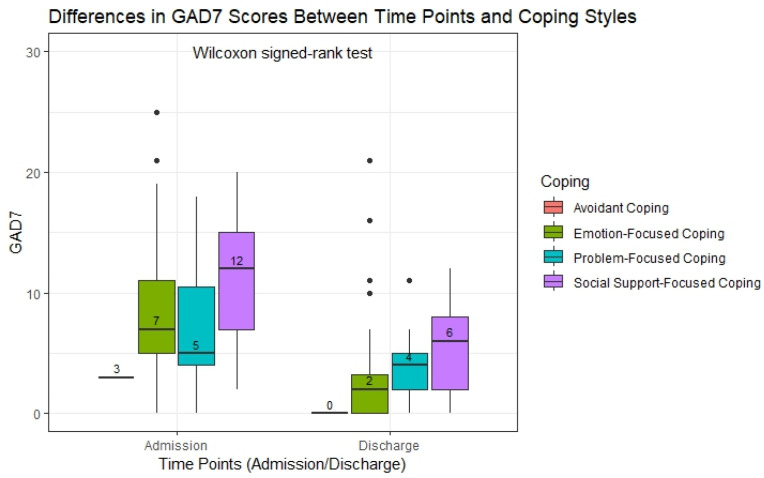 Figure 2
Peer Reviews
No public reviews on file for this paper yet. If you reviewed it on a platform where reviews are public (OpenReview, ICLR, NeurIPS, ICML), you can paste yours below so the community can read it here.
Videos
No videos yet. Explain this paper in a talk, walkthrough, or lecture? Add one.
Taxonomy
TopicsHealth and Well-being Studies · Perfectionism, Procrastination, Anxiety Studies · Family Caregiving in Mental Illness