Introduction to the RSC Advances themed collection on nanotubes: fabrication, properties, and applications
O. Durante, A. Di Bartolomeo

TL;DR
This paper introduces a collection of research on nanotubes, focusing on how they are made, their properties, and potential uses.
Contribution
The paper serves as an introduction to a themed collection highlighting recent advances in nanotube research.
Findings
The themed collection covers fabrication methods of nanotubes.
It explores the properties and applications of nanotubes in various fields.
Abstract
Ofelia Durante and Antonio Di Bartolomeo introduce the RSC Advances themed issue on nanotubes: fabrication, properties, and applications.
Genes, proteins, chemicals, diseases, species, mutations and cell lines named across the full text — each resolved to its canonical identifier and authoritative record.
Click any figure to enlarge with its caption.
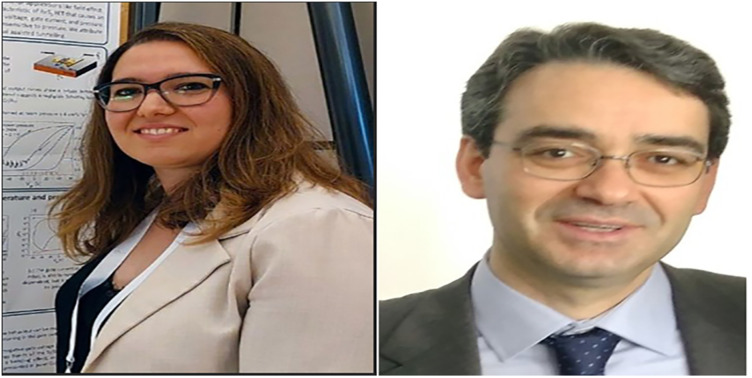 Figure 1
Peer Reviews
No public reviews on file for this paper yet. If you reviewed it on a platform where reviews are public (OpenReview, ICLR, NeurIPS, ICML), you can paste yours below so the community can read it here.
Videos
No videos yet. Explain this paper in a talk, walkthrough, or lecture? Add one.
Taxonomy
TopicsCarbon Nanotubes in Composites · Graphene research and applications · Nanotechnology research and applications
Over the past three decades, research on carbon nanotubes has led to the discovery of fundamental phenomena and has enabled the introduction of innovative applications in numerous fields, including nanoelectronics, gas sensors, photodetectors, telecommunications, quantum information, materials engineering, nanomechanics, nanofluidics, nanomedicine, pharmacology, catalysis, energy science and more.^1,2^ These successes have stimulated the exploration of nanotubes made from other materials, thereby expanding the range of applications and technological possibilities. In particular, the family of two-dimensional transition metal dichalcogenides, such as MoS_2_ and WS_2_, has opened up promising new opportunities. MoS_2_ and WS_2_ nanotubes have already been successfully synthesized and studied,^3–7^ while others, such as black phosphorus nanotubes, have been theoretically predicted but not yet experimentally confirmed. This shows how the field is constantly evolving and how new directions are always on the horizon. Research on nanotube synthesis and characterization methodologies is constantly advancing, and with it, increasingly advanced and specific applications are emerging.
This themed collection presents a selection of articles exploring new findings in the synthesis, characterization and application of nanotubes, with particular focus on carbon nanotubes and hybrid materials. These articles illustrate the current scientific challenges, discoveries and the latest applications, offering a comprehensive overview of the state of the art. Ranging from medicine to energy, from nanoelectronics to advanced sensors, the contributions demonstrate how nanotubes can have a significant impact in several fields.
Savargaonkar et al. (https://doi.org/10.1039/D4RA05038J) examine the use of copper-modified titanium nanotubes to enhance osteogenic differentiation of adipose tissue-derived stem cells. Research has shown that copper-modified nanotubes not only promote cell adhesion and proliferation, but also improve blood clotting properties, making them promising for applications in orthopaedic implants. This study underlines the importance of surface engineering of nanotubes for biomedical applications.
Wang et al. (https://doi.org/10.1039/D4RA00852A) study the crystallization of anodized TiO_2_ nanotube arrays, examining the morphological and structural evolution during annealing treatment. The results show how controlled crystallization leads to improved electrochemical properties, with potential applications in batteries and energy storage devices.
Chatree and Schulte (https://doi.org/10.1039/D3RA05688K) examine the use of carbon nanotube deposits on pencil graphite electrodes to improve analytical performance in voltammetry. This approach promises low-cost applications for advanced electroanalytical sensors, also suggesting their use in ecological biosensors and green platforms for chemical analysis.
The field of nanotubes is rapidly expanding, with a promising future for both fundamental research and practical applications. An interdisciplinary approach is crucial for progress in this field, which can be achieved through collaboration between physicists, chemists, materials scientists, life scientists, and engineers.
In conclusion, this themed collection provides an overview of the state of the art in the field of nanotubes, and opens the door to new and exciting directions for future research.
The reference list from the paper itself. Each links out to its DOI / PubMed record.
- 1De Volder M. F. L. Tawfick S. H. Baughman R. H. Hart A. J. Science 20133395355392337200610.1126/science.1222453 · doi ↗ · pubmed ↗
- 2Baughman R. H. Zakhidov A. A. De Heer W. A. Science 20022977877921216164310.1126/science.1060928 · doi ↗ · pubmed ↗
- 3Pelella A. Kumar A. Intonti K. Durante O. De Stefano S. Han X. Li Z. Guo Y. Giubileo F. Camilli L. Passacantando M. Zak A. Di Bartolomeo A. Small 202420240396510.1002/smll.20240396538994696 · doi ↗ · pubmed ↗
- 4Pelella A. Camilli L. Giubileo F. Zak A. Passacantando M. Guo Y. Intonti K. Kumar A. Di Bartolomeo A. Nanoscale 202517205220603964888010.1039/d 4nr 04877 f · doi ↗ · pubmed ↗
- 5Durante O. , Stefano S. D., Capista D., Passacantando M., Zak A., Giubileo F., Camilli L. and Sr A. D. B., in 2023 IEEE Nanotechnology Materials and Devices Conference (NMDC), IEEE, Paestum, Italy, 2023, pp. 676–680
- 6Grillo A. Passacantando M. Zak A. Pelella A. Di Bartolomeo A. Small 202016200288010.1002/smll.20200288032761781 · doi ↗ · pubmed ↗
- 7Remskar M. Mrzel A. Skraba Z. Jesih A. Ceh M. Demšar J. Stadelmann P. Lévy F. Mihailovic D. Science 20012924794811131348810.1126/science.1059011 · doi ↗ · pubmed ↗