Abdominal Sepsis With Pseudomonas aeruginosa After Oocyte Retrieval
Vashisht V Persad, Nigel Bascombe

TL;DR
A woman developed a rare and severe abdominal infection caused by Pseudomonas aeruginosa after undergoing egg retrieval for in-vitro fertilization.
Contribution
This case highlights a rare but serious complication of oocyte retrieval and emphasizes the importance of early diagnosis and treatment.
Findings
Intra-abdominal sepsis occurred following oocyte retrieval with Pseudomonas aeruginosa identified as the causative agent.
Diagnostic laparoscopy and peritoneal washout led to significant clinical improvement.
The rectouterine pouch was the most inflamed area, with no involvement of the appendix.
Abstract
We present a case of a 30-year-old female admitted to our hospital with signs of intra-abdominal sepsis, without a clear source, after undergoing controlled ovarian stimulation and egg retrieval. She failed to improve after 48 hours of broad-spectrum antibiotic therapy and subsequently underwent diagnostic laparoscopy. Intra-abdominal findings included diffuse pus and fibrinous exudates, without abscess formation. Peritoneal washout and prophylactic appendectomy were performed, with dramatic improvement post-operatively. Cultures of intra-abdominal pus grew Pseudomonas aeruginosa, and pathology confirmed that the appendix was not involved. Given that the rectouterine pouch appeared to be the most inflamed area and given the lack of other exposures, our case demonstrates a severe intra-abdominal infection following oocyte retrieval during in-vitro fertilization treatment. This is a rare,…
Genes, proteins, chemicals, diseases, species, mutations and cell lines named across the full text — each resolved to its canonical identifier and authoritative record.
Click any figure to enlarge with its caption.
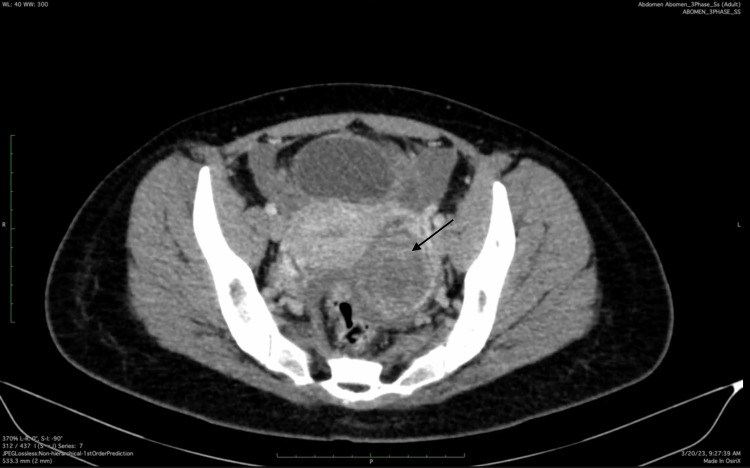 Figure 1
| Lab Parameter | Patient Result | Reference Range | ||
| Day of admission | Hospital day 2 | Hospital day 3 (pre-operation) | ||
| White blood cell (WBC) (k/mL) | 18.6 | 13.6 | 11.5 | 4.0-11.0 k/mL |
| Neutrophils (%) | 91.4 | 91.5 | 86.5 | 40-75% |
| Hemoglobin (g/dL) | 13.8 | 12.1 | 10.4 | 11.5-18.0 g/dL |
| Hematocrit (%) | 40.2 | 34.7 | 29.2 | 36-54% |
| Platelets (k/mL) | 226 | 148 | 114 | 150-400 k/mL |
| Sodium (mmol/L) | 137 | - | - | 137-145 mmol/L |
| Potassium (mmol/L) | 4.1 | - | - | 3.5-5.0 mmol/L |
| Chloride (mmol/L) | 114.5 | - | - | 98-110 mmol/L |
| Blood urea nitrogen (BUN) (mg/dL) | 6.98 | - | - | 7-17 mg/dL |
| Creatinine (mg/dL) | 0.56 | - | - | 0.57-1.11 mg/dL |
| C-reactive protein (CRP) (mg/L) | 367.24 | - | - | 0.2-3.0 mg/L |
Peer Reviews
No public reviews on file for this paper yet. If you reviewed it on a platform where reviews are public (OpenReview, ICLR, NeurIPS, ICML), you can paste yours below so the community can read it here.
Videos
No videos yet. Explain this paper in a talk, walkthrough, or lecture? Add one.
Taxonomy
TopicsReproductive tract infections research · Urinary Tract Infections Management · Reproductive Health and Contraception
Introduction
Worldwide, the use of assisted reproductive technologies (ART) is increasing, with a growing number of oocyte (egg) retrievals being performed for both infertility treatment [1] and oocyte cryopreservation [2]. In general, oocyte retrieval is considered a low-risk procedure, with major risks being intra-abdominal bleeding and ovarian hyperstimulation syndrome. Infection is rare, with a cited incidence of one in 500, but is a severe and potentially deadly complication. Infection usually is secondary to seeding with vaginal flora. Although Pseudomonas aeruginosa is occasionally found in healthy vaginal flora, this is, to our knowledge, the first reported case of abdominal sepsis caused by this organism following egg retrieval. While the overall risk of infection is low, our case highlights the importance of maintaining vigilance for this diagnosis in patients presenting with abdominal pain or other unusual symptoms after the procedure.
Case presentation
Our patient was a 30-year-old female nulligravida with no significant medical history who presented with worsening diffuse abdominal pain over the past few days. She also reported occasional low-grade fevers and chills at home prior to admission and associated nausea and decreased appetite. She had been undergoing assisted reproductive treatments due to male factor infertility and underwent transvaginal oocyte retrieval under ultrasound guidance following controlled ovarian stimulation approximately three weeks prior. Notably, immediate embryo transfer was not performed. She reported experiencing pelvic pain since the procedure, which initially responded to pain medication but never fully resolved. However, over the past 48 hours, her symptoms significantly worsened, with the pain progressing to involve the upper quadrants of the abdomen.
She had been seen at another facility approximately 12 hours prior to the presentation. At that time, her laboratory results were notable only for an elevated white blood cell (WBC) count of 12.6 K/mL, with 84% neutrophils. An abdominal ultrasound revealed enlarged ovaries with multiple cysts and trace abdominal free fluid, but no other abnormalities were noted (images unavailable).
On examination, her vital signs were significant only for mild tachycardia (heart rate 105-110 beats per minute, regular). She was normotensive (BP 106/77 mmHg) and afebrile (temperature 36.5°C). Her abdomen was distended and diffusely tender to palpation, with guarding and rigidity, findings consistent with peritonitis. Pelvic examination revealed mild cervical motion tenderness without vaginal or cervical discharge. A urine pregnancy test was negative. Laboratory results obtained on admission to our facility are shown in Table 1. Given the absence of a clear source of infection on imaging and clinical signs of abdominal infection, the patient was admitted for intravenous broad-spectrum antibiotics, fluid resuscitation, and observation. She was started on ceftriaxone and metronidazole.
On her second day of admission, there was no improvement in her abdominal pain or tachycardia. However, she maintained adequate urine output, and her WBC count had trended downward. Notably, she developed a diffuse urticarial rash, likely related to cephalosporin exposure. A computed tomography (CT) scan of the abdomen and pelvis was obtained, revealing enlarged ovaries with unilocular cysts and minimal pelvic free fluid (Figure 1). There were no signs of appendicitis, pyelonephritis, abscess, or bowel perforation. The patient was subsequently transitioned to intravenous moxifloxacin for 24 hours.
Computed tomography (CT) image taken on hospital day 3, showing an adnexal cyst with peripheral ring enhancement (arrow), suspicious for a tubo-ovarian abscess
However, no clinical improvement was observed after 48 hours of antibiotic therapy, despite a continued downward trend in WBC count. Therefore, on hospital day 3, a decision was made to perform a diagnostic laparoscopy and abdominal washout in conjunction with general surgery. Intraoperatively, frank pus was noted in all quadrants of the abdomen, with approximately 150 mL aspirated and sent for culture and sensitivity. The abdominal viscera appeared grossly normal, with no identifiable source of infection or abscess cavity. The rectouterine pouch and ovaries showed mild inflammatory changes, but no discrete abscess was identified. Given the absence of a clear source, a prophylactic appendectomy was performed. The abdomen was irrigated with sterile saline, and a drain was placed.
Postoperatively, the patient showed marked clinical improvement, including resolution of abdominal pain, improved appetite, and normalization of heart rate. She was discharged on postoperative day 1 with oral moxifloxacin. At follow-up three days later, the drain was removed after minimal serosanguinous output was noted. Pus culture grew Pseudomonas aeruginosa, which was sensitive to fluoroquinolones but resistant to piperacillin/tazobactam. Pathology of the appendix revealed fibrinous exudates on an otherwise normal specimen. At a subsequent follow-up on postoperative day 10, the patient reported near-complete resolution of abdominal pain, with no complications noted.
Discussion
The Centers for Disease Control and Prevention (CDC) estimates that 2.4% of pregnancies in the US today are the result of assisted reproductive technology (ART) [1], representing a three-fold increase since 1996. To put this in perspective, according to data from the Society for Assisted Reproductive Technology (SART), the number of women undergoing egg freezing in the US increased from 475 in 2009 to more than 17,000 in 2020. Multiple factors contribute to the rising rate of ART, including the later average age of childbearing and an increased interest in oocyte cryopreservation [2]. Currently, it is estimated that 1 in 8 couples in the US experience infertility [3]. Oocyte retrieval itself involves controlled ovarian stimulation and triggering, followed by egg retrieval via needle aspiration of the follicular cysts, usually under ultrasound guidance and sedation or anesthesia. This procedure is typically performed transvaginally, though a transabdominal approach may be used, particularly in cases of distorted anatomy.
Though considered a safe, low-risk procedure, known complications include vaginal bleeding, intra-abdominal bleeding, intra-abdominal organ injury, ovarian hyperstimulation syndrome, and even adnexal torsion and vertebral osteomyelitis [4,5]. Pelvic infection remains a rare but serious complication of transvaginal oocyte retrieval, with a reported incidence of less than 1% in multiple large series [6-8]. The most likely mechanism by which infection occurs is the transvaginal passage of the needle, which can introduce vaginal microbiota into the sterile peritoneal cavity. Another possibility is inadvertent puncture of the bowel. Risk factors for pelvic infection include a history of prior pelvic inflammatory disease, adnexal adhesions, or the presence of endometriomas [9-12]. Infections are typically polymicrobial [13] and severe, warranting the use of broad-spectrum antibiotics. In our case, cultures grew Pseudomonas aeruginosa, which is a unique finding for this condition. Pseudomonas species have only been reported in a handful of pelvic inflammatory disease cases, typically associated with an intrauterine device [14,15], which was not present in our patient. Initially, the patient did not respond to standard antibiotic therapy for pelvic inflammatory disease; however, once the antibiotic coverage was broadened to include Pseudomonas, the patient showed significant clinical improvement.
Given the low risk of infection, the American College of Obstetricians & Gynecologists (ACOG) recommends against routine antibiotic prophylaxis [16]. However, aside from the immediate morbidity and mortality risks associated with sepsis, patients who develop pelvic infections after oocyte retrieval are at an increased risk of implantation failure [17]. Those who do progress to pregnancy have a higher risk of adverse pregnancy outcomes, such as pregnancy loss, sepsis, and spontaneous preterm birth [18]. Due to these potential complications, clinicians must remain vigilant and maintain a high index of suspicion in patients presenting with symptoms of pelvic inflammatory disease after oocyte retrieval. Once suspected, we recommend a low threshold for initiating antibiotic therapy. Imaging is necessary to rule out abscesses or other sources of infection, and blood cultures should be obtained in severe cases. If antibiotic therapy fails after 24-48 hours, interventional procedures or surgical management should be considered.
Conclusions
Clinicians must maintain a high index of suspicion for infection in patients presenting with abnormal symptoms after egg retrieval, and a low threshold for initiating broad-spectrum antibiotic therapy, including coverage for atypical organisms. Timely surgical or interventional radiology management is indicated for non-responders to minimize complications.
The reference list from the paper itself. Each links out to its DOI / PubMed record.
- 1A third of U.S. adults say they have used fertility treatments or know someone who has 1 2022 2018 https://www.pewresearch.org/fact-tank/2018/07/17/a-third-of-u-s-adults-say-they-have-used-fertility-treatments-or-know-someone-who-has/
- 2SART National Summary Report 1 2022 2021 https://www.sartcorsonline.com/rpt CSR_Public Mult Year.aspx
- 3Infertility and impaired fecundity in the United States, 1982-2010: data from the National Survey of Family Growth Natl Health Stat Rep 2 2018 Chandra A Copen CE Stephen EH 119672013 https://www.cdc.gov/nchs/data/nhsr/nhsr 067.pdf 24988820 · pubmed ↗
- 4Perioperative and post-operative complications of transvaginal ultrasound-guided oocyte retrieval: prospective study of 1000 oocyte retrievals Hum Reprod Ludwig AK Glawatz M Griesinger G Diedrich K Ludwig M 323532402120061687737310.1093/humrep/del 278 · doi ↗ · pubmed ↗
- 5A review of complications following transvaginal oocyte retrieval for in-vitro fertilization Hum Fertil (Camb) El-Shawarby S Margara R Trew G Lavery S 127133720041522376210.1080/14647270410001699081 · doi ↗ · pubmed ↗
- 6Clinical complications during in-vitro fertilization treatment Hum Reprod Bergh T Lundkvist O 62562671992163998010.1093/oxfordjournals.humrep.a 137708 · doi ↗ · pubmed ↗
- 7Complications of transvaginal ultrasound-directed follicle aspiration: a review of 2670 consecutive procedures J Assist Reprod Genet Bennett SJ Waterstone JJ Cheng WC Parsons J 7277101993849968310.1007/BF 01204444 · doi ↗ · pubmed ↗
- 8Severe abdominal complications after transvaginal ultrasonographically guided retrieval of oocytes for in vitro fertilization and embryo transfer Fertil Steril Dicker D Ashkenazi J Feldberg D 13131315591993849578410.1016/s 0015-0282(16)55997-4 · doi ↗ · pubmed ↗