Fixed points of multivalued convex contractions with application
Abdul Rahim Khan, Hamed H. Al-Sulami, Muhammad Rashid, Faiza Shabbir, Rizwan Anjum, Rizwan Anjum, Rizwan Anjum

TL;DR
This paper extends fixed point theory for convex contractions in b-metric spaces and applies it to solve a nonlinear integral equation.
Contribution
The paper introduces new fixed point results for multivalued convex contractions and applies them to a nonlinear Fredholm integral equation.
Findings
Fixed point outcomes are established for single-valued convex contraction mappings in b-metric spaces.
A new result for multivalued convex contractions is derived, analogous to Nadler’s fixed point theorem.
The results are applied to solve a nonlinear Fredholm integral equation using a Chatterjea convex contraction.
Abstract
In this work, we establish fixed point outcomes for single- valued convex contraction type mappings in the context of a b-metric space. Some of the new results are extended for a multivalued convex contraction and an F-convex contraction. Thereby, an analogue of the famous Nadler’s fixed point theorem for a multivalued convex contraction mapping is obtained. The relation among various contractions is presented in a diagram for an insight in this area of investigations. We apply a special case of Theorem 2.11, to solve a nonlinear Fredholm integral equation for a Chatterjea convex contraction.
Genes, proteins, chemicals, diseases, species, mutations and cell lines named across the full text — each resolved to its canonical identifier and authoritative record.
Click any figure to enlarge with its caption.
 Figure 1
 Figure 2
 Figure 3
 Figure 4
 Figure 5
 Figure 6
 Figure 7
 Figure 8
 Figure 9
 Figure 10
 Figure 11
 Figure 12
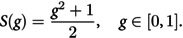 Figure 13
 Figure 14
 Figure 15
 Figure 16
 Figure 17
 Figure 18
 Figure 19
 Figure 20
 Figure 21
 Figure 22
 Figure 23
 Figure 24
 Figure 25
 Figure 26
 Figure 27
 Figure 28
 Figure 29
 Figure 30
 Figure 31
 Figure 32
 Figure 33
 Figure 34
 Figure 35
 Figure 36
 Figure 37
 Figure 38
 Figure 39
 Figure 40
 Figure 41
 Figure 42
 Figure 43
 Figure 44
 Figure 45
 Figure 46
 Figure 47
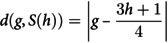 Figure 48
 Figure 49
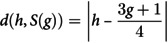 Figure 50
Peer Reviews
No public reviews on file for this paper yet. If you reviewed it on a platform where reviews are public (OpenReview, ICLR, NeurIPS, ICML), you can paste yours below so the community can read it here.
Videos
No videos yet. Explain this paper in a talk, walkthrough, or lecture? Add one.
Taxonomy
TopicsFixed Point Theorems Analysis
1 Preliminaries and introduction
The exploration of fixed point theory represents a fundamental and highly impactful area in modern mathematics. The main theme in this subject is the celebrated principle of Banach contraction, which asserts that there is a unique fixed point for each contraction mapping on a complete metric space. The proof of this principle hinges on the iterates of the contraction and the principle itself has applications in a wide range of fields like partial differential equations, integral equations, image processing, optimization and artificial intelligence. In view of paramount importance of this principle, Browder and Petryshyn [7], Istratescu [11] and Berinde [2] have introduced and studied new classes of mappings enjoying higher powers of the mapping; in particular, Istratescu has coined the term “convex contraction”.
We now set out to develop results for convex contraction type single-valued as well as multi-valued mappings in the context of b-metric spaces.
1.1 Single-valued mappings
Definition 1.1: Consider a nonempty set G and a mapping . A point is referred to as a fixed point of S if it satisfies . The set consisting of all fixed points of the mapping S is represented by .
Definition 1.2: Let (G, d) be a complete metric space. A map is known as Istratescu convex contraction [11] if
where a and b are constants which satisfy 0 < a, b < 1 and .
Remark 1.3: ([17],Example 2.1) (i) If b = 0, the convex contraction condition reduces to the well-known Banach contraction condition:
subject to a change of notation.
(ii) If a = 0, the convex contraction condition reduces to the classial "asymptotic” contraction:
which confirms the presence of a fixed point, even when the number 2 is replaced with any arbitrary integer n.
Example 1.4: [17] Let be equipped with the usual metric of . Define by
Then S is not a Banach contraction, and . But S is a convex contraction, because for , we have
with and .
Definition 1.5: [16] A mapping is defined as a generalized convex contraction if there exist a function and constants satisfying , so that the subsequent condition is satisfied:
If a = 0 and in Definition 1.5, then it becomes asymptotic contraction condition of Remark 1.3.
Definition 1.6: [9] A continuous map on a complete metric space (G,d) is referred to as a two-sided convex contraction if there are constants and the following inequality is satisfied:
for all and .
Definition 1.7. [10] Let S be a mapping from a metric space G into itself. The set
is referred to as the orbit of S starting at g. We say that S is orbitally continuous at a point if for every sequence , with , the condition
It is important to note that every continuous self-map on a metric space is orbitally continuous, the converse does not necessarily hold [6].
Definition 1.8: [9] Let (G, d) denote a complete metric space. A continuous mapping is termed a Chatterjea two-sided convex contraction if there are constants and the subsequent inequality is satisfied:
for any and .
We now provide an example of a Chatterjea two-sided convex contraction.
Example 1.9: Let with the metric . Define by:
Let us calculate :
where
Since the sum of the coefficients is:
therefore, S is a Chatterjea two-sided convex contraction.
Definition 1.10: [9] A mapping (complete metric space) is called Hardy and Rogers convex contraction if there exist positive integers and the subsequent inequality is satisfied:
for any and .
It is remarked that some of the above mentioned classes of convex contraction type mappings are independent of each other [9, 11]. In case, the constants are allowed to be zero in Definition 1.10, then it reduces to Istratescu convex contraction (Definition 1.2).
Definition 1.11: [16] Let (metric space). For any given , a point is called an approximate fixed point of S if it fulfills the condition:
Definition 1.12: [7] A map S defined on a metric space (G, d) is termed asymptotically regular at any point if
where denotes the n-th iterate of S at g.
Lemma 1.13: ([16],Lemma 2.1) Suppose that (G, d) is a metric space and S is an asymptotically regular mapping on G. Then S has an approximate fixed point.
Definition 1.14: [14] Consider the mapping that adheres to the subsequent properties:
(a) The function F is strictly increasing.(b) A sequence of positive real numbers satisfies if and only if .(c) If there exists a constant , then .
The class of functions F that satisfies conditions (a)-(c) is represented by .
Definition 1.15: An F-contraction is a self-map S defined over a metric space G if there is a function and a constant such that
for all with d(Sg, Sh) > 0.
Definition 1.16: [26] Let F be a mapping that meets requirements (a)–(c). A funtion is known as an F-Kannan mapping if the following hold:
(K1) (K2) such that
for all , with .
Example 1.17: ([26],Lemma 12) Consider a metric space (G, d) and F-Kannan mapping . Then,
So an F-Kannan mapping is asymptotically regular.
Here are some well known results for convex contraction type mappings.
Theorem 1.18: ([11], Theorem 1.2) Every convex contraction mapping defined on a complete metric space has a unique fixed point.
Theorem 1.19: ([5], Theorem 2.1) If S is a self-map on a complete metric space (G, d), , and then we have
Suppose that S is k-continuous for [12]. Then S admits a unique fixed point.
Theorem 1.20: ([6],Theorem 2.1) Let S be a self-map of a complete metric space (G, d) such that for each ;
where the constants are non-negative and their sum satisfies . The map S has a unique fixed point if it is either orbitally continuous or k-continuous.
Theorem 1.21: ([9], Theorem 2.5) Let (G, d) be a complete metric space and S be a self-map on G satisfying the condition:
for all , where and . If S is orbitally continuous, then S admits a unique fixed point in G. Moreover, for any initial point , the Picard iterations sequence , defined by for , converges to a fixed point of S in G.
1.2 Multivalued mappings
Definition 1.22: Let (G, d) be a metric space and CB(G) represent the family of closed and bounded subsets of G. A mapping has g0 as it’s fixed point if .
Definition 1.23 [12] A map S on a metric space (G, d) is known as asymptotically regular at a point if
H is the Hausdorff metric given by
,
where .
Definition 1.24: Consider the metric space (G, d). A mapping is called convex contraction if
for all , where a, b are the constants that fulfill 0 < a, b < 1 and .
Definition 1.25: Let (G, d) be a metric space. A mapping is called Chatterjea two-sided convex contraction if the following holds:
for every , and .
Definition 1.26: Let (G, d) be a complete metric space and be a mapping. The mapping S is said to be a weak convex contraction if it satisfies:
for all , , and
Definition 1.27: [2] Let (G, d) be a metric space and be a multivalued map. If and , then S is a multivalued weak contraction if
holds for each pair of points .
For ease of reference, we provide proof of the result to follow.
Lemma 1.28: ([2], Lemma 1) Consider a metric space (G, d), two subsets and a fixed constant q > 1. Then, for each , there exists an element such that
Proof: For , the result holds for b = a with .
Set where k < 1.
According to the definitions of d(a, B) and H(A, B), for all , there exists an element such that
Putting the selected value of in the above inequality, we get the result with q = k^−1^.
Fixed point results for single-valued asymptotically regular and convex contraction type mappings have been considered by Berinde and Pacurar [3], Bisht and Hussain [4] and Khan and Oyetunbi [12] while Khan and Oyetunbi [13], Karakaya and Sekman [15] and Sgroi and Vetro [23] have studied these results for multivalued mappings.In this paper, we will extend Theorem 1.21 for a Chatterjea two-sided convex contraction in a b-metric space. On the one hand, we apply our new result to solve a non-linear Fredholm integral equation and on the other hand, we find it’s multivalued version. A fixed point result for generalized convex contraction on a b-metric space is proved in Theorem 2.5. We established a multivalued version of Theorem 1.18, the fundamental result of Istratescu for a convex contraction.
Recently, Nallaselli et al [19], Özkan et al [21] and Ricinschi et al [22] have studied convex contractions on metric spaces and b-metric spaces. It is remarked that our results and techniques are different from their ones and are more focused on the development of fixed point results for a multivalued convex contraction.
2 Fixed points results
2.1 Single-valued mappings
The concept of a b-metric space was presented by Czerwik [8] as follows:
Definition 2.1: Let G be a nonempty set and be a fixed real number. A function is said to be a b-metric if, for all , the subsequent conditions hold:
(b_1_) , g = h(b_2_) (b_3_)
The triplet (G, d, s) is then referred to as a b-metric space.
Note that when s = 1, a b-metric space becomes a metric space. But, in general, the converse does not hold.
We extend Theorem 2.5 in [9] for b-metric spaces as follows.
Theorem 2.2: Let (G, d, s) be a complete b-metric space with coefficient and S be a self-map on G satisfying the condition;
for all , , and .
If S is orbitally continuous, then it admits a unique fixed point in G. For any initial point , the sequence , defined recursively by for , converges to the unique fixed point of S in G.
Proof: Let be an arbitrary point. Define a sequence {gn} by
for all .
Put g = g0, h = S(g0) in (2), we get
Now substitute g = S(g0) and in (2), and get:
By continuing this process, we obtain:
We now demonstrate that {gn} forms a Cauchy sequence in G. For m < n, we get
As , in the view of , .
Therefore is a Cauchy sequence. Since G is complete, there exists a point such that as . So applying orbital continuity of S, we get
This shows that g is a fixed point of S.
For it’s uniqueness, assume on the contrary that u is another fixed point of S such that .
As , so d(g,u)=0 implies g = u which is a contradiction. Hence S has a unique fixed point in G.
An extension of Corollary 1 in [1] for b-metric spaces is presented below.
Corollary 2.3: Let S be a self-map on a complete b-metric space satisfying (2) in Theorem 2.2 with . Then both S and S^2^ have a unique common fixed point (i.e. S(z) = S^2^(z) = z).
Proof: By Theorem 2.2, there exists a unique fixed point z of S and so .
Now, we aim to show that S and S^2^ have a unique common fixed point. Clearly, . Suppose and . Then S^2^(u) = u.
Assume, for a contradiction, that . Since S^2^(u) = u, therefore by (2), applied to the pair u and ,we get
Now, if , the above inequality implies that is smaller than itself, which is a contradiction. Thus, , and hence . Therefore, F(S) = F(S^2^), and since z is the only fixed point of S, it must also be the only fixed point of S^2^. This shows that both S and S^2^ possess a unique common fixed point.
Definition 2.4 [16] Consider a self-map S defined on a nonempty set G, along with a function . S is -admissible if for ,
We now extend ([16],Theorem 3.1) in the framework of b-metric spaces.
Theorem 2.5: Consider a b-metric space (G, d, s) with , S a generalized convex contraction on G characterized by the base mapping . Assume that S satisfies the -admissibility condition and that there exists a point such that . Under these assumptions, S possesses an approximate fixed point. Furthermore, if S is continuous and (G, d, s) is complete, then S has a fixed point.
Proof: Let be such that . Define {gn} in G as before to get
If for some n, the proof is complete. Otherwise, assume . Given that S is -admissible, we have the condition for all n. Let and .
Then .
Now put g = g0, h = S(g0) in (1) and get
Again put g = Sg0 and in (1) to obtain.
Similarly,
And also,
By continuing this procedure, we get
where m = 2l or m = 2l + 1. Consequently, as . This implies that S is asymptotically regular. By Lemma 1.13, S possesses an approximate fixed point. Now, suppose that S is continuous, and the space (G, d) is a complete b-metric space. To demonstrate that {gn} is a Cauchy sequence, consider m and n as positive integers such that m < n. Let m = 2l and n = 2p, where and .
For m = 2l + 1 and n = 2p, where and , with the condition that , we obtain:
Similarly, let m = 2l + 1 and n = 2p + 1, where and .
For , in all the cases, we obtain (in view of ). That is, {gn} is a Cauchy sequence in G. As G is complete, so there exists such that as . If S is continuous, then , i.e., . Hence Sz = z.
Now we need to prove that S has a unique fixed point in G. Assume, on the contrary that is a fixed point of S such that .
Taking z = g and z^*^ = h in (1), we get by hypothesis
In view of (1–a–b) < 0, d(z,z^^) = 0.Hence z = z^^, which is a contradiction. Hence S has a unique fixed point in G.
Lemma 2.6: ([18], Lemma 4) Let and {gn} represent a sequence in a b-metric space (G, d, s) such that
for all , where and
Then {gn} is Cauchy.
The following result improves ([18],Theorem 1).
Theorem 2.7: Let be a convex contraction of order k defined on a complete b-metric space (G, d, s), such that
for all , where ai is non-negative and the sum satisfies . If S exhibits orbital continuity, then S admits a unique fixed point in G.
Proof Let be arbitrary. Define a sequence {gn}, as before, to get
Now,
for every , where ai is non-negative, and the sum .
By Lemma 2.6, the sequence {gn} forms a Cauchy sequence in the complete space G. Hence, there exists a point such that as . Furthermore, since , the orbital continuity of S ensures that . Consequently, we have , implying that z is a fixed point of S, and uniqueness of z follows as before.
2.2 Multi-valued mappings
Lemma 2.8: [25] Let (G, d, s) be a b-metric space and denotes the class of all nonempty, closed, and bounded subsets of G. For any , the following are satisfied:
Definition 2.9 (cf. [25],Definition 2.4) Let G be an arbitrary nonempty set and be a fixed real number. A strong b-metric on G is a function , satisfying the following axioms for :
(a) ;(b) ;(c) ;(d) .
The triplet denotes a strong b-metric space.
We establish a multivalued version of Theorem 1.18, a classical result of Istratescu [11].
Theorem 2.10: Let (G, d,s) be a complete strong b-metric space and be an asymptotically regular convex contraction. Then there exists such that .
Proof: Let . Then is a closed and bounded subset of G. Furthermore, let and be a closed and bounded subset of G. By Lemma 2.8 (2), there exists such that
Using the definition of convex contraction and asymptotic regularity of S, we get
Now, is a closed and bounded subset of G, so there exists such that
As before,
Similarly,
Using (6), we have
In general,
For convenience, we set
so the above result can be written as
For , , we have
Using (8), we get
In the limiting case, when ,
So {gn} is a Cauchy sequence in G. By completeness of G, there exists such that . Now we will prove that h is a fixed point of S.
By Lemma 2.8 (1),
In the limiting case, when ,
Now Sh is closed and so . Hence, h is a fixed point of S as desired.
Here is a multivalued version of Theorem 2.2 for a convex contraction (see also [20],[24],[27]).
Theorem 2.11: Let (G, d) be a complete metric space and let be a multivalued F-convex contraction satisfying:
for all , and . Then S has a fixed point.
Proof: Let be an arbitrary point of G and choose . If , then g1 is a fixed point of S and nothing to prove.
Assume that . Then .
Let g = g0, h = S(g0) in (9) and set ,
Since F is strictly increasing and is greater than zero, (10) becomes
where . Substituting g = S(g0), in (9),we have
Given that F is strictly increasing and
Similarly, we can show that
By following this process, we obtain
As F is strictly increasing and is greater than zero, we have
For m > n, we need to show {gn} is a Cauchy sequence in G. Using the triangular inequality, we obtain
This demonstrates that the sequence {gn} is Cauchy in G, implying the existence of an element such that
Now we have to prove that z is a fixed point of S. As S is orbitally continuous, so we get
This shows that z is a fixed point of S.
Definition 2.12 Let (G, d) be a complete metric space. A mapping is a weak convex contraction if it satisfies
for all and and and
Here is an extention of Theorem 3 of Berinde and Berinde [2] for a weak convex contraction.
Theorem 2.13 Let (G, d) be a complete metric space and a multivalued weak convex contraction. Then
(i) (ii) For every initial point , there exists a sequence generated by the operator S that converges to a fixed point u of S, for which the following estimates hold:
for a certain real number h < 1.
Proof: (i) Let q > 1. Let and . We consider two cases based on the Hausdorff distance between the iterates of S.
Case 1: If , then .
Now implies that (cf. Remark 1.3(i)). Therefore gives and the proof is complete.
Case 2: Let . By Lemma 1.28, there exists such that .
We take such that
Hence
If , then , i.e., .
Assume that . Again by Lemma 1.28, there exists such that
In this way, we construct an orbit at g0 for S satisfying
By (14), we obtain inductively
Hence
Similarly, by (15), we have
Considering , it can be concluded that the sequence constitutes a Cauchy sequence. Given that is a complete metric space, it follows that the sequence converges. Let
Then by (*) in the proof of Lemma 1.28, we get
Letting in (19) and using the fact that imply by (18) that , as . So we get
As Su is closed, so .
(ii) Let in (17). Then approaches 0 and so we get
This proves (12).
In the same way when in (16), we get
At the end of this section, we present relation among various concepts, used in this work in the form of a diagram:
1- Contraction
2- Convex Contraction
3- Hardy and Rogers Convex Contraction
4- Weak Convex Contraction
5- Generalized Convex Contraction
6- F-Contraction
2.3 Diagram
Here the arrow stands for the inclusion.
3 Application
Let represent the vector space of all continuous real-valued functions on [a, b] endowed with the usual metric. Then (G, d) is a complete metric space.
The non-linear Fredholm integral equation is given as follows:
where , and are continuous and v(t) is a given function in G.
The solution of non-linear Fredhalm integral equation has been obtained for Hardy and Rogers convex contraction in [9]. We apply our Theorem 2.2 to solve non-linear Fredhalm integral equation for a Chatterjea convex contraction.
Theorem 3.1: Let be the equipped with the usual metric.
Assume that (i) is given by
(ii) For , with and , we have
If S is orbitally continuous, the integral operator defined by equation (22) possesses a unique solution . Moreover, for any initial value , it holds that for all . Consequently, we have
Proof
Let be an arbitrary point. Define a sequence {gn} in G by for all . By (22), we have,
We must demonstrate that S is a Chatterjea two sided convex contraction on C[a, b]. Use of (22) and (23) yields
where for all with .
Since G is a complete metric space, therefore the iterative process converges to a specific point (i.e. ). By orbital continuity of S, we can establish that z is a fixed point of S. Thus all the conditions of Theorem 2.2 are satisfied and so by it’s conclusion the non-linear Fredholm integral operator S defined by (22) has a unique solution.
Now we provide an example to demonstrate the application of Theorem 3.1
Example 3.2:
Let us consider the operator defined as:
where , and . The kernel is given by:
Let us choose the following constants:
which satisfy the requirement:
Let . We must demonstrate that:
Substituting the kernel , we get:
Substituting the expressions for and , we have:
By the given nature of g and h, the subsequent inequality holds:
So S satisfies (23). The operator S being continuous is orbitally continuous.
Thus, all the requirements of Theorem 3.1 are satisfied and so the operator S defined by (24) has a unique solution.
4 Conclusion
In this work, we have proved fixed point theorems for single-valued convex contraction mappings in b-metric spaces. Generalizing, some of these results for multivalued convex contraction mappings, an analogue of well-known theorems of Nadler and Istratescu are obtained. A result for an F-convex contraction is also established. A diagram is included here to provide an insight for the relationship among various convex contractions. A special case of Theorem 2.11 is applied to solve a non-linear Fredholm integral equation in the context of a Chatterjea two-sided convex contraction.
5 Open problems
Establish Theorems 2.2, 2.5, 2.10 and 2.13 for common fixed points and coincidences of convex contractions.
The reference list from the paper itself. Each links out to its DOI / PubMed record.
- 1Alghamdi MA, Alnafei SH, RadenovićS, Shahzad N. Fixed point theorems for convex contraction mappings on cone metric spaces. Math Comput Model. 2011;54(9–10):2020–6. doi: 10.1016/j.mcm.2011.05.010 · doi ↗
- 2Berinde M, Berinde V. On a general class of multi-valued weakly Picard mappings. J Math Anal Appl. 2007;326(2):772–82.
- 3Berinde V, Pacurar M. Fixed point theorems for Chatterjea type mappings in Banach spaces. J Fixed Point Theory Appl. 2021;23:10–1007. doi: 10.1007/s 11784-021-00800-7 · doi ↗
- 4Bisht RK, Hussain N. A note on convex contraction mappings and discontinuity at fixed point. J Math Anal. 2017;8:90–6.
- 5Bisht RK, RakočevićV. Fixed points of convex and generalized convex contractions. Rendiconti del Circolo Matematico di Palermo Series 2. 2020;69:21–8.
- 6Bisht RK, Özgür N. Discontinuous convex contractions and their applications in neural networks. Comput Appl Math. 2021;40:11.
- 7Browder FE, Petryshyn WV. The solution by iteration of nonlinear functional equations in Banach spaces. Bull Am Math Soc. 1966;72:571–5.
- 8Czerwik S. Contraction mappings in b-metric spaces. Acta Math Inform Univ Ostrav. 1993;1(1):5–11.