Pest categorisation of Selenaspidus articulatus
Antonio Vicent Civera, Paula Baptista, Anna Berlin, Elisavet Chatzivassiliou, Jaime Cubero, Nik Cunniffe, Eduardo de la Peña, Nicolas Desneux, Francesco Di Serio, Anna Filipiak, Paolo Gonthier, Beata Hasiów‐Jaroszewska, Hervé Jactel, Blanca B. Landa, Lara Maistrello

TL;DR
This paper assesses the risk of Selenaspidus articulatus, a scale insect, becoming a pest in the EU, highlighting its potential economic impact and spread.
Contribution
The study provides a comprehensive pest categorization of Selenaspidus articulatus for the EU, evaluating its potential as a quarantine pest.
Findings
Selenaspidus articulatus is polyphagous and can affect important EU crops like avocado and citrus.
The pest could establish in southern EU countries and greenhouses in colder regions.
Phytosanitary measures are available to mitigate its entry and spread in the EU.
Abstract
Following the commodity risk assessment of Jasminum polyanthum unrooted cuttings from Uganda, in which Selenaspidus articulatus (Hemiptera: Diaspididae) was identified as a pest of possible concern, the European Commission requested the EFSA Panel on Plant Health to conduct a pest categorisation of S. articulatus for the territory of the European Union (EU). S. articulatus originates probably from sub‐Saharan Africa. It is present in Africa, North and South America, as well as in parts of Asia and Oceania. Within the EU, the pest has been recorded in the Netherlands in greenhouses on ornamental plants, however, it appears not to be able to establish outside of a greenhouse under the environmental conditions of the Netherlands. S. articulatus is polyphagous, feeding on plants assigned to 158 genera in 68 plant families. Important crops of the EU that may be affected by this insect are…
Genes, proteins, chemicals, diseases, species, mutations and cell lines named across the full text — each resolved to its canonical identifier and authoritative record.
Click any figure to enlarge with its caption.
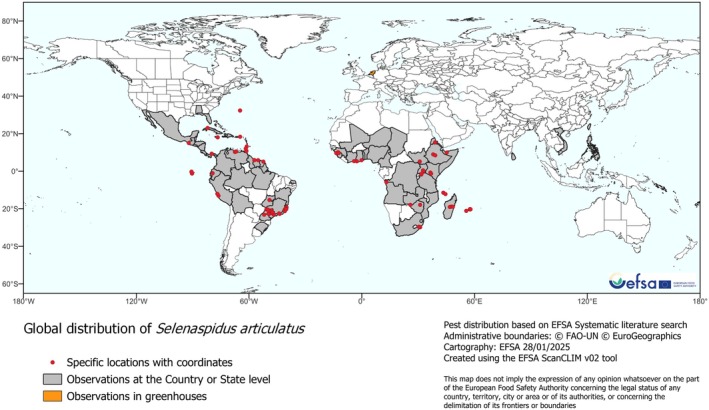 FIGURE 1
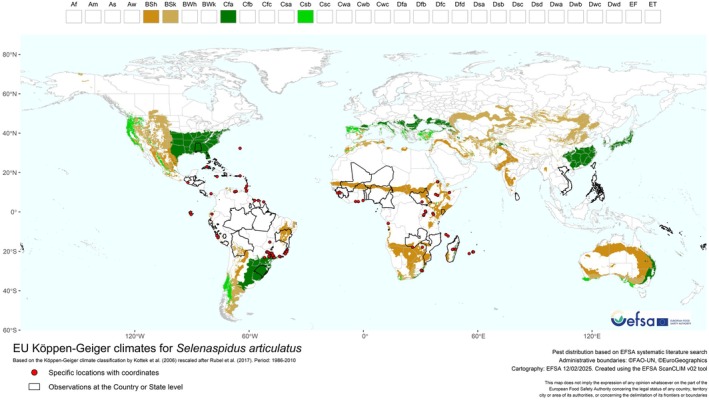 FIGURE 2
| Criterion of pest categorisation | Criterion in regulation (EU) 2016/2031 regarding union quarantine pest (article 3) |
|---|---|
|
| Is the identity of the pest clearly defined, or has it been shown to produce consistent symptoms and to be transmissible? |
|
|
Is the pest present in the EU territory? If present, is the pest in a limited part of the EU or is it scarce, irregular, isolated or present infrequently? If so, the pest is considered to be not widely distributed |
|
| Is the pest able to enter into, become established in and spread within, the EU territory? If yes, briefly list the pathways for entry and spread |
|
| Would the pests' introduction have an economic or environmental impact on the EU territory? |
|
| Are there measures available to prevent pest entry, establishment, spread or impacts? |
|
| A statement as to whether (1) all criteria assessed by EFSA above for consideration as a potential quarantine pest were met and (2) if not, which one(s) were not met |
| List of plants, plant products and other objects whose introduction into the Union from certain third countries is prohibited | |||
|---|---|---|---|
| Description | CN code | Third country, group of third countries or specific area of third country | |
| 8. | Plants for planting of […] |
ex 0602 10 90 ex 0602 20 20 ex 0602 20 80 ex 0602 40 00 ex 0602 90 41 ex 0602 90 45 ex 0602 90 46 ex 0602 90 47 ex 0602 90 48 ex 0602 90 50 ex 0602 90 70 ex 0602 90 91 ex 0602 90 99 | Third countries other than: Albania, Andorra, Armenia, Azerbaijan, Belarus, Bosnia and Herzegovina, Canary Islands, Faeroe Islands, Georgia, Iceland, Liechtenstein, Moldova, Monaco, Montenegro, North Macedonia, Norway, Russia (only the following parts: Central Federal District (Tsentralny federalny okrug), Northwestern Federal District (Severo‐Zapadny federalny okrug), Southern Federal District (Yuzhny federalny okrug), North Caucasian Federal District (Severo‐Kavkazsky federalny okrug) and Volga Federal District (Privolzhsky federalny okrug)), San Marino, Serbia, Switzerland, Türkiye, Ukraine and the United Kingdom |
| 10. | Plants of |
0602 10 10 0602 20 10 ex 0604 20 90 ex 1404 90 00 | Third countries other than Switzerland |
| 11. | Plants of |
ex 0602 10 90 ex 0602 20 20 0602 20 30 ex 0602 20 80 ex 0602 90 45 ex 0602 90 46 ex 0602 90 47 ex 0602 90 50 ex 0602 90 70 ex 0602 90 91 ex 0602 90 99 ex 0604 20 90 ex 1404 90 00 | All third countries |
| 13. | Plants of |
ex 0602 20 20 ex 0602 20 80 ex 0602 90 41 ex 0602 90 45 ex 0602 90 46 ex 0602 90 47 ex 0602 90 50 ex 0602 90 70 ex 0602 90 99 ex 0604 20 90 ex 1404 90 00 | Algeria, Morocco |
| 20. | Growing medium as such, other than soil, consisting in whole or in part of solid organic substances, other than that composed entirely of peat or fibre of |
ex 2530 10 00 ex 2530 90 00 ex 2703 00 00 ex 3101 00 00 ex 3824 99 93 | Third countries other than Switzerland |
| Pathways | Life stage | Relevant mitigations [e.g. prohibitions (Annex VI), special requirements (Annex VII) or phytosanitary certificates (Annex XI) within implementing Regulation 2019/2072] |
|---|---|---|
| Plants for planting | Eggs, nymphs and adults |
Plants for planting that are hosts of A phytosanitary certificate is required for plants for planting from third countries to be imported into the EU (Regulation 2019/2072, Annex XI, Part A) The host plants which are considered high‐risk plants (EU 2018/2019) for the EU and their import is prohibited until a full risk assessment has been carried out are listed below Table |
| Cut flowers or cut branches | Eggs, nymphs and adults | Cut flowers and flower buds of a kind suitable for bouquets or for ornamental purposes and foliage, branches and other parts of plants, without flowers or flower buds, being goods of a kind suitable for bouquets or for ornamental purposes from third countries where the species occur require a phytosanitary certificate (Regulation 2019/2072, Annex XI, Part A) |
| Fruits | Eggs, nymphs and adults | A phytosanitary certificate is required for fruits from third countries to be imported into the EU (2019/2072, Annex XI, Part A) |
| Crop | Code | 2019 | 2020 | 2021 | 2022 | 2023 |
|---|---|---|---|---|---|---|
| Citrus | T0000 | 512.83 | 522.10 | 519.96 | 520.94 | 521.58 |
| Grapes | W1000 | 3155.20 | 3146.24 | 3120.22 | 3109.86 | 3098.46 |
| Olives | O1000 | 5071.59 | 5104.20 | 5007.50 | 4987.25 | 5002.60 |
| Control measure/risk reduction option | RRO summary | Risk element targeted (entry/establishment/spread/impact) |
|---|---|---|
|
| As a pest with low mobility, a risk reduction option could be to source plants from a pest free area, or place of production or production site | Entry/spread |
|
| Plants could be grown in insect‐proof places such as glass or plastic greenhouses or in places with complete physical isolation. That measure could mitigate the likelihood of entry and spread of | Entry (reduce contamination/infestation)/spread |
|
| Roguing (removal of infested plants) and pruning (removal of infested plant parts only without affecting the viability of the plant) can reduce the population density of the pest | Entry/spread/impact |
|
|
There are several parasitoids that can parasitise on
Gravena et al. ( There are also reports of predators capable of controlling Moraes et al. ( | Entry/impact |
|
|
In the Application of insecticides might kill all stages of | Entry/establishment impact |
|
| Chemical compounds that may be applied to plants or to plant products after harvest, during process or packaging operations and storage could mitigate the likelihood of infestation of pests susceptible to chemical treatment | Entry/spread |
|
| Brushing, washing and other mechanical cleaning methods can be used to reduce the likelihood of the presence of the pest in consignments (especially fruit) | Entry/spread |
|
| Controlled temperature treatments aimed to kill or inactivate pests without causing any unacceptable prejudice to the treated material itself | Entry/spread |
|
|
Treatment of plants by storage in a modified atmosphere (including modified humidity, O2, CO2, temperature, pressure) could mitigate the likelihood of entry and spread of the pest Controlled atmosphere storage can be used in commodities such as fresh and dried fruits, cut flowers and vegetables | Entry/spread (via commodity) |
| Supporting measure | Summary | Risk element targeted (entry/establishment/spread/impact) |
|---|---|---|
|
|
ISPM 5 (FAO, The effectiveness of sampling and subsequent inspection to detect pests may be enhanced by including trapping and luring techniques. However, there are not yet traps or lures available specifically for | Entry/establishment/spread |
|
| Examination, other than visual, to determine if pests are present using official diagnostic protocols. Diagnostic protocols describe the minimum requirements for reliable diagnosis of regulated pests | Entry/spread |
|
|
According to ISPM 31 (FAO, For inspection, testing and/or surveillance purposes the sample may be taken according to a statistically based or a non‐statistical sampling methodology | Entry/spread |
|
|
According to ISPM 5 (FAO, (a) export certificate (import) (b) plant passport (EU internal trade) | Entry/spread |
|
| Mandatory/voluntary certification/approval of premises is a process including a set of procedures and of actions implemented by producers, conditioners and traders contributing to ensure the phytosanitary compliance of consignments. It can be a part of a larger system maintained by the NPPO in order to guarantee the fulfilment of plant health requirements of plants and plant products intended for trade. Key property of certified or approved premises is the traceability of activities and tasks (and their components) inherent the pursued phytosanitary objective. Traceability aims to provide access to all trustful pieces of information that may help to prove the compliance of consignments with phytosanitary requirements of importing countries | Entry/spread |
|
| Plants come from within an approved propagation scheme and are certified pest free (level of infestation) following testing; Used to mitigate against pests that are included in a certification scheme | Entry/spread |
|
| ISPM 5 defines a buffer zone as ‘an area surrounding or adjacent to an area officially delimited for phytosanitary purposes in order to minimise the probability of spread of the target pest into or out of the delimited area, and subject to phytosanitary or other control measures, if appropriate’ (ISPM 5). The objectives for delimiting a buffer zone can be to prevent spread from the outbreak area and to maintain a pest free production place (PFPP), site (PFPS) or area (PFA) | Spread |
|
| Surveillance to guarantee that plants and produce originate from a Pest Free Area could be an option | Entry/spread |
| Criterion of pest categorisation | Panel's conclusions against criterion in regulation (EU) 2016/2031 regarding union quarantine pest | Key uncertainties |
|---|---|---|
| Identity of the pest (Section | The identity of the pest is clearly defined and | None |
| Absence/presence of the pest in the EU (Section | The pest is present in the EU but has a limited distribution (only known to be present in greenhouses in the Netherlands) | None |
| Pest potential for entry, establishment and spread in the EU (Section |
The main pathways are plants for planting and fruits | None |
| Potential for consequences in the EU (Section | If | None |
| Available measures (Section | There are measures available to prevent the entry, establishment and spread of | None |
| Conclusion (Section | All criteria assessed by EFSA for consideration as a potential quarantine pest are met | None |
| Aspects of assessment to focus on/scenarios to address in future if appropriate: | ||
Peer Reviews
No public reviews on file for this paper yet. If you reviewed it on a platform where reviews are public (OpenReview, ICLR, NeurIPS, ICML), you can paste yours below so the community can read it here.
Videos
No videos yet. Explain this paper in a talk, walkthrough, or lecture? Add one.
Taxonomy
TopicsResearch on scale insects · Insect-Plant Interactions and Control · Hymenoptera taxonomy and phylogeny
INTRODUCTION
1
Background and Terms of Reference as provided by the requestor
1.1
Background
1.1.1
The new Plant Health Regulation (EU) 2016/2031, on the protective measures against pests of plants, is applying from 14 December 2019. Conditions are laid down in this legislation in order for pests to qualify for listing as Union quarantine pests, protected zone quarantine pests or Union regulated non‐quarantine pests. The lists of the EU regulated pests together with the associated import or internal movement requirements of commodities are included in Commission Implementing Regulation (EU) 2019/2072. Additionally, as stipulated in the Commission Implementing Regulation 2018/2019, certain commodities are provisionally prohibited to enter in the EU (high risk plants, HRP). EFSA is performing the risk assessment of the dossiers submitted by exporting to the EU countries of the HRP commodities, as stipulated in Commission Implementing Regulation 2018/2018. Furthermore, EFSA has evaluated a number of requests from exporting to the EU countries for derogations from specific EU import requirements.
In line with the principles of the new plant health law, the European Commission with the Member States are discussing monthly the reports of the interceptions and the outbreaks of pests notified by the Member States. Notifications of an imminent danger from pests that may fulfil the conditions for inclusion in the list of the Union quarantine pest are included. Furthermore, EFSA has been performing horizon scanning of media and literature.
As a follow‐up of the above‐mentioned activities (reporting of interceptions and outbreaks, HRP, derogation requests and horizon scanning), a number of pests of concern have been identified. EFSA is requested to provide scientific opinions for these pests, in view of their potential inclusion by the risk manager in the lists of Commission Implementing Regulation (EU) 2019/2072 and the inclusion of specific import requirements for relevant host commodities, when deemed necessary by the risk manager.
Terms of Reference
1.1.2
EFSA is requested, pursuant to Article 29(1) of Regulation (EC) No 178/2002, to provide scientific opinions in the field of plant health.
EFSA is requested to deliver 53 pest categorisations for the pests listed in Annex 1A, 1B, 1D and 1E (for more details see mandate M‐2021‐00027 on the Open.EFSA portal). Additionally, EFSA is requested to perform pest categorisations for the pests so far not regulated in the EU, identified as pests potentially associated with a commodity in the commodity risk assessments of the HRP dossiers (Annex 1C; for more details see mandate M‐2021‐00027 on the Open.EFSA portal). Such pest categorisations are needed in the case where there are not available risk assessments for the EU.
When the pests of Annex 1A are qualifying as potential Union quarantine pests, EFSA should proceed to phase 2 risk assessment. The opinions should address entry pathways, spread, establishment, impact and include a risk reduction options analysis.
Additionally, EFSA is requested to develop further the quantitative methodology currently followed for risk assessment, in order to have the possibility to deliver an express risk assessment methodology. Such methodological development should take into account the EFSA Plant Health Panel Guidance on quantitative pest risk assessment and the experience obtained during its implementation for the Union candidate priority pests and for the likelihood of pest freedom at entry for the commodity risk assessment of High Risk Plants.
Interpretation of the Terms of Reference
1.2
Selenaspidus articulatus (Morgan) is one of a number of pests relevant to Annex 1C of the Terms of Reference (ToR) to be subject to pest categorisation to determine whether it fulfils the criteria of a potential Union quarantine pest for the area of the EU excluding Ceuta, Melilla and the outermost regions of Member States referred to in Article 355(1) of the Treaty on the Functioning of the European Union (TFEU), other than Madeira and the Azores, and so inform EU decision making as to its appropriateness for potential inclusion in the lists of pests of Commission Implementing Regulation (EU) 2019/2072. If a pest fulfils the criteria to be potentially listed as a Union quarantine pest, risk reduction options will be identified.
Additional information
1.3
This pest categorisation was initiated following the commodity risk assessments of J. polyanthum unrooted cuttings from Uganda (EFSA PLH Panel, 2022), in which S. articulatus was identified as a relevant non‐regulated EU pest of possible concern, which could potentially enter the EU on cuttings of J. polyanthum.
DATA AND METHODOLOGIES
2
Data
2.1
Information on pest status from NPPOs
2.1.1
In the context of the current mandate, EFSA is preparing pest categorisations for new/emerging pests that are not yet regulated in the EU. When an official pest status is not available in the European and Mediterranean Plant Protection Organization (EPPO) Global Database (EPPO, online), EFSA consults the NPPOs of the relevant Member States. To obtain information on the official pest status for S. articulatus, EFSA consulted the NPPOs of Croatia and the Netherlands. The results of this consultation are presented in Section 3.2.2.
Literature search
2.1.2
A literature search on S. articulatus was conducted at the beginning of the categorisation (initially on 22/8/2024 and additionally on 24/10/2024) in the ISI Web of Science and Scopus bibliographic database, using the scientific name of the pest, the synonyms, other scientific names and the international common names as search term. Papers relevant for the pest categorisation were reviewed, and further references and information were obtained from experts, as well as from citations within the references and grey literature.
Database search
2.1.3
Pest information, on host(s) and distribution, was retrieved from relevant papers identified in scientific literature databases as referred above in Section 2.1.2. The CABI Database and the EPPO Global Database were used to integrate the information retrieved through the data extraction.
Data about the import of commodity types that could potentially provide a pathway for the pest to enter the EU and about the area of hosts grown in the EU were obtained from EUROSTAT (Statistical Office of the European Union).
The EUROPHYT and TRACES databases were consulted for pest‐specific notifications on interceptions and outbreaks. EUROPHYT is a web‐based network run by the Directorate General for Health and Food Safety (DG SANTÉ) of the European Commission as a subproject of PHYSAN (Phyto‐Sanitary Controls) specifically concerned with plant health information. TRACES is the European Commission's multilingual online platform for sanitary and phytosanitary certification required for the importation of animals, animal products, food and feed of non‐animal origin and plants into the European Union, and the intra‐EU trade and EU exports of animals and certain animal products. Up to May 2020, the EUROPHYT database managed notifications of interceptions of plants or plant products that do not comply with EU legislation, as well as notifications of plant pests detected in the territory of the Member States and the phytosanitary measures taken to eradicate or avoid their spread. The recording of interceptions switched from EUROPHYT to TRACES in May 2020.
GenBank was searched to determine whether it contained any nucleotide sequences for S. articulatus which could be used as reference material for molecular diagnosis. GenBank® (www.ncbi.nlm.nih.gov/genbank/) is a comprehensive publicly available database that as of October 2024 (release version 263.0) contained over 36.5 trillion base pairs from over 5.13 billion nucleotide sequences representing a wide range of formally described species (Sayers et al., 2024).
Methodologies
2.2
The Panel performed the pest categorisation for S. articulatus following guiding principles and steps presented in the EFSA guidance on quantitative pest risk assessment (EFSA PLH Panel, 2018), the EFSA guidance on the use of the weight of evidence approach in scientific assessments (EFSA Scientific Committee et al., 2017), the protocol for pest categorisations as presented in the EFSA standard protocols for scientific assessments (EFSA PLH Panel, 2024; Kertesz et al., 2024) and the International Standards for Phytosanitary Measures No. 11 (FAO, 2013).
The criteria to be considered when categorising a pest as a potential Union quarantine pest (QP) are given in Regulation (EU) 2016/2031 Article 3 and Annex I, Section 1 of the Regulation. Table 1 presents the Regulation (EU) 2016/2031 pest categorisation criteria on which the Panel bases its conclusions. In judging whether a criterion is met the Panel uses its best professional judgement (EFSA Scientific Committee et al., 2017) by integrating a range of evidence from a variety of sources (as presented above in Section 2.1) to reach an informed conclusion as to whether or not a criterion is satisfied.
The Panel's conclusions are formulated respecting its remit and particularly with regard to the principle of separation between risk assessment and risk management (EFSA founding regulation (EU) No 178/2002). Therefore, instead of determining whether the pest is likely to have an unacceptable impact, deemed to be a risk management decision, the Panel will present a summary of the observed impacts in the areas where the pest occurs, and make an expert knowledge elicitation about potential impacts in the EU. Whilst the Panel may quote impacts reported from areas where the pest occurs in monetary terms, the Panel will seek to express potential EU impacts in terms of yield and quality losses and not in monetary terms, in agreement with the EFSA guidance on quantitative pest risk assessment (EFSA PLH Panel, 2018). Article 3 (d) of Regulation (EU) 2016/2031 refers to unacceptable social impact as a criterion for quarantine pest status. Assessing social impact is outside the remit of the Panel.
PEST CATEGORISATION
3
Identity and biology of the pest
3.1
Identity and taxonomy
3.1.1
Is the identity of the pest clearly defined, or has it been shown to produce consistent symptoms and/or to be transmissible?
Yes, the identity of the pest is clearly defined and Selenaspidus articulatus (Morgan) is the accepted name.
The West Indian red scale, S. articulatus (Morgan, 1889) is an armoured scale insect within the order Hemiptera, suborder Sternorrhyncha, family Diaspididae. It was first described as Aspidiotus articulatus by Morgan in 1889, on Dictyospermum album in the region Demerara of Guyana (Matile‐Ferrero, 1978). In 1891, Cockerell described it as A. rufescens, when found on olive trees. After some misspellings of the genus and species names through the years and changes in the genus composition, which led to different names such as Pseudaonidia articulatus (Nakahara, 1982), Selenaspidus rufescens and S. articulatus (Waltman et al., 2016), the scientific name S. articulatus is the accepted name (Garcia Morales et al., 2016). Its synonym name is A. articulatus (EPPO, online) and the additional common name is the rufous scale (McKenzie, 1956). The EPPO code1 (EPPO, 2019; Griessinger & Roy, 2015) for this species is: SELSAR (EPPO, online).
Biology of the pest
3.1.2
The life cycle of S. articulatus includes egg, two nymphal instars and adult for females, while egg, two nymphal instars, prepupa, pupa and adult for males (Rosen, 1990). Individuals are frequently found in aggregations. The first instar nymphs are the crawlers, which are the primary dispersal stage and move to new parts of the plant or are dispersed by wind or by hitchhiking on animals. It is ovoviviparous and reproduces sexually. Each female produces 71–142 eggs on Citrus spp. (Bartra, 1974). High population densities are found most often at times of high rainfall and temperature (Watson, 2002).
There are limited studies on the phenology of S. articulatus. On Hevea brasiliensis (rubber tree) the greater abundance of its population in Goiás, Brazil was observed from March to July (Silva et al., 2020). In Peru, four generations per year have been reported (Herrera Aranguena, 1964). Development from egg to adult male and female on orange fruits takes 30 and 45 days respectively (Beingolea, 1969). Reproduction started 45 days after egg hatching and reached a maximum of 122 female offsprings. The reproductive period lasts more than 30 days. Τhe optimum temperature for the survival of S. articulatus is considered to be between 17 and 35°C (Bartra, 1974; Perruso & Cassino, 1993).
Loayza et al. (2003) estimated the immature (from 1st nymphal instar to adult) developmental time of S. articulatus on the fruits of the orange cultivars ‘Hamlin’, ‘Natal’, ‘Pêra’ and ‘Valência’, and the cucurbit Citrullus silvestris under laboratory conditions at 25 ± 2°C, 60 ± 10% RH and a photoperiod of 14h. The developmental duration for females lasted 26.5, 32.9, 28.4, 40.7 and 41.2 days at each orange cultivar and C. silvestris, while males completed their development within 25.4, 31.8, 26.8, 38.9 and 40.5 days, respectively. In all cases, immature mortality for both males and females, was around 60%–65%.
Host range/species affected
3.1.3
Selenaspidus articulatus is polyphagous, as it is reported feeding on 212 different plant species belonging to 158 genera assigned in 68 families. The list of host plant species is presented in Appendix A. There are many important crops in the EU that are potential host plants of S. articulatus such as avocado (Persea americana) (Williams & Watson, 1988), banana (Musa paradisiaca) (Silva et al., 2020), citrus (Citrus spp.) (Dekle, 1976; Garcia Morales et al., 2016), grape (Vitis vinifera) (Bartra, 1974; Williams & Watson, 1988), olive (Olea europaea) (Bartra, 1974; Dekle, 1976) and many other fruits and ornamentals.
Intraspecific diversity
3.1.4
To the best of the Panel's knowledge, no intraspecific diversity is reported for this species.
Detection and identification of the pest
3.1.5
Are detection and identification methods available for the pest?
Yes, there are methods available for the detection and identification of S. articulatus.
Detection
Careful visual examination of the fruits, leaves, stems, bark and growing points of plants for circular, flat, semitransparent, yellowish‐brown scales for females and white for males, could be conducted for the detection of S. articulatus (Dekle, 1965). Nymphs and adult females are often difficult to detect, due to their small size (Watson, 2002). Usually it is found to feed on the upper surface of leaves (Kondo & Muñoz, 2016). Thus, inspections may not be successful when insect density is low and the signs of its presence are scarce.
Identification
The identification of S. articulatus requires microscopic examination of slide‐mounted adult females and verification of the presence of key morphological characteristics. A detailed morphological description and illustration of the adult female can be found in McKenzie (1956), Mamet (1958), Ramos‐Portilla and Caballero (2017) and a colour photograph in Watson (2001) (Garcia Morales et al., 2016).
Molecular diagnostic protocols for species identification have been suggested by Schneider et al. (2018), Normark et al. (2019) and Peterson et al. (2020) based on sequences of Carbamoylphosphate synthetase (CAD), Cytochrome Oxidase I (COI), Cytochrome Oxidase II (COII), 28S ribosomal RNA (28SrDNA) and Elongation Factor 1 alpha (EF1a) gene segments. Sequences are available in the NCBI and BOLD databases (NCBI, online; Ratnasingham et al., 2024).
Symptoms
Selenaspidus articulatus feeds on the stems, foliage, flowers and fruits of its hosts, causing early ripening, stains, discoloration of fruits, drying of plant tissues and loss of leaves and fruits. The main damage is caused by continuous sap sucking from plant tissues, causing chlorosis. This leads to a reduction of photosynthesis and decrease in fruit size. Furthermore, S. articulatus introduces toxins during feeding that cause leaf fall and influence fruit quality (Bartra, 1974; Williams & Watson, 1988).
Note that the above symptoms are common to other plant‐sap feeding insects and should not be considered as species‐specific.
Description
The main morphological character that distinguishes S. articulatus from the other species of the genus is the presence of perivulvar pores (McKenzie, 1956). The scale of the adult female is flat, approximately circular, about 2–2.5 mm in diameter, pale brown and its centrally placed exuviae is darker. The male scales reach 1.25–1.8 mms in length, they are almost white, irregularly shaped, elongate‐oval and their exuviae appears to be subcentral (Dekle, 1965; Garcia Morales et al., 2016; McKenzie, 1956). Moreover, the scale cover of females and males appears to have white or yellow margin (Davidson & Miller, 1990). The eggs are small (0.2 mm long), oval and flat (McKenzie, 1956).
Descriptions and illustrations of the adult female is available by McKenzie (1956), Watson (2002), Garcia Morales et al. (2016) and Ramos‐Portilla and Caballero (2017).
Pest distribution
3.2
Pest distribution outside the EU
3.2.1
Selenaspidus articulatus probably originated in sub‐Saharan Africa (Rosen, 1990) or Madagascar (Watson, 2002). It is currently distributed throughout sub‐Saharan Africa and Madagascar. It is also present in North and South America, ranging from the southern United States (Alabama, Florida) to South America, as well as in some areas of Asia and Oceania (Figure 1). The species is considered eradicated in California (Gill, 1997).
The list of countries where the presence of S. articulatus is confirmed is shown in Appendix B, with details provided for sub‐national units.
Global distribution of Selenaspidus articulatus (Source: EFSA literature search; for details see Appendix B). The different colour of the Netherlands indicates that the pest has been found only in greenhouses.
Pest distribution in the EU
3.2.2
Is the pest present in the EU territory? If present, is the pest in a limited part of the EU or is it scarce, irregular, isolated or present infrequently? If so, the pest is considered to be not widely distributed. Yes, S. articulatus is present in a limited part of the EU territory.
According to the Dutch NPPO, the pest status of S. articulatus is ‘present, few occurrences’ as it has been found incidentally in greenhouses in the Netherlands on ornamental Citrus sp. and Dypsis sp. ‘The most recent finding was in November 2023. As the impact is low, and the pest appears not to be able to establish outside of a greenhouse, no official measures have been undertaken to eradicate this pest’ (NPPO of Netherlands, 2024). S. articulatus has also been found on plants for planting of Phoenix in the Netherlands (Jansen & Alferink, 2023).
The Croatian NPPO informed EFSA that S. articulatus ‘was intercepted in Croatia only once in 2008 on key lime fruits imported from Chile. There were no further findings of the pest since 2008’. The pest status is considered: ‘absent, intercepted only’ (NPPO of Croatia, 2024).
Regulatory status
3.3
Commission Implementing Regulation 2019/2072
3.3.1
Selenaspidus articulatus is not listed in Annex II of Commission Implementing Regulation (EU) 2019/2072, an implementing act of Regulation (EU) 2016/2031 or amendments to high‐risk plants Regulation (EU) 2018/2019 or in any emergency plant health legislation.
Hosts or species affected that are prohibited from entering the Union from third countries
3.3.2
Plants for planting of Acacia Mill., Annona L., Bauhinia L., Cassia L., Diospyros L., Ficus carica L., Jasminum L., Ligustrum L., Nerium L., Persea Mill., Prunus sp. and Tilia L. which are hosts of S. articulatus (Appendix A), are considered High‐Risk Plants for the EU and their import is prohibited pending risk assessment (EU 2018/2019).
Entry, establishment and spread in the EU
3.4
Entry
3.4.1
Is the pest able to enter into the EU territory? If yes, identify and list the pathways. Yes, the pest can enter the EU territory. Possible pathways of entry are plants for planting, fruits, cut branches and cut flowers. Comment on plants for planting as a pathway.Plants for planting are one of the main pathways for S. articulatus to enter the EU although some of the host plants from some third countries are prohibited (Table 3).
Potential pathways for S. articulatus to enter the EU territory are listed in Table 3.
Selenaspidus articulatus has a wide range of host plants (Appendix A), and many of them are imported into the EU from areas where the pest occurs. Although there are some prohibitions on imports of some host plants for planting from third countries (Citrus L., Phoenix spp.) (Regulation 2019/2072, Annex VI), there are many hosts that can be imported into the EU.
Fruits of some host plants (citrus, coffee, etc.) are imported into the EU from areas where the pest occurs. A phytosanitary certificate for fruits that are imported into the EU is required (Regulation 2019/2072, Annex XI, Part A). However, fruits may carry insects, and this may be a pathway for their entry. Banana (Musa L.), coconut (Cocos nucifera L.), and pineapple (Ananas comosus (L.) Merill), which might host S. articulatus, are exempt by Regulation 2019/2072, Annex XI, Part C and a phytosanitary certificate is not required for their introduction into the Union territory. Of note, a derogation for unrooted cuttings of plants for planting of Jasminum polyanthum Franchet in Uganda is in place since October 2022 ((EU) 2022/1942 amended by (EU) 2020/1213), allowing the imports from Uganda into the EU, following the commodity risk assessment performed by EFSA (EFSA PLH Panel, 2022).
Detailed data of the annual imports of host plant commodities into the EU from countries where the pest occurs are provided in Appendix C).C1, C2, C3, C4
Notifications of interceptions of harmful organisms began to be compiled in EUROPHYT in May 1994 and in TRACES in May 2020. As of 30 October 2024, three cases of interceptions of S. articulatus in the EU were recorded on Citrus sinensis fruits imported from Peru in 2008, and in one case on plants for planting of Areca sp. imported into the United Kingdom from the Netherlands in 2002 (EUROPHYT, online; TRACES‐NT, online). S. articulatus was intercepted in the Netherlands in 1951 on Citrus from Cuba, Dominican Republic and Guatemala, on Citrus x reticulata from Mexico and Peru, on Citrus maxima from Suriname, on Beaucarnea guatemalensis and Ficus nitida from Guatemala, on Ardisia and Phoenix from Honduras and on Phoenix roebelenii from Costa Rica (Jansen, 1995; Jansen & Alferink, 2023). Jansen (1995) also reports that it was found on plants for planting of Phoenix in a commercial greenhouse in the Netherlands, in 1993. In 2008, it was found in Croatia during inspections of Citrus aurantiifolia fruits from Chile in a supermarket (Masten Milek et al., 2009). S. articulatus has been intercepted on imported plant material in 70 occasions in England and Wales between 1996 and 2019 (Defra, unpublished data). Most interceptions were on Citrus fruit (including C. aurantifolia, C. latifolia, C. paradisi, C. reticulata and C. sinensis), and occasionally on Annona, Mangifera and Musa fruit (Malumphy C., Fera Science Ltd., confirmed this by email on 2 December Malumphy, 2024).
Establishment
3.4.2
Is the pest able to become established in the EU territory?
Yes, in the southern EU countries the climate is suitable and there are many available hosts that can support establishment.
Climatic mapping is the principal method for identifying areas that could provide suitable conditions for the establishment of a pest taking key abiotic factors into account (Baker, 2002). The approach used in EFSA pest categorisations is based on the Köppen–Geiger climate classification (version of Kottek et al., 2006; Rubel et al., 2017) which identifies potentially suitable areas based on the climate types present in Europe. Availability of hosts is considered in Section 3.4.2.1. Climatic factors are considered in Section 3.4.2.2.
EU distribution of main host plants
3.4.2.1
Selanaspidus articulatus is a polyphagous pest feeding on a relatively wide range of crop plants (Appendix A). The main hosts of the pest cultivated in the EU are shown in Table 4. The main cultivated host plants of the pest which are economically important in the EU are citrus, grape and olive.
Climatic conditions affecting establishment
3.4.2.2
Selanaspidus articulatus occurs mainly in tropical and sub‐tropical areas of Africa, Asia and both North and South America. Figure 2 shows the world distribution of selected Köppen–Geiger climate types (Kottek et al., 2006) that occur in the EU, and where S. articulatus has been reported. Climate types Cfb and Cfc were removed from the figure due to their very limited occurrence in countries where S. articulatus is present. Köppen–Geiger climate matching indicates that climate types BSh (hot semi‐arid), BSk (cold semi‐arid), Cfa (humid subtropical) and Csb (warm‐summer Mediterranean), which are found in Southern Europe, are suitable. The climate type Csa (hot‐summer Mediterranean), that occurs in the Mediterranean countries, was not identified by the Köppen–Geiger climate matching, However, this climate is characterised by the same precipitation patterns as Csb, and by an average maximum temperature ≥ 22°C which is included between the temperature conditions of Csb (average maximum temperature < 22°C) and BSh (average annual temperature ≥ 18°C). Therefore, it is reasonable to consider this climate as suitable for the establishment of the pest.
Based on the current distribution, establishment is most likely to occur in areas of the south of the EU. The Mediterranean countries provide suitable climatic conditions for the establishment of S. articulatus. It could also establish inside glasshouses, and indoor plantings in cooler areas. It has been found incidentally inside greenhouses in the Netherlands with the most recent finding in November 2023, but it appears not to be able to establish outside of a greenhouse.
World distribution of Köppen–Geiger climate types that occur in the EU and which occur in countries where Selenaspidus articulatus has been reported (Red dots indicate precise locations where the insect has been observed). Climate types Cfb and Cfc were removed due to their very limited occurrence in the distribution area of S. articulatus.
Spread
3.4.3
Describe how the pest would be able to spread within the EU territory following establishment. Selenaspidus articulatus could spread over short distances naturally on air currents or by hitchhiking by first instar crawlers. Comment on plants for planting as a mechanism of spread.The trade of infested plants for planting is the main pathway of S. articulatus spread within the EU territory.
The first instar nymphs (crawlers) of the pest are mobile and they can spread over short distances by walking and colonise new areas or transported by the wind or by hitchhiking on humans and animals due to their tiny size (Magsig‐Castillo et al., 2010). On the other hand, mortality due to abiotic factors is high in this stage (Bartra, 1974). Trade/movement of infested plants for planting and other plant material is the main pathway of the long distance dispersal of S. articulatus (Watson, 2002).
Impacts
3.5
Would the pests' introduction have an economic or environmental impact on the EU territory?
Yes, if S. articulatus established in the EU, it would most probably have an economic impact on its host species.
Selenaspidus articulatus is considered as one of the important pests of citrus and olive orchards in Peru (Watson, 2002). It is reported to cause significant damage to bananas, citrus and coffee trees and a variable number of plant species, as both adult and immature stages feed on their leaves and fruit (Oliveira et al., 2013; Williams & Watson, 1988). The damage is caused by sap‐depletion, and through injection of toxic saliva, which causes chlorosis and death of plant tissue in the area of penetration. This leads to a reduction of photosynthesis, decrease in fruit size, death of entire plants, reducing the overall yield and provoking economic losses. Oliveira et al. (2013) estimated that the economic losses caused by S. articulatus in citrus fruits in Sao Paulo State‐Brazil was 118 million US dollars per year (Ceron et al., 2024). S. articulatus has a quarantine status in Morocco, Argentina, Chile and China (EPPO, online). The pest has been found incidentally in greenhouses in the Netherlands on ornamental Citrus sp., Dypsis sp. and Phoenix sp. without causing significant impact (NPPO of Netherlands, 2024; Jansen & Alferink, 2023).
Available measures and their limitations
3.6
Are there measures available to prevent pest entry, establishment, spread or impacts such that the risk becomes mitigated?
Yes, although the existing phytosanitary measures identified in Section 3.3.2 do not specifically target S. articulatus, they mitigate the likelihood of its entry into, establishment and spread within the EU (see also Section 3.6.1).
Identification of potential additional measures
3.6.1
Phytosanitary measures (prohibitions) are currently applied to some host plants for planting (see 3.3.2).
Additional potential risk reduction options and supporting measures are shown in Sections 3.6.1.1 and 3.6.1.2.
Additional potential risk reduction options
3.6.1.1
Potential additional control measures are listed in Table 5.
Additional supporting measures
3.6.1.2
Potential additional supporting measures are listed in Table 6.
Biological or technical factors limiting the effectiveness of measures
3.6.1.3
- Selenaspidus articulatus adults, immature stages and eggs are tiny and difficult to detect by visual inspection.
- Some insecticide treatments may not be effective because of the waxy cover.
Uncertainty
3.7
No key uncertainties have been identified in the assessment.
CONCLUSIONS
4
Selenaspidus articulatus satisfies all criteria assessed by EFSA for consideration as a potential quarantine pest. Table 7 provides a summary of the PLH Panel conclusions.
ABBREVIATIONSEPPOEuropean and Mediterranean Plant Protection OrganizationFAOFood and Agriculture OrganizationIPPCInternational Plant Protection ConventionISPMInternational Standards for Phytosanitary MeasuresMSMember StatePFApest free areaPFPPpest free production placePFPSpest free production sitePLHEFSA Panel on Plant HealthPZProtected ZoneTFEUTreaty on the Functioning of the European UnionToRTerms of Reference
GLOSSARYContainment (of a pest)Application of phytosanitary measures in and around an infested area to prevent spread of a pest (FAO, 2023)Control (of a pest)Suppression containment or eradication of a pest population (FAO, 2023)Entry (of a pest)Movement of a pest into an area where it is not yet present or present but not widely distributed and being officially controlled (FAO, 2023)Eradication (of a pest)Application of phytosanitary measures to eliminate a pest from an area (FAO, 2023)Establishment (of a pest)Perpetuation for the foreseeable future of a pest within an area after entry (FAO, 2023)GreenhouseA walk‐in static closed place of crop production with a usually translucent outer shell which allows controlled exchange of material and energy with the surroundings and prevents release of plant protection products (PPPs) into the environment.HitchhikerAn organism sheltering or transported accidentally via inanimate pathways including with machinery shipping containers and vehicles; such organisms are also known as contaminating pests or stowaways (Toy & Newfield, 2010).Impact (of a pest)The impact of the pest on the crop output and quality and on the environment in the occupied spatial unitsIntroduction (of a pest)The entry of a pest resulting in its establishment (FAO, 2023)PathwayAny means that allows the entry or spread of a pest (FAO, 2023)Phytosanitary measuresAny legislation regulation or official procedure having the purpose to prevent the introduction or spread of quarantine pests or to limit the economic impact of regulated non‐quarantine pests (FAO, 2023)Quarantine pestA pest of potential economic importance to the area endangered thereby and not yet present there or present but not widely distributed and being officially controlled (FAO, 2023)Risk reduction option (RRO)A measure acting on pest introduction and/or pest spread and/or the magnitude of the biological impact of the pest should the pest be present. A RRO may become a phytosanitary measure action or procedure according to the decision of the risk managerSpread (of a pest)Expansion of the geographical distribution of a pest within an area (FAO, 2023)
REQUESTOR
European Commission
QUESTION NUMBER
EFSA‐Q‐2024‐00039
COPYRIGHT FOR NON‐EFSA CONTENT
EFSA may include images or other content for which it does not hold copyright. In such cases, EFSA indicates the copyright holder and users should seek permission to reproduce the content from the original source.
PANEL MEMBERS
Antonio Vicent Civera, Paula Baptista, Anna Berlin, Elisavet Chatzivassiliou, Jaime Cubero, Nik Cunniffe, Eduardo de la Peña, Nicolas Desneux, Francesco Di Serio, Anna Filipiak, Paolo Gonthier, Beata Hasiów‐Jaroszewska, Hervé Jactel, Blanca B. Landa, Lara Maistrello, David Makowski, Panagiotis Milonas, Nikos Papadopoulos, Roel Potting, Hanna Susi and Dirk Jan van der Gaag.
The reference list from the paper itself. Each links out to its DOI / PubMed record.
- 1Abate, T. (1991). Entomophagous Arthropods of Ethiopia: A catalog. Technical manual, No 4. Institute of Agricultural Research.
- 2Agudelo, F. , & Falcon, L. A. (1977). Some naturally occurring insect pathogens in Colombia. Turrialba, 27, 423–424.
- 3Almeida, L. F. V. , Peronti, A. L. B. G. , Martinelli, N. M. , & dos Santos Wolff, V. R. (2018). A survey of scale insects (Hemiptera: Coccoidea) in citrus orchards in São Paulo, Brazil. Florida Entomologist, 101(3), 353–363. 10.1653/024.101.0324 · doi ↗
- 4Almeida, M. D. (1971). Diaspididae (Homoptera – Coccoidea) of Mozambique, with the description of a new species. Novos Taxa Entomológicos, 90, 3–17.
- 5Almeida, M. d. D. (1973). Coccoidea de Angola. 1‐ Revisao das especies conhecidas. Boletim do Instituto de Investigacao Cientifica de Angola, Luanda, 10, 1–23.
- 6Baker, R. H. A. (2002). Predicting the limits to the potential distribution of alien crop pests. In G. J. Hallman & C. P. Schwalbe (Eds.), Invasive Arthropods in agriculture: problems and solutions (pp. 207–241). Science Publishers Inc.
- 7Bartra, P. C. E. (1974). Biology of Selenaspidus articulatus Morgan and its principal biological control agents. Revista Peruana de Entomologia, 17(1), 60–68.
- 8Beingolea, G. O. (1969). Notas sobre la biologia de Selenaspidus articulatus Morgan (Hom.: Diaspididae), "Queresa redonda de los citricos". Revista Peruana de Entomologia, 12(1), 119–129.