Behind the Ink: Unmasking Asymptomatic Micro-perforations Following Endoscopic Tattooing
Woo Suk Kim, Tasur Seen, Joel Baum, Aaron Walfish

TL;DR
A case study shows a patient had an asymptomatic micro-perforation after endoscopic tattooing, suggesting that close observation may be sufficient in such cases.
Contribution
This paper reports a rare case of asymptomatic micro-perforation following endoscopic tattooing and suggests the need for further large-scale studies.
Findings
A 49-year-old male had an asymptomatic micro-perforation detected incidentally after endoscopic tattooing.
The patient recovered successfully with supportive treatment and no additional interventions.
The study highlights the need for further research to understand the correlation between tattooing and micro-perforations.
Abstract
Endoscopic tattooing is a valuable tool for identifying gastrointestinal lesions following initial discovery during endoscopy. Although generally considered safe, with minimal complications, routine post-procedure imaging is not practiced, and the detection of micro-perforation after tattooing is even rarer. We present a case of a 49-year-old male who underwent a colonoscopy for a workup of anemia, revealing a malignant-appearing mass in the ascending colon. The lesion was tattooed for further assessment. A follow-up CT scan for evaluation of metastatic disease incidentally demonstrated acute inflammatory changes and trace gas, consistent with micro-perforation. The patient was asymptomatic and hemodynamically stable on supportive treatment, with subsequent successful recovery. Therefore, close observation without additional interventions could be considered in patients with incidental…
Genes, proteins, chemicals, diseases, species, mutations and cell lines named across the full text — each resolved to its canonical identifier and authoritative record.
Click any figure to enlarge with its caption.
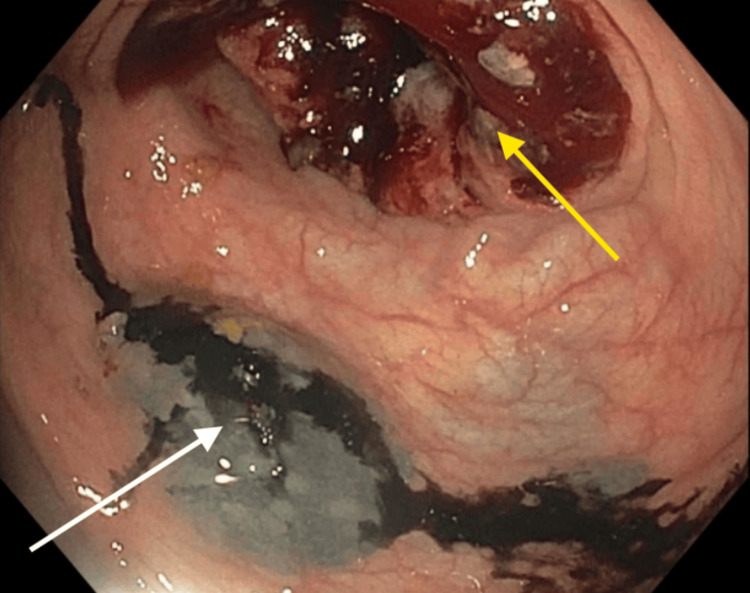 Figure 1
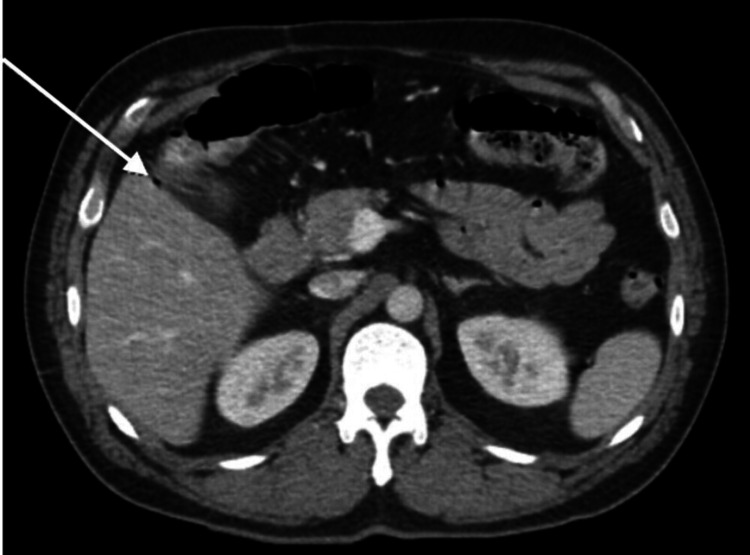 Figure 2
Peer Reviews
No public reviews on file for this paper yet. If you reviewed it on a platform where reviews are public (OpenReview, ICLR, NeurIPS, ICML), you can paste yours below so the community can read it here.
Videos
No videos yet. Explain this paper in a talk, walkthrough, or lecture? Add one.
Taxonomy
TopicsTattoo and Body Piercing Complications · Nasal Surgery and Airway Studies
Introduction
Endoscopic tattooing is an accepted technique for precise localization of gastrointestinal lesions for further endoscopic or surgical intervention. It is considered a safe procedure, as the only notable adverse effect is local inflammation [1]. However, it is unclear whether tattooing can cause asymptomatic micro-perforations, as imaging is not routinely performed post-endoscopically.
Gastrointestinal micro-perforations are most frequently associated with iatrogenic instrumentation, such as endoscopic submucosal dissection, or complications of infectious processes, including diverticulitis and appendicitis [2,3]. They can lead to peritonitis from the spillage of intestinal contents into the abdomen and are treated with antibiotics, with or without emergent surgery [4].
Due to the potential mortality of peritonitis and high recovery rates with early intervention, the necessity of intensive evaluation and treatment of incidental micro-perforations should be explored. Although micro-perforations have the potential to develop into serious complications, close observation could be considered as an alternative management approach. We present a case of asymptomatic micro-perforation at the site of endoscopic tattooing to demonstrate that extensive workup may not always be necessary.
Case presentation
A 49-year-old male with a history of iron deficiency anemia and alcohol dependence was hospitalized after routine blood work showed a hemoglobin count of 6.5 g/dL (reference range: 14.0-18.0 g/dL). He reported fatigue and dark stool for the past few years after starting oral iron supplements. Hemolysis and thyroid evaluations were normal. A colonoscopy for anemia workup revealed a circumferential, non-obstructing, malignant-appearing, ulcerated lesion in the proximal ascending colon. Biopsies were taken with cold forceps, and the site was tattooed with a non-India ink permanent marker using a standardized technique (Figure 1).
Endoscopic view of a circumferential, non-obstructing, malignant-appearing, ulcerated lesion in the proximal ascending colon (yellow arrow); non-India ink permanent marker proximal to the lesion for subsequent evaluation and intervention (white arrow).
A CT of the abdomen was completed immediately post-endoscopy to assess for metastatic disease, which showed no metastatic lesions, but bowel thickening in the area of the ascending colon highlighted by the tattoo. The imaging was also noteworthy for acute inflammatory changes and trace gas adjacent to the bowel thickening within the highlighted region, consistent with a micro-perforation due to the tattoo (Figure 2).
Axial view of the computed tomography scan of the abdomen, showing an intra-peritoneal air focus adjacent to bowel thickening, indicative of a micro-perforation at the site of endoscopic tattooing (arrow).
The patient remained asymptomatic, afebrile, and hemodynamically stable throughout the rest of the hospital course. Pathology was confirmatory of moderately differentiated invasive adenocarcinoma with invasion into the peri-colonic tissue. The patient subsequently underwent a right hemicolectomy a week later and was discharged without incident.
Discussion
Radiologic imaging is not routine after endoscopic tattooing. However, if CT imaging is performed in an asymptomatic patient and a micro-perforation is incidentally discovered, close clinical monitoring is essential for early detection of symptoms and appropriate management. Unrecognized or untreated micro-perforations can lead to peritonitis, which could potentially increase mortality in patients who already have comorbid conditions, such as malignancies and infections [5].
A meta-analysis previously identified several complications of endoscopic tattooing, including infected hematoma or abscess formation, inflammatory pseudotumor, idiopathic inflammatory bowel disease, post-operative adhesions, and tumor inoculation. However, the study did not identify micro-perforation as a possible adverse effect [1]. The micro-perforation was not attributed to the biopsy, as prior prospective studies have not found perforation to be a complication of cold forceps biopsies [6]. This incidental discovery is similar to the established finding of asymptomatic pneumoperitoneum found on routine imaging after percutaneous endoscopic gastrostomy tube insertion, which does not necessitate any further intervention [7].
Conclusions
Asymptomatic micro-perforation following endoscopic tattooing is a rare and likely under-recognized complication, as routine post-procedural imaging is not standard practice. Although endoscopic tattooing remains a safe and valuable modality for lesion localization, this case recognizes the merit of careful clinical assessment when incidental radiological findings, such as micro-perforation, are encountered. Additional studies are warranted to define the true incidence of micro-perforation following endoscopic tattooing and to establish management guidelines.
The reference list from the paper itself. Each links out to its DOI / PubMed record.
- 1Endoscopic tattooing of colorectal lesions: is it a risk-free procedure?World J Gastrointest Endosc Trakarnsanga A Akaraviputh T 256260320112219523510.4253/wjge.v 3.i 12.256PMC 3244942 · doi ↗ · pubmed ↗
- 2Intra-abdominal microperforation which is recognized by computed tomography after endoscopic submucosal dissection Gastrointest Endosc Onogi F Araki H Ibuka T Nagaki M Nishiwaki S Moriwaki H 0652007
- 3Diverticulitis with microperforation Cureus Choksey R Stead TS Mangal R Amatea J Ganti L 014202210.7759/cureus.27159 PMC 939331636017297 · doi ↗ · pubmed ↗
- 4Complication of endoscopic tattooing: a case report of covered perforation G Chir Falco N Fontana T Tutino R 74783720162738169310.11138/gchir/2016.37.2.074PMC 4938225 · doi ↗ · pubmed ↗
- 5Clinical profile and management of perforation peritonitis in Bharatpur hospital, Nepal: a prospective study Ann Med Surg (Lond) Neupane S Koirala DP Kharel S Silwal S Yadav KK 1045288220223626844310.1016/j.amsu.2022.104528 PMC 9577425 · doi ↗ · pubmed ↗
- 6Efficacy and safety of cold forceps polypectomy utilizing the jumbo cup: a prospective study Intest Res Hasegawa H Bamba S Takahashi K 2652721720193047728410.5217/ir.2018.00103 PMC 6505094 · doi ↗ · pubmed ↗
- 7Reappraisal of pneumoperitoneum after percutaneous endoscopic gastrostomy Intest Res Park WY Lee TH Lee JS 3133171320152657613610.5217/ir.2015.13.4.313PMC 4641857 · doi ↗ · pubmed ↗