A survey of Belisana spiders (Araneae, Pholcidae) from eastern Sichuan, China

Abstract
Genes, proteins, chemicals, diseases, species, mutations and cell lines named across the full text — each resolved to its canonical identifier and authoritative record.
Click any figure to enlarge with its caption.
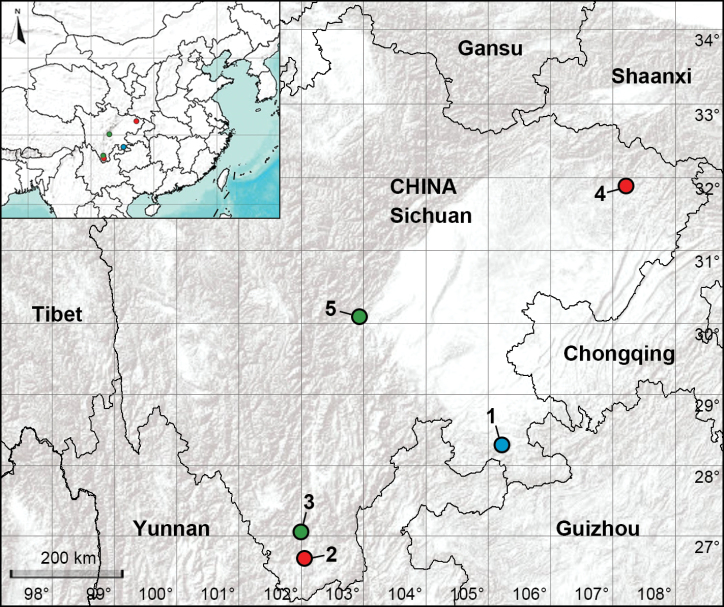 Figure 1
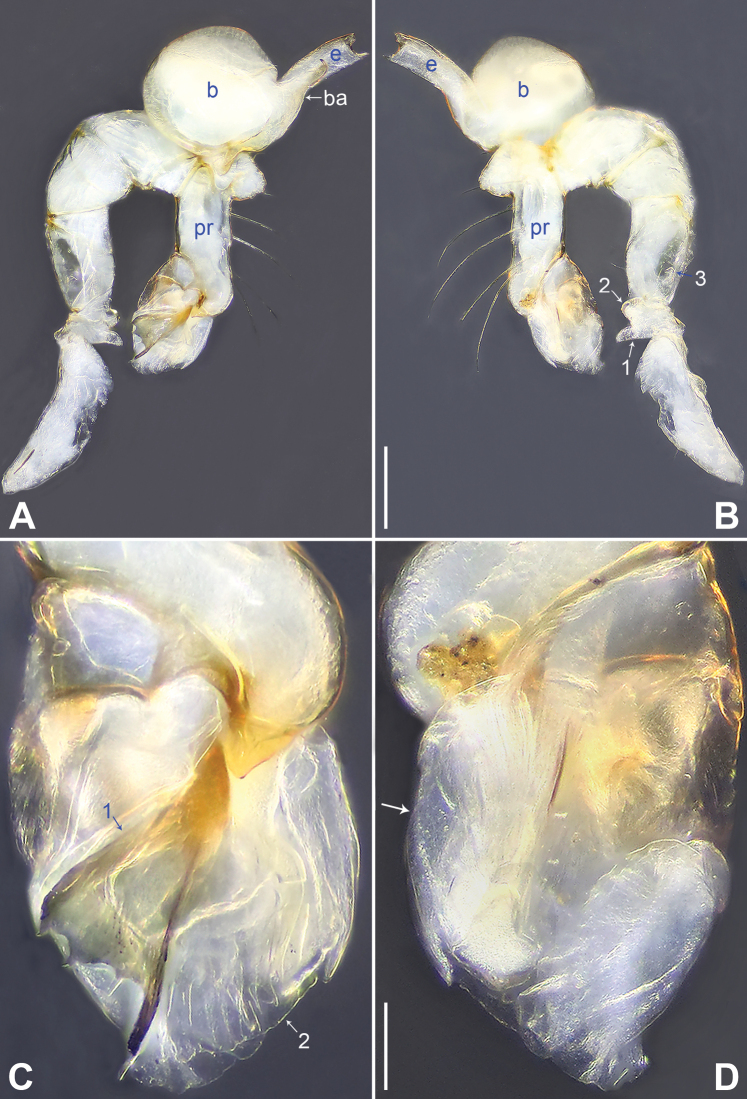 Figure 2
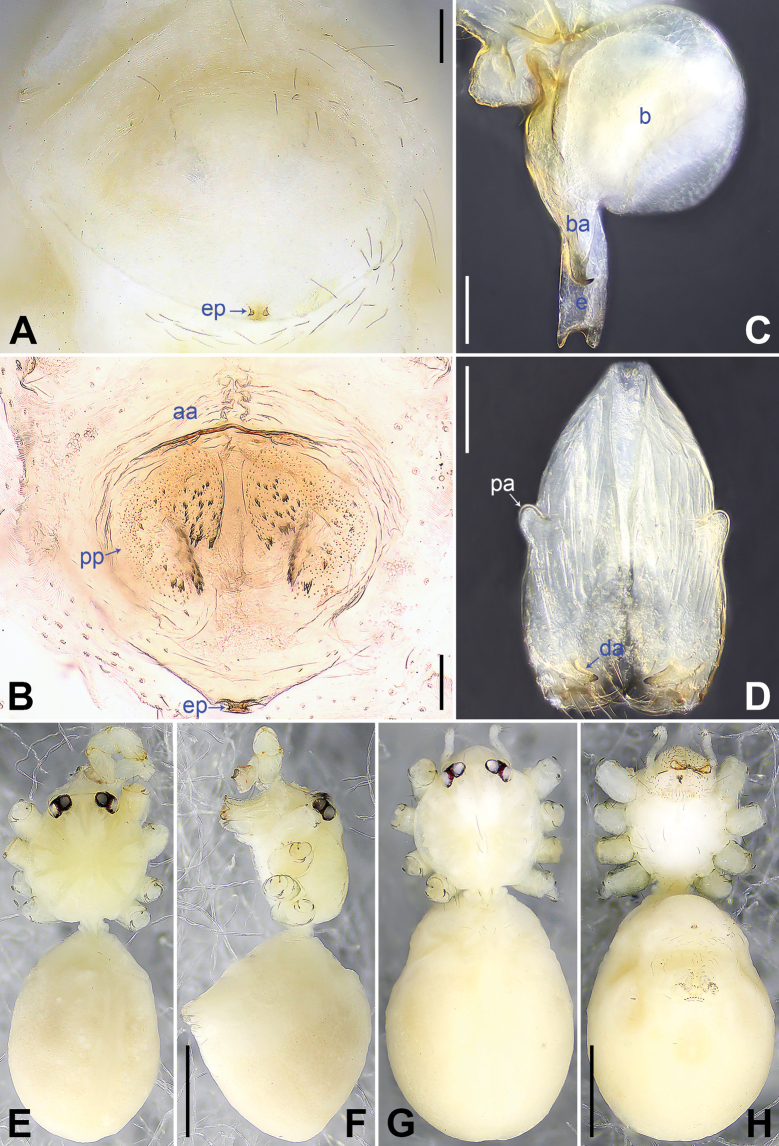 Figure 3
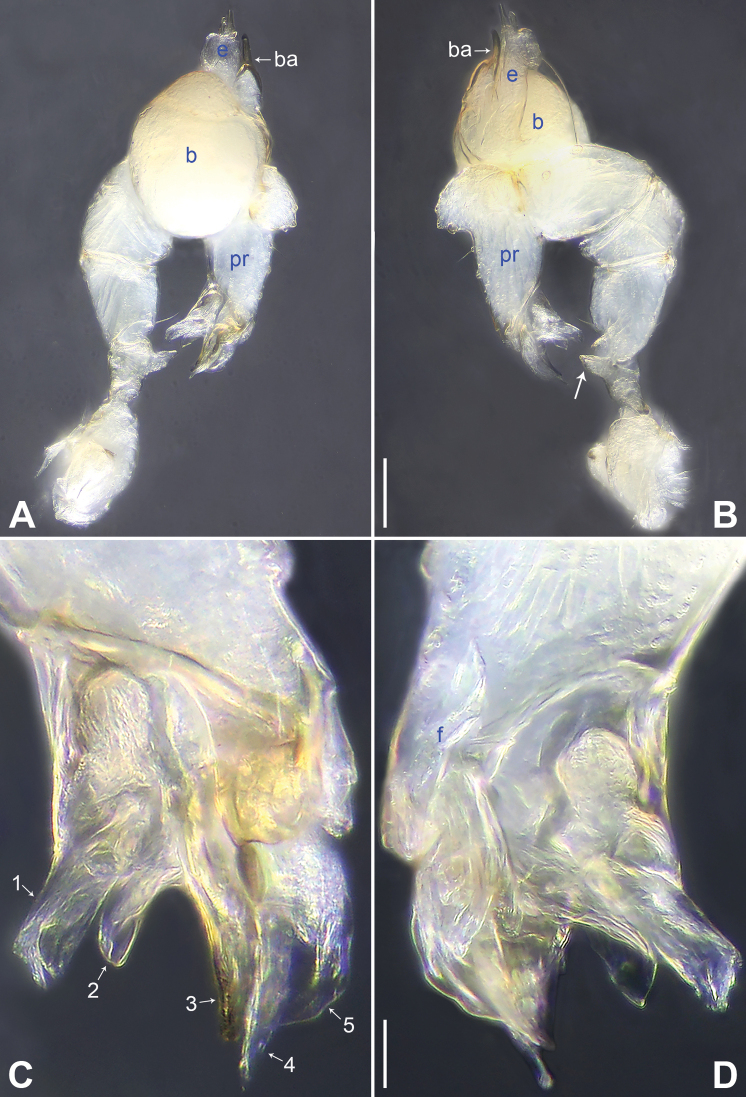 Figure 4
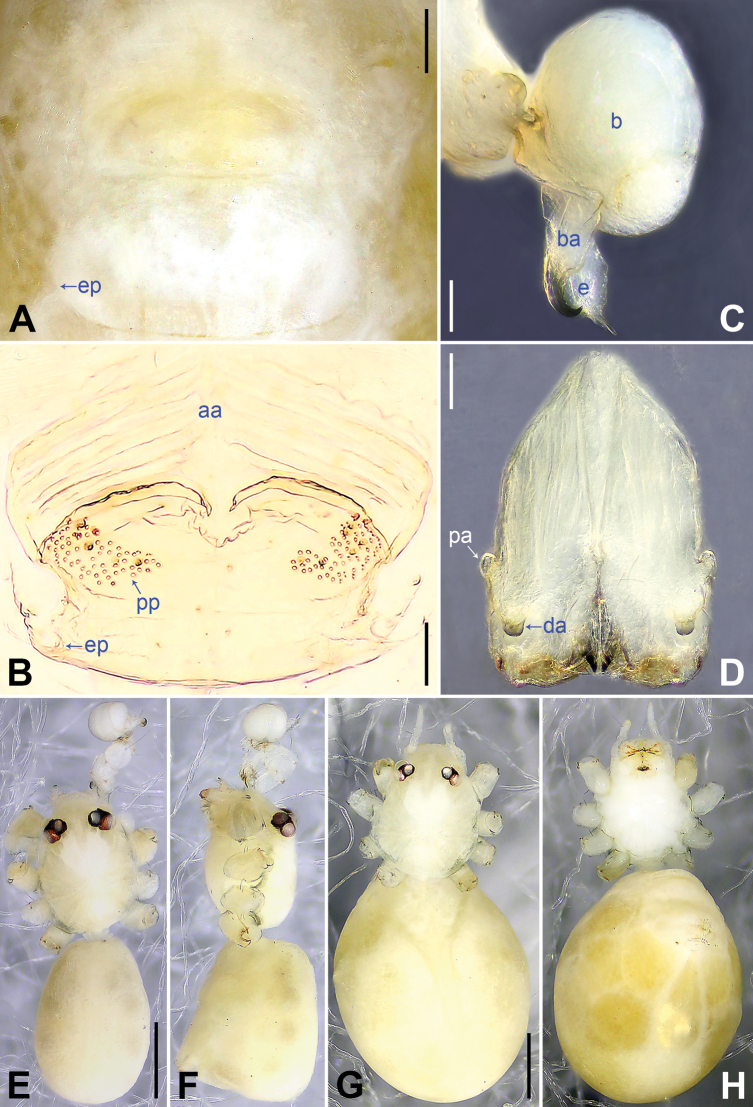 Figure 5
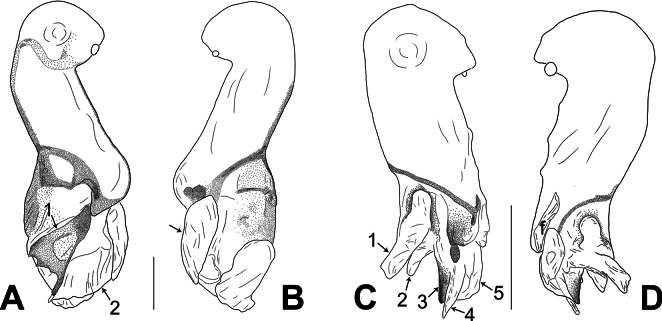 Figure 6
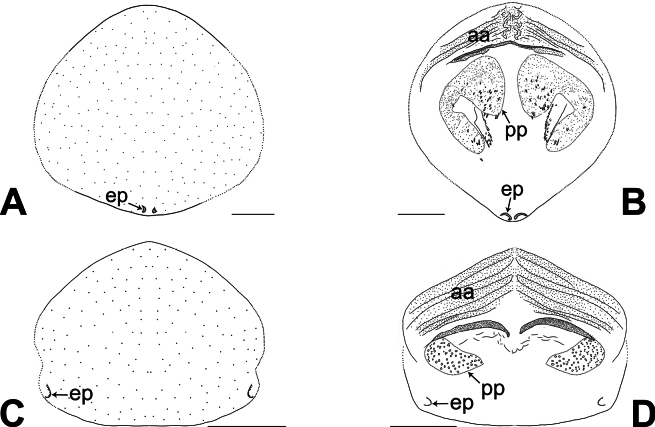 Figure 7
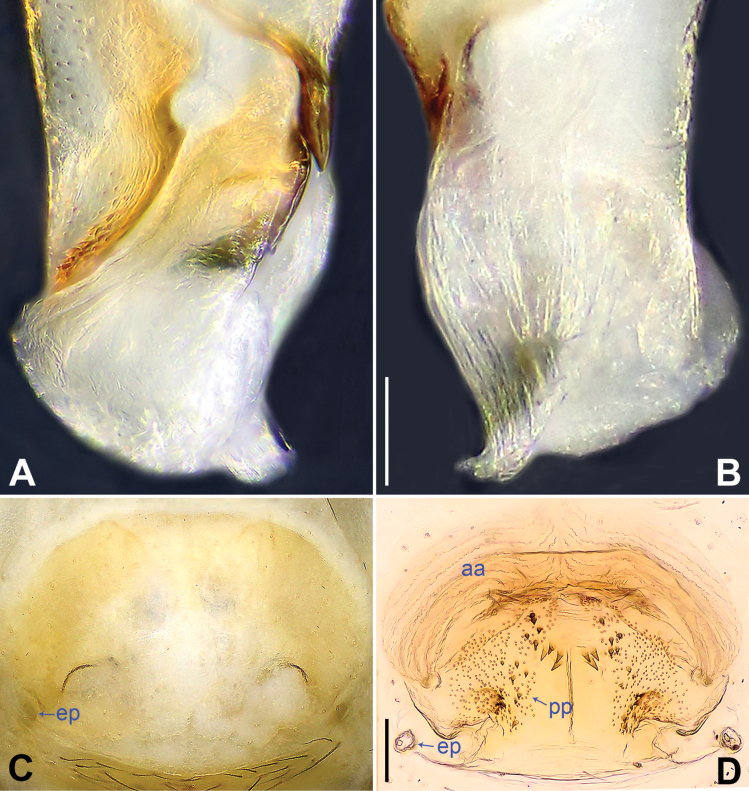 Figure 8
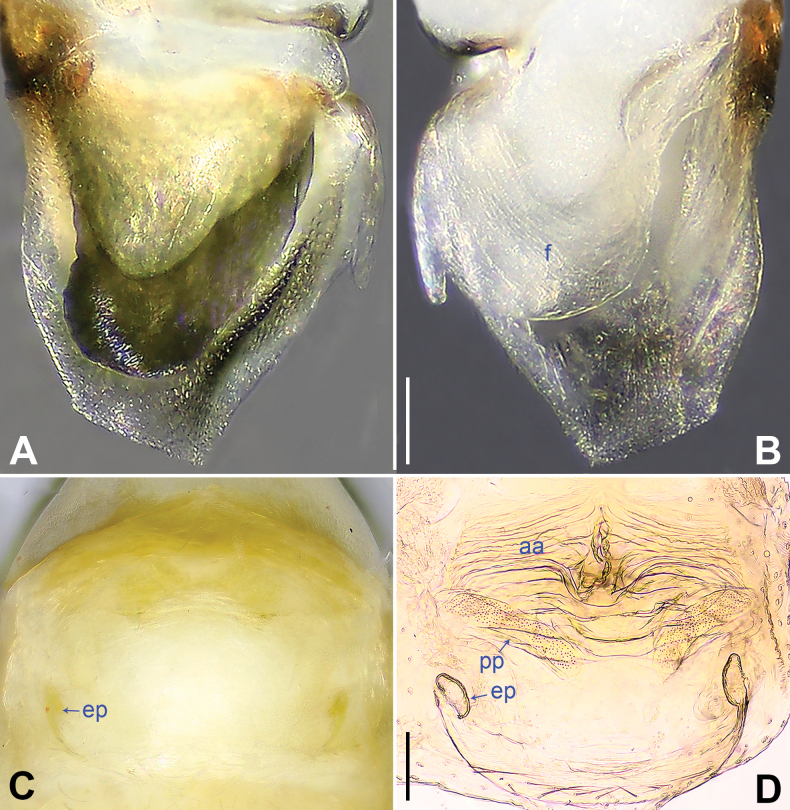 Figure 9
Peer Reviews
No public reviews on file for this paper yet. If you reviewed it on a platform where reviews are public (OpenReview, ICLR, NeurIPS, ICML), you can paste yours below so the community can read it here.
Videos
No videos yet. Explain this paper in a talk, walkthrough, or lecture? Add one.
Taxonomy
TopicsSpider Taxonomy and Behavior Studies · Genomics and Phylogenetic Studies · Lepidoptera: Biology and Taxonomy
Introduction
The family Pholcidae C.L. Koch, 1850 is one of the most species-rich spider families, with 2037 extant species in 97 genera (WSC 2025). Belisana Thorell, 1898, the second largest genus in Pholcidae, comprises 169 species (WSC 2025). They are mainly distributed in southern China, and the Indo-Malayan and Australasian regions (Huber 2005; Yao and Li 2013; Yao et al. 2018; Zhu et al. 2020). The former exhibits the highest diversity with 83 described species and represents 49% of the genus (Wang et al. 2024; WSC 2025). Recently, numerous expeditions of pholcid spiders have been conducted in China, resulting in the discovery and description of a large number of new species. These efforts have primarily focused on two genera: Pholcus Walckenaer, 1805 in northern and central China (e.g., Yao et al. 2021; Lu et al. 2022; Zhao et al. 2023b; Yang et al. 2024a, b; Li et al. 2025; Yao and Li 2025) and Belisana in southern China (e.g., Zhao et al. 2023a; Wang et al. 2024; Zhang et al. 2024a, b). Nevertheless, the distribution of these two genera in China is still conspicuously patchy. For instance, Sichuan Province, located in the southwest of China, has recorded only one species of Belisana: B.maoer Yao & Li, 2020 (Zhu et al. 2020). Sichuan is situated in the transitional zone between the Tibetan Plateau (often considered the first step of China’s geographical terrain) and the middle and lower reaches of the Yangtze River (typically classified as the third step), within the framework of China’s three major geographical steps. Furthermore, eastern Sichuan boasts a subtropical humid climate (Wang et al. 2020). Therefore, its species diversity deserves further investigation. We recently conducted a field survey targeting Belisana in eastern Sichuan by canopy fogging and discovered two new species. Additionally, two known species were reported from Sichuan for the first time (Fig. 1).
Distribution records of the Belisana species from eastern Sichuan, China 1Belisanamaoer Yao & Li, 2020 2B.miyi sp. nov. 3B.tongi Zhang, Li & Yao, 2024 4B.tongjiang sp. nov. 5B.yanhe Chen, Zhang & Zhu, 2009. Blue, green and red circles indicate previously recorded species, newly recorded species, and new species, respectively.
Material and methods
All specimens were collected by canopy fogging. Specimens were examined and measured with a Leica M205 C stereomicroscope. Left male palps were photographed. The ventral views of epigyna were photographed before dissection. Vulvae were photographed after treating them in a 10% warm solution of potassium hydroxide (KOH) to dissolve soft tissues. Images were captured with a Canon EOS 750D wide zoom digital camera (24.2 megapixels) mounted on the stereomicroscope mentioned above and assembled using Helicon Focus v. 3.10.3 image stacking software (Khmelik et al. 2005). For each sample, ~100 individual photos were stacked together. Using Procreate v. 5.0.2 (Savage Interactive Pty Ltd), the drawings were done based on the photos, with further modifications made according to direct observations of the samples. All measurements are given in millimeters (mm). Leg measurements are shown as: total length (femur, patella, tibia, metatarsus, tarsus). Leg segments were measured on their dorsal sides. The distribution map was generated with ArcGIS v. 10.2 (ESRI Inc.). The specimens studied are preserved in 75% ethanol and deposited in the College of Life Science, Shenyang Normal University (SYNU) in Liaoning, China.
Terminology and taxonomic descriptions follow Huber (2005) and Yao et al. (2015). The following abbreviations are used: aa = anterior arch, ALE = anterior lateral eye, b = bulb, ba = bulbal apophysis, da = distal apophysis, e = embolus, ep = epigynal pocket, f = flap, L/d = length/diameter, pa = proximo-lateral apophysis, PME = posterior median eye, pp = pore plate, pr = procursus.
Taxonomy
Family Pholcidae C.L. Koch, 1850
Subfamily Pholcinae C.L. Koch, 1850
Belisana
Taxon classificationAnimaliaAraneaePholcidae
Genus
Thorell, 1898
C594937F-AB28-5D7B-BC67-919663888E93
Type species.
Belisanatauricornis Thorell, 1898.
Belisana
miyi
Taxon classificationAnimaliaAraneaePholcidae
Wang, Li & Yao sp. nov.
540FC269-A899-5947-99BA-DB14A34B5EBD
https://zoobank.org/EF9C76D6-1612-4301-87FF-3ACEAE8F7B0F
Type material.
Holotype: China • ♂; Sichuan, Panzhihua, Miyi County, Binggu Town, Maidichong Village; 26.679384°N, 102.062562°E; alt. 2235 m; 7 Jun. 2024; X. Zhang, Y. Wang & Q. Meng leg.; SYNU-Ar00453. Paratypes: China • 3 ♂; same data as for holotype; SYNU-Ar00454–56 • 1 ♀; same data as for holotype; SYNU-Ar00457.
Etymology.
The specific name refers to the type locality; noun in apposition.
Diagnosis.
The new species resembles B.erromena Zhang & Peng, 2011 (Zhang and Peng 2011: 58, fig. 7A–G) by having similar bulbal apophysis (distally hooked; Fig. 3C) and vulval pore plates (strongly curved, with several teeth; Figs 3B, 7B), but can be distinguished by procursus with prolatero-distal sclerite (arrow 1 in Figs 2C, 6A vs membranous lamella bearing comb-shaped apophyses, fig. 7D in Zhang and Peng 2011), by male cheliceral distal apophyses on distal part of chelicerae (da in Fig. 3D vs on submedian part, fig. 7B in Zhang and Peng 2011), and by epigynal pockets on postero-median part of epigynal plate and close to each other (ep in Figs 3A, B, 7A, B vs on anterior part of epigynal plate and widely separated, ep in fig. 7F in Zhang and Peng 2011).
Description.
Male (holotype): Total length 2.00 (2.10 with clypeus), carapace 0.72 long, 0.73 wide, opisthosoma 1.28 long, 0.89 wide. Leg I: 12.56 (3.28, 0.32, 3.13, 4.55, 1.28), leg II missing, leg III: 5.29 (1.51, 0.22, 1.25, 1.72, 0.59), leg IV: 7.19 (2.13, 0.25, 1.82, 2.30, 0.69); tibia I L/d: 41. Eye interdistances and diameters: PME–PME 0.14, PME 0.13, PME–ALE 0.02. Sternum width/length: 0.50/0.45. Habitus as in Fig. 3E, F. Carapace yellowish, without marks; clypeus and sternum yellowish. Legs whitish, without darker rings. Opisthosoma yellowish, without spots. Thoracic furrow absent. Clypeus frontally projected. Chelicerae with a pair of proximo-lateral apophyses (pa in Fig. 3D) and a pair of distal, prolaterally curved apophyses (distance between tips: 0.05; da in Fig. 3D). Palp as in Fig. 2A, B; trochanter with ventral apophysis (2× longer than wide; arrow 1 in Fig. 2B) and retrolateral apophysis (as long as wide; arrow 2 in Fig. 2B); femur with retrolateral protrusion (arrow 3 in Fig. 2B); procursus with fan-shaped prolatero-distal sclerite (arrow 1 in Figs 2C, 6A), distal membranous lamella (arrow 2 in Figs 2C, 6A), and retrolatero-subdistal membranous lamella (arrow in Figs 2D, 6B); bulb with hooked apophysis (ba in Fig. 3C) and distally bifurcated embolus (e in Fig. 3C). Retrolateral trichobothrium on tibia I at 5% proximally; legs with short vertical setae on metatarsi; tarsus I with 16 distinct pseudosegments.
Belisanamiyi sp. nov., holotype male A, B palp (A prolateral view B retrolateral view, arrow 1 points at ventral apophysis, arrow 2 points at retrolateral apophysis, arrow 3 points at retrolateral protrusion) C, D distal part of procursus (C prolateral view, arrow 1 points at prolatero-distal sclerite, arrow 2 points at distal membranous lamella D retrolateral view, arrow points at retrolatero-subdistal membranous lamella). Abbreviations: b = bulb, ba = bulbal apophysis, e = embolus, pr = procursus. Scale bars: 0.20 (A, B); 0.05 (C, D).
Belisanamiyi sp. nov., holotype male (C–F) and paratype female (A, B, G, H) A epigynum, ventral view B vulva, dorsal view C bulb, prolateral view D chelicerae, frontal view E–H habitus (E, G dorsal view F lateral view H ventral view). Abbreviations: aa = anterior arch, b = bulb, ba = bulbal apophysis, da = distal apophysis, e = embolus, ep = epigynal pocket, pa = proximo-lateral apophysis, pp = pore plate. Scale bars: 0.10 (A–D); 0.50 (E–H).
Female (paratype, SYNU-Ar00457): Similar to male, habitus as in Fig. 3G, H. Total length 2.22 (2.32 with clypeus), carapace 0.70 long, 0.72 wide, opisthosoma 1.52 long, 1.10 wide. Leg I missing. Eye interdistances and diameters: PME–PME 0.12, PME 0.10, PME–ALE 0.02. Sternum width/length: 0.58/0.55. Clypeus unmodified. Epigynum oval, posteriorly curved, with postero-median pockets 0.03 apart (ep in Figs 3A, 7A). Vulva with anterior arch (aa in Figs 3B, 7B) and a pair of strongly curved pore plates with several teeth (pp in Figs 3B, 7B).
Variation.
Tibia I in two male paratypes (SYNU-Ar00454–55): 2.30, 3.00 (Leg I missing in SYNU-Ar00456).
Distribution.
China (Sichuan, type locality; Fig. 1).
Belisana
tongjiang
Taxon classificationAnimaliaAraneaePholcidae
Wang, Li & Yao sp. nov.
C6B66EE4-1F51-5FA5-9D03-BBE6EF9ED4D5
https://zoobank.org/CFA56021-48BF-4FC0-9FD8-5F5D22D3BAF6
Type material.
Holotype: China • ♂; Sichuan, Bazhong, Tongjiang County, Nuojiang Town, Mulingzui Village; 31.892294°N, 107.217638°E; alt. 583 m; 21 Jun. 2024; X. Zhang, Y. Wang & Q. Meng leg.; SYNU-Ar00463. Paratypes: China • 5 ♀; same data as for holotype; SYNU-Ar00464–68.
Etymology.
The specific name refers to the type locality; noun in apposition.
Diagnosis.
The new species resembles B.honghe Zhang, Li & Yao, 2024 (Zhang et al. 2024b: 257, figs 2A–D, 3A–H, 18A, B, 20A, B) by having similar bulbal apophysis (distally hooked; Fig. 5C) and epigynum (epigynal pockets on postero-lateral part of epigynal plate; Figs 5A, B, 7C, D), but can be distinguished by procursus with distal membranous process (arrow 2 in Figs 4C, 6C vs sclerotized apophysis, arrow 2 in figs 2C, 18A in Zhang et al. 2024b), prolatero-distal membranous process (arrow 4 in Figs 4C, 6C vs absent, figs 2C, 18A in Zhang et al. 2024b) and retrolateral membranous flap (4× wider than long, f in Figs 4D, 6D vs 2× wider than long, f in figs 2D, 18B in Zhang et al. 2024b), by male cheliceral distal apophyses distally blunt (da in Fig. 5D vs distally pointed, da in fig. 3D in Zhang et al. 2024b), and by vulval pore plates nearly rectangular (pp in Figs 5B, 7D vs anteriorly pointed and posteriorly wide, pp in figs 3B, 20B in Zhang et al. 2024b).
Belisanatongjiang sp. nov., holotype male A, B palp (A prolateral view B retrolateral view, arrow points at ventral apophysis) C, D distal part of procursus (C prolateral view, arrow 1 points at ventro-distal membranous process, arrow 2 points at distal membranous process, arrow 3 points at sclerotized distal apophysis, arrow 4 points at prolatero-distal membranous process, arrow 5 points at dorso-distal membranous process D retrolateral view). Abbreviations: b = bulb, ba = bulbal apophysis, e = embolus, f = flap, pr = procursus. Scale bars: 0.10 (A, B); 0.02 (C, D).
Belisanatongjiang sp. nov., holotype male (C–F) and paratype female (A, B, G, H) A epigynum, ventral view B vulva, dorsal view C bulb, prolateral view D chelicerae, frontal view E–H habitus (E, G dorsal view F lateral view H ventral view). Abbreviations: aa = anterior arch, b = bulb, ba = bulbal apophysis, da = distal apophysis, e = embolus, ep = epigynal pocket, pa = proximo-lateral apophysis, pp = pore plate. Scale bars: 0.05 (A–D); 0.30 (E–H).
Description.
Male (holotype): Total length 1.27 (1.38 with clypeus), carapace 0.45 long, 0.40 wide, opisthosoma 0.82 long, 0.50 wide. Legs I, II and IV missing, leg III: 4.42 (1.27, 0.18, 1.04, 1.44, 0.49). Eye interdistances and diameters: PME–PME 0.10, PME 0.07, PME–ALE 0.02. Sternum width/length: 0.43/0.40. Habitus as in Fig. 5E, F. Carapace yellowish, without marks; clypeus and sternum yellowish. Legs whitish, without darker rings. Opisthosoma yellowish, without spots. Thoracic furrow absent. Clypeus unmodified. Chelicerae with a pair of proximo-lateral apophyses (pa in Fig. 5D) and a pair of distal apophyses pointing downwards (distance between tips: 0.14; da in Fig. 5D). Palp as in Fig. 4A, B; trochanter with ventral apophysis (2× longer than wide; arrow in Fig. 4B); procursus with ventro-distal membranous process (arrow 1 in Figs 4C, 6C), distal membranous process (arrow 2 in Figs 4C, 6C), sclerotized distal apophysis (arrow 3 in Figs 4C, 6C), prolatero-distal membranous process (arrow 4 in Figs 4C, 6C), dorso-distal membranous process (arrow 5 in Figs 4C, 6C), and retrolateral membranous flap (f in Figs 4D, 6D); bulb with hooked apophysis (ba in Fig. 5C) and distally pointed embolus (e in Fig. 5C).
Procursus in prolateral and retrolateral views (arrows point at the same structures as those shown in the photos of each species) A, BBelisanamiyi sp. nov. C, DB.tongjiang sp. nov. Abbreviation: f = flap. Scale bars: 0.10.
Female (paratype, SYNU-Ar00464): Similar to male, habitus as in Fig. 5G, H. Total length 1.48 (1.60 with clypeus), carapace 0.53 long, 0.56 wide, opisthosoma 0.95 long, 0.63 wide. Tibia I: 1.70; tibia I L/d: 22. Eye interdistances and diameters: PME–PME 0.12, PME 0.06, PME–ALE 0.02. Sternum width/length: 0.44/0.40. Epigynum nearly triangular, posteriorly straight, with postero-lateral pockets 0.25 apart (ep in Figs 5A, 7C). Vulva with anterior arch (aa in Figs 5B, 7D) and a pair of nearly rectangular pore plates (2× longer than wide; pp in Figs 5B, 7D).
Female genitalia in ventral and dorsal views A, BBelisanamiyi sp. nov. C, DB.tongjiang sp. nov. Abbreviations: aa = anterior arch, ep = epigynal pocket, pp = pore plate. Scale bars: 0.10.
Variation.
Tibia I in another female paratype (SYNU-Ar00465): 1.44 (Leg I missing in SYNU-Ar00466–68).
Distribution.
China (Sichuan, type locality; Fig. 1).
Belisana
tongi
Taxon classificationAnimaliaAraneaePholcidae
Zhang, Li & Yao, 2024
E054B103-6D63-58C7-90CC-5EBE0BB9DB33
Belisana tongi
Zhang et al. 2024b: 273, figs 12A–D, 13A–H, 18K, L, 21C, D.
Material examined.
China • 2 ♂; Sichuan, Panzhihua, Miyi County, Puwei Town, Pengjiayakou Village; 27.060020°N, 102.000282°E; alt. 2464 m; 5 Jun. 2024; X. Zhang, Y. Wang & Q. Meng leg.; SYNU-Ar00458–59 • 3 ♀; same data as for preceding; SYNU-Ar00460–62.
Belisanatongi Zhang, Li & Yao, 2024, male (A, B) and female (C, D) A, B distal part of procursus (A prolateral view B retrolateral view) C epigynum, ventral view D vulva, dorsal view. Abbreviations: aa = anterior arch, ep = epigynal pocket, pp = pore plate. Scale bars: 0.05 (A, B); 0.10 (C, D).
Distribution.
China (Sichuan, Fig. 1; Yunnan, type locality).
Belisana
yanhe
Taxon classificationAnimaliaAraneaePholcidae
Chen, Zhang & Zhu, 2009
59522E08-DFAE-59B0-8B67-2EA53C8BA7ED
Belisana yanhe
Chen et al. 2009: 65, figs 31–38.
Material examined.
China • 1 ♂; Sichuan, Yaan, Lushan County, Feixianguan Town, Longdongpo; 30.090000°N, 102.930556°E; alt. 905 m; 24 May 2024; X. Zhang, Y. Wang & Q. Meng leg.; SYNU-Ar00469 • 1 ♀; same data as for preceding; SYNU-Ar00470.
Belisanayanhe Chen, Zhang & Zhu, 2009, male (A, B) and female (C, D) A, B distal part of procursus (A prolateral view B retrolateral view) C epigynum, ventral view D vulva, dorsal view. Abbreviations: aa = anterior arch, ep = epigynal pocket, f = flap, pp = pore plate. Scale bars: 0.05 (A, B); 0.10 (C, D).
Distribution.
China (Sichuan, Fig. 1; Guizhou, type locality).
Supplementary Material
XML Treatment for Belisana
XML Treatment for Belisana miyi
XML Treatment for Belisana tongjiang
XML Treatment for Belisana tongi
XML Treatment for Belisana yanhe
The reference list from the paper itself. Each links out to its DOI / PubMed record.
- 1Chen H Zhang F Zhu M (2009) Four new troglophilous species of the genus Belisana Thorell, 1898 (Araneae, Pholcidae) from Guizhou Province, China.Zootaxa 2092(1): 58–68. 10.11646/zootaxa.2092.1.5 · doi ↗
- 2Huber BA (2005) High species diversity, male-female coevolution, and metaphyly in Southeast Asian pholcid spiders: The case of Belisana Thorell 1898 (Araneae, Pholcidae).Zoologica 155: 1–126.
- 3Khmelik VV Kozub D Glazunov A (2005) Helicon Focus 3.10.3. https://www.heliconsoft.com/heliconsoft-products/helicon-focus/ [Accessed 6 July 2024]
- 4Li J He Q Li S Yao Z (2025) Filling a zoogeographical gap in China: Taxonomic descriptions of six new spider species of the Pholcusphungiformes species group (Araneae, Pholcidae).Zoo Keys 1232: 285–310. 10.3897/zookeys.1232.14562240151605 PMC 11947730 · doi ↗ · pubmed ↗
- 5Lu Y Chu C Zhang X Li S Yao Z (2022) Europe vs China: Pholcus (Araneae, Pholcidae) from Yanshan-Taihang Mountains confirms uneven distribution of spiders in Eurasia.Zoological Research 43(4): 532–534. [& Suppl. 1–78] 10.24272/j.issn.2095-8137.2022.4.dwxyj 20220400535616257 PMC 9336444 · doi ↗ · pubmed ↗
- 6Wang N Cheng W Wang B Liu Q Zhou C (2020) Geomorphological regionalization theory system and division methodology of China.Journal of Geographical Sciences 30(2): 212–232. 10.1007/s 11442-020-1724-9 · doi ↗
- 7Wang B Li J Li S Yao Z (2024) Nine new spider species of Belisana Thorell, 1898 (Araneae, Pholcidae) from karst caves, with a list of species of the genus from Guizhou, southwestern China.Zoo Keys 1216: 265–302. 10.3897/zookeys.1216.13256139494110 PMC 11530764 · doi ↗ · pubmed ↗
- 8WSC (2025) World Spider Catalog, Version 26. Natural History Museum Bern. https://wsc.nmbe.ch [Accessed 25 March 2025]