A modified variable flip angle release device for endoscopic titanium clips
Jiaxing Feng, Chunping Zhang, Jiachen Bao, Qingyu Xu, Yutong Gan, Yiqun Hu

Abstract
Genes, proteins, chemicals, diseases, species, mutations and cell lines named across the full text — each resolved to its canonical identifier and authoritative record.
Click any figure to enlarge with its caption.
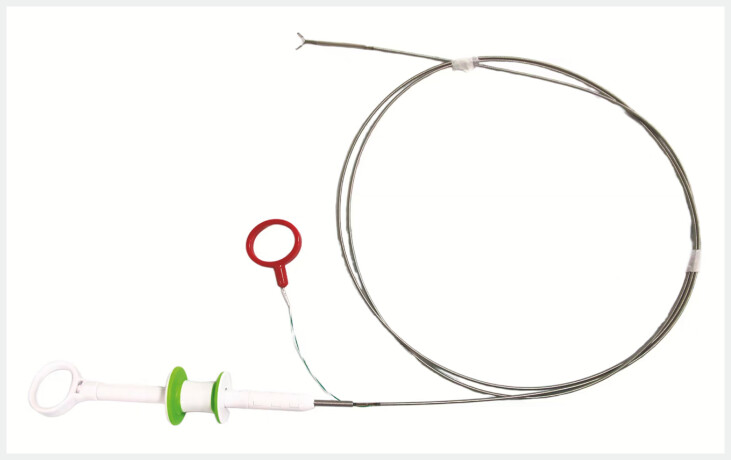 Fig. 1
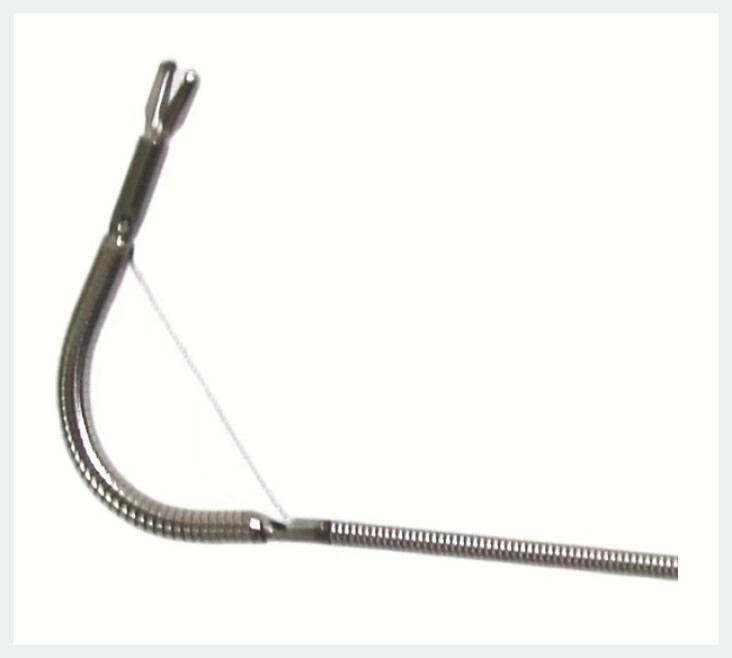 Fig. 2
- —Xiamen High-quality Development Medical Innovation Fund
Peer Reviews
No public reviews on file for this paper yet. If you reviewed it on a platform where reviews are public (OpenReview, ICLR, NeurIPS, ICML), you can paste yours below so the community can read it here.
Videos
No videos yet. Explain this paper in a talk, walkthrough, or lecture? Add one.
Taxonomy
TopicsEsophageal and GI Pathology · Gastrointestinal disorders and treatments · Dysphagia Assessment and Management
Titanium clips are widely used in gastrointestinal endoscopy, especially during endoscopic surgical procedures. Their principal role is to efficiently close defects within the gastrointestinal tract, thereby mitigating the risk of postoperative complications 1 2 3 4 . During clinical procedures, the alignment of the endoscope with the gastrointestinal lumen, coupled with the ongoing peristaltic movements of the stomach and intestinal cavities, frequently leads to suboptimal angulation for conventional titanium clip applicators when deploying clips via the endoscopeʼs channel, impeding the precise release of clips. Furthermore, the restricted opening angle of traditional titanium clips complicates their accurate placement on the wound surface, presenting considerable operational challenges.
Considering this, we have developed an innovative adjustable-angle endoscopic titanium clip release device. This device is composed of a clamp head assembly, a spring tube, a handle assembly, and an angle adjustment mechanism ( Fig. 1 ). The clamp head assembly is welded to the spring tube, while the angle adjustment mechanism incorporates a side-pulling steel wire and an end pull ring, which is also welded to the tail of the titanium clip. In its static configuration, the side-pulling steel wire remains linear. Upon activation of the pull ring at the terminus of the angle adjustment mechanism, the side-pulling steel wire contracts, reducing the distance between the titanium clip and the junction of the spring tube and handle assembly, thereby bending the titanium clip to the desired angle ( Fig. 2 ). The titanium clip is comprised of a tail end and a clip section. The tail end provides leverage during deployment to facilitate smooth clamping. The fully extended length of the titanium clip is approximately 10–15 mm, with an opening angle range of 90–135° ( Video 1 ).
The modified release device requires a clamp head assembly, a spring tube, a handle assembly, and an angle adjustment mechanism.
Pulling the ring tightens the wire, bending the clip to the desired angle.
A modified variable flip angle release device for endoscopic titanium clips.Video 1
In summary, this modified variable-angle titanium clip-release device adapts to wounds throughout the digestive tract for more precise treatment.
Endoscopy_UCTN_Code_TTT_1AO_2AD
The reference list from the paper itself. Each links out to its DOI / PubMed record.
- 1Qin G Wang QQ Tan CA novel method for efficient closure of large mucosal defects using nylon loops combined with titanium clips after endoscopic submucosal dissection Endoscopy 20235501 E 848E 84937369242 10.1055/a-2106-2383 PMC 10299868 · doi ↗ · pubmed ↗
- 2Mou H Liu Q Fan Y Nylon ring with titanium clip assists endoscopic cyanoacrylate injection for the treatment of GOV 1-type gastric varices Endoscopy 20235501 E 578E 58037011901 10.1055/a-2011-5595 PMC 10070010 · doi ↗ · pubmed ↗
- 3Yu J Zhou CJ Wang P Endoscopic titanium clip closure of gastric fistula after splenectomy: A case report World J Clin Cases 201861047105210.12998/wjcc.v 6.i 15.104730568962 PMC 6288501 · doi ↗ · pubmed ↗
- 4Zhan X Wang B Di D Endoscopic closure of gastric tube perforations with titanium clips: a four-case report World J Surg Oncol 2015132525889662 10.1186/s 12957-015-0434-8PMC 4336678 · doi ↗ · pubmed ↗