Psychometric properties of the polish version of the Dysfunctional Thoughts about Caregiving Questionnaire (DTCQ)
Katarzyna Sanna, Maciej Kościelniak, Jarosław M. Michałowski, Andrés Losada-Baltar, Konrad Piotrowski, Paweł Larionow, Paweł Larionow, Paweł Larionow, Paweł Larionow

TL;DR
This study evaluates the Polish version of a questionnaire measuring negative thoughts in caregivers, finding it reliable and valid.
Contribution
The study provides the first psychometric validation of the Polish version of the DTCQ for measuring dysfunctional caregiving thoughts.
Findings
Confirmatory factor analysis supported a one-factor structure of the DTCQ in the Polish sample.
The DTCQ showed significant relationships with depression, identity formation, and sociodemographic variables.
The questionnaire demonstrates reliability and validity for assessing dysfunctional caregiving thoughts in Polish caregivers.
Abstract
Dysfunctional thoughts about caregiving are defined as rigid and inappropriate interpretations of one’s experiences, behaviors, thoughts, or feelings that are associated with providing care to a dependent relative. The present study examined the psychometric properties of the Polish adaptation of the Dysfunctional Thoughts about Caregiving Questionnaire (DTCQ). DTCQ was administered to 618 family caregivers of people with chronic health problems. As the Confirmatory factor analysis supported both one and two-factor structure of the DTCQ, following the principle of parsimony, one-factor model was considered more appropriate. Construct validity was also supported by significant and theoretically expected relationships between DTCQ and depression, identity formation or sociodemographic variables. In conclusion, this study is the first to provide preliminary evidence for the reliability and…
Genes, proteins, chemicals, diseases, species, mutations and cell lines named across the full text — each resolved to its canonical identifier and authoritative record.
Click any figure to enlarge with its caption.
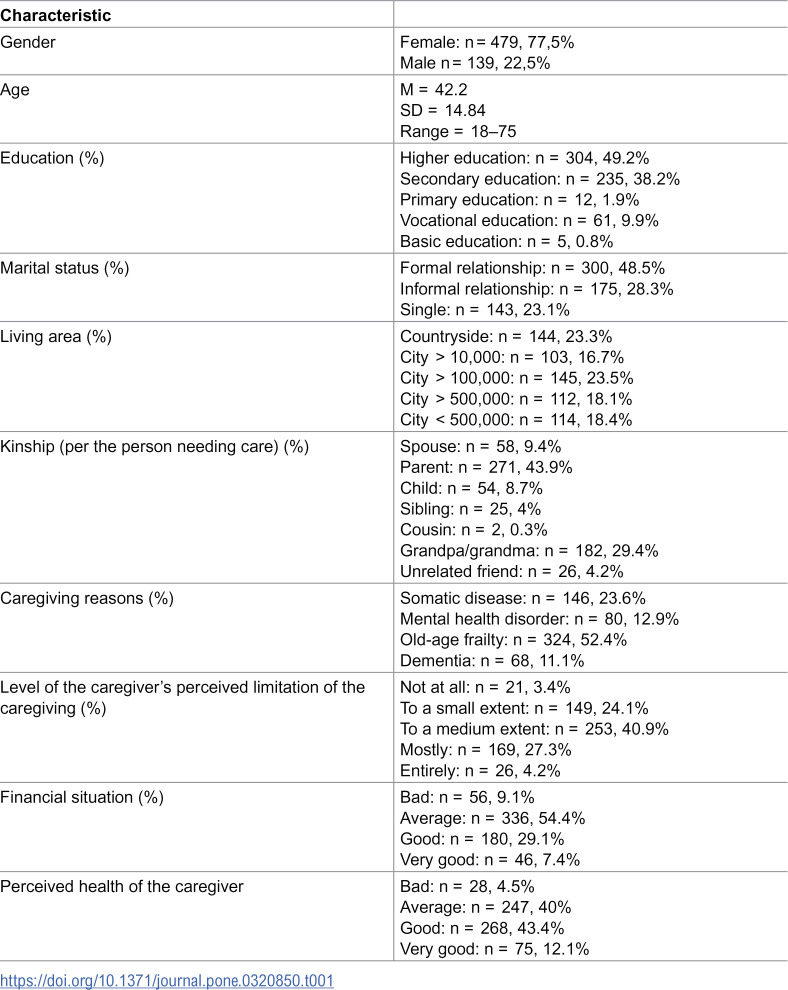 Figure 1
 Figure 2
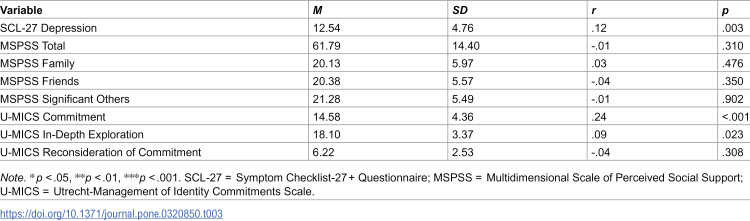 Figure 3
Peer Reviews
No public reviews on file for this paper yet. If you reviewed it on a platform where reviews are public (OpenReview, ICLR, NeurIPS, ICML), you can paste yours below so the community can read it here.
Videos
No videos yet. Explain this paper in a talk, walkthrough, or lecture? Add one.
Taxonomy
TopicsFamily Support in Illness · Family Caregiving in Mental Illness · Attachment and Relationship Dynamics