The predictive value of stereotactic surgery guided by CTA angiographic point sign for secondary hematoma expansion following surgery in patients with moderate-volume basal ganglia hematoma
Changpin Liao, Zepeng Ni, Zhen Lu, Jiancheng Liang, Shengde Nong, Jing Ye, Xianfu Wei

TL;DR
Using CTA angiographic point sign during stereotactic surgery helps reduce hematoma expansion and improves outcomes for patients with moderate-volume basal ganglia hematomas.
Contribution
Demonstrates the clinical benefit of CTA angiographic point sign in reducing secondary hematoma expansion after surgery.
Findings
No secondary hematoma expansion occurred in the CTA-guided group, compared to 18.75% in the CT-guided group.
The CTA-guided group had lower mortality and better GCS and MRS scores than the CT-guided group.
CTA-guided surgery reduced postoperative lung infections and improved long-term recovery.
Abstract
To examine the efficacy of the CTA angiographic point sign in forecasting secondary hematoma expansion following stereotactic surgery in patients with moderate-volume basilar ganglia hematoma and it’s potential to enhance postoperative outcomes. A retrospective analysis was conducted on the clinical data of 143 patients with moderate-volume basal ganglia hematoma (hematoma volume between 30 mL and 60 mL) admitted to the Department of Neurosurgery at Baise People’s Hospital from January 2021 to December 2022. Stereotactic surgery guided by the CTA angiographic point sign was conducted in 79 patients (experimental group), while stereotactic surgery guided by the computed tomography (CT) scan was performed in 64 patients (control group). The short-term clinical results (incidence of secondary hematoma expansion, Glasgow Coma Scale (GCS) score within 30 days, death, surgical complications)…
Genes, proteins, chemicals, diseases, species, mutations and cell lines named across the full text — each resolved to its canonical identifier and authoritative record.
Click any figure to enlarge with its caption.
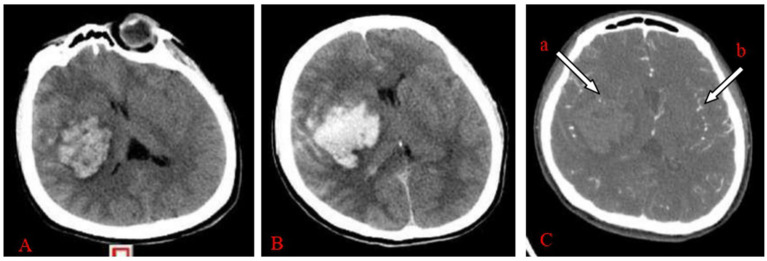 Figure 1
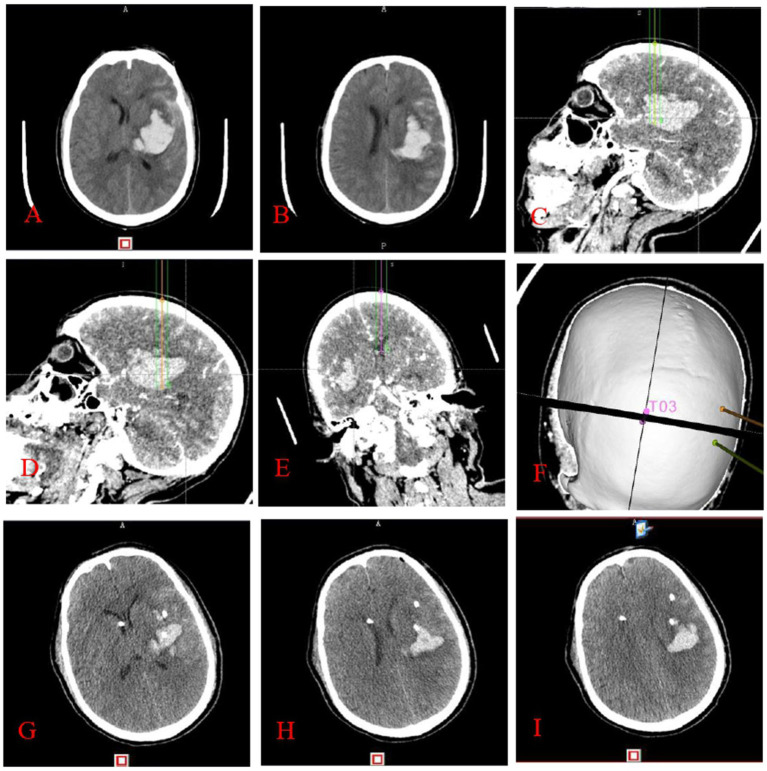 Figure 2
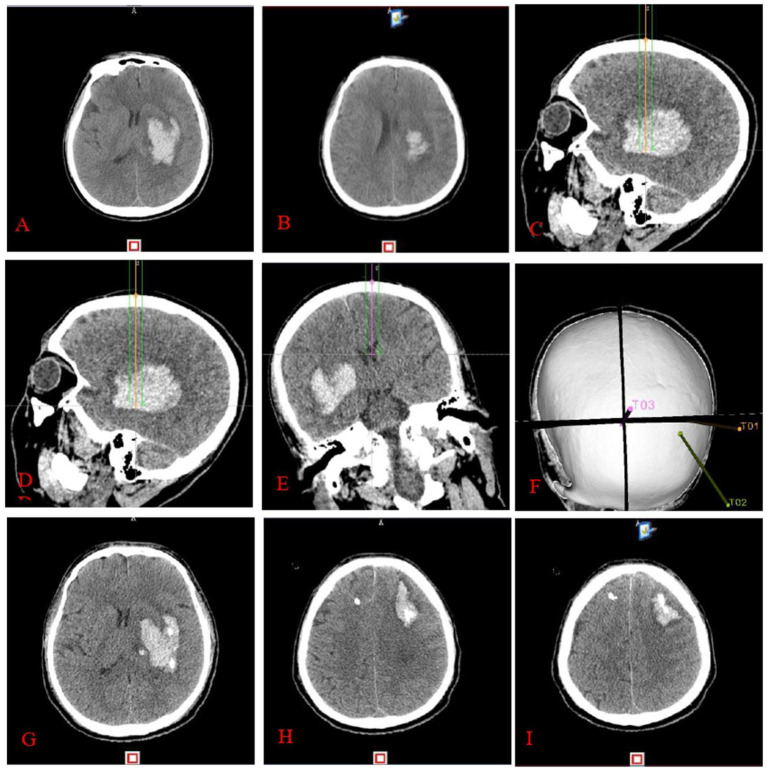 Figure 3
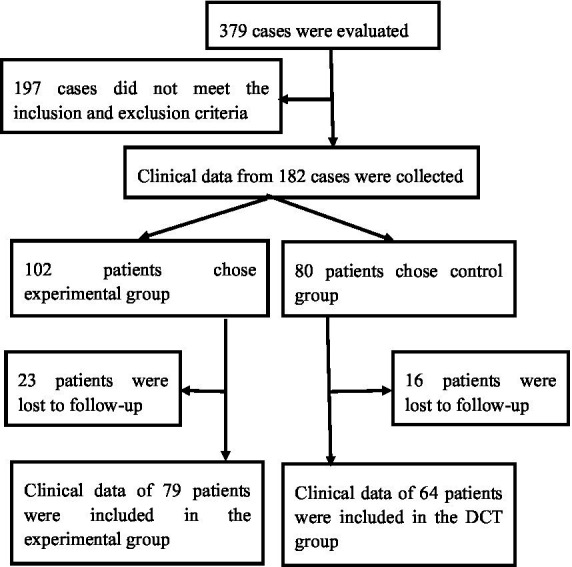 Figure 4
Peer Reviews
No public reviews on file for this paper yet. If you reviewed it on a platform where reviews are public (OpenReview, ICLR, NeurIPS, ICML), you can paste yours below so the community can read it here.
Videos
No videos yet. Explain this paper in a talk, walkthrough, or lecture? Add one.
Taxonomy
TopicsIntracerebral and Subarachnoid Hemorrhage Research · Neurosurgical Procedures and Complications · Acute Ischemic Stroke Management