Effect of Celastrus paniculatus on Alcohol-Elicited Conditioned Place Preference and Alcohol Withdrawal-Induced Anxiety in Mice
Sonali Satam, Sanket Raut, Yashashri C Shetty, Padmaja A Marathe, Alhad Mulkalwar, Ashwinikumar Raut, Nirmala Rege

TL;DR
This study shows that Celastrus paniculatus seed oil reduces alcohol dependence and withdrawal anxiety in mice, similar to existing medications.
Contribution
The study demonstrates the efficacy of Celastrus paniculatus in animal models of alcohol use disorder.
Findings
Celastrus paniculatus reduced alcohol dependence in mice as measured by the CPP model.
The highest dose of CP prevented alcohol withdrawal-induced anxiety in EPM and OFT tests.
CP3 group results were comparable to naltrexone and diazepam in treating alcohol-related behaviors.
Abstract
Background Celastrus paniculatus (CP), an Indian medicinal plant, is hypothesized to be effective in alcohol use disorder (AUD) based on its medicinal properties useful in CNS disorders as per ancient Ayurveda literature. Hence, it was tested in animal models of AUD. Methodology The study was conducted in Swiss albino mice (n=144) of either sex after obtaining Institutional Animal Ethics Committee permission. Three doses of seed oil of CP (CP1: 140, CP2: 280 and CP3: 560 mg/kg) were administered orally in milk (vehicle for CP). A conditioned place preference (CPP) model was used to study the effect of CP on alcohol dependence. Elevated plus maze (EPM) and open field test (OFT) were used to study its effect on alcohol withdrawal-induced anxiety. Naltrexone and diazepam were used as positive controls. Results The results in all the CP groups (CP1 (337.88±20.66s, p<0.05); CP2…
Genes, proteins, chemicals, diseases, species, mutations and cell lines named across the full text — each resolved to its canonical identifier and authoritative record.
Click any figure to enlarge with its caption.
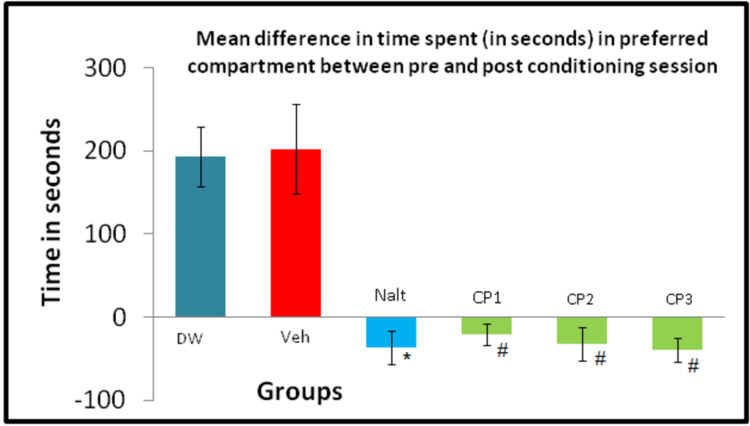 Figure 1
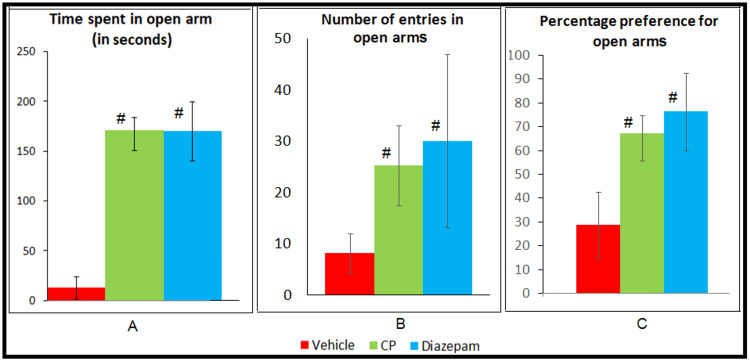 Figure 2
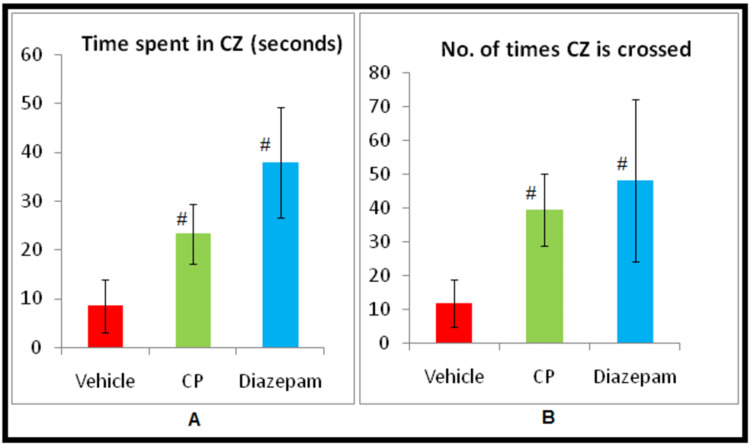 Figure 3
Peer Reviews
No public reviews on file for this paper yet. If you reviewed it on a platform where reviews are public (OpenReview, ICLR, NeurIPS, ICML), you can paste yours below so the community can read it here.
Videos
No videos yet. Explain this paper in a talk, walkthrough, or lecture? Add one.
Taxonomy
TopicsPharmacological Effects of Natural Compounds · Biochemical effects in animals · Neuroscience and Neuropharmacology Research