Thoracoscopic two-port treatment of two extralobar pulmonary sequestrations in the left thoracic cavity of a child: a case report
Huashan Zhao, Shumin Zhao, Yunpeng Zhai, Rui Guo, Gang Shen, Hongxiu Xu, Sai Huang, Shisong Zhang

TL;DR
A rare case of two extralobar pulmonary sequestrations in a child's left thoracic cavity was successfully treated using thoracoscopic two-port surgery.
Contribution
This case report demonstrates the effectiveness of thoracoscopic two-port surgery in diagnosing and treating multiple extralobar bronchopulmonary sequestrations in children.
Findings
Thoracoscopic two-port surgery successfully resected two extralobar bronchopulmonary sequestrations in a 7-month-old girl.
Preoperative CT scans failed to detect one of the lesions, highlighting the diagnostic limitations of CT alone.
The thoracoscopic two-port technique offers better diagnostic and therapeutic outcomes for such rare cases.
Abstract
Reports of bronchopulmonary sequestration in two or more locations within the ipsilateral thorax in children are rare. To date, only a few clinical reports have described thoracoscopic two-port treatment for external lobe bronchopulmonary sequestration. We performed thoracoscopic two-port surgery on a 7-month-old girl and identified two abnormal masses in the left thoracic cavity: one located in the upper hilum of the lung and the other on the surface of the lower diaphragm. Both masses were resected using two-aperture thoracoscopic surgery and were pathologically confirmed as extralobar bronchopulmonary sequestrations. Preoperative computed tomography (CT) only detected the lesions in the upper hilum of the lung, indicating that CT alone is insufficient to achieve a comprehensive and accurate diagnosis of the disease in similar cases. Therefore, the thoracoscopic two-port technique can…
Genes, proteins, chemicals, diseases, species, mutations and cell lines named across the full text — each resolved to its canonical identifier and authoritative record.
Click any figure to enlarge with its caption.
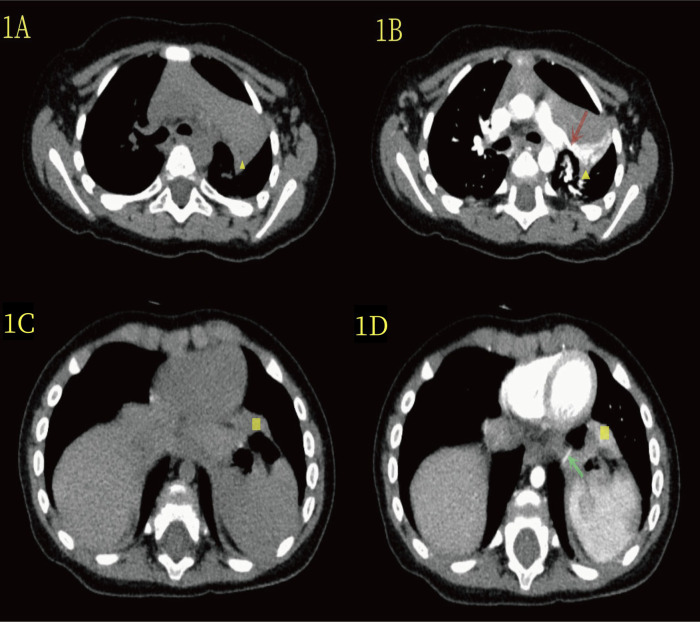 Figure 1
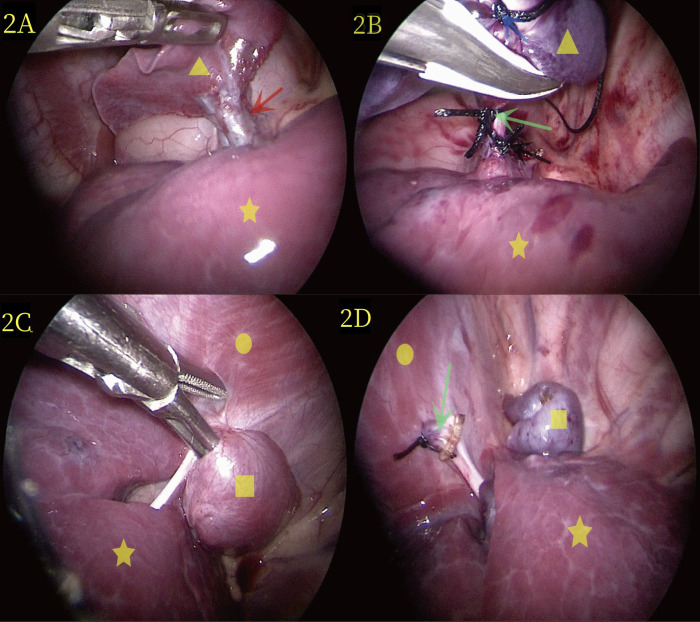 Figure 2
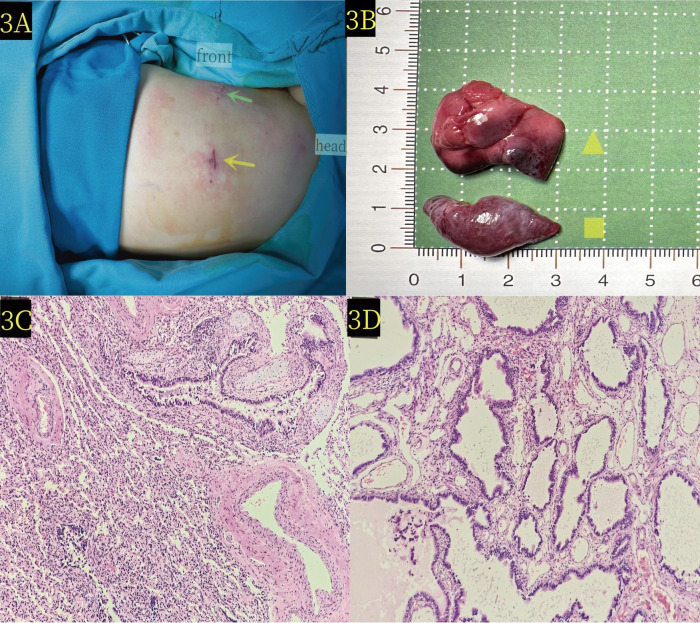 Figure 3
Peer Reviews
No public reviews on file for this paper yet. If you reviewed it on a platform where reviews are public (OpenReview, ICLR, NeurIPS, ICML), you can paste yours below so the community can read it here.
Videos
No videos yet. Explain this paper in a talk, walkthrough, or lecture? Add one.
Taxonomy
TopicsCongenital Diaphragmatic Hernia Studies · Congenital Anomalies and Fetal Surgery · Tracheal and airway disorders