Summation-based Private Segmented Membership Test from Threshold-Fully Homomorphic Encryption
Nirajan Koirala, Jonathan Takeshita, Jeremy Stevens, Taeho Jung

TL;DR
This paper introduces a new privacy-preserving method to check if data is in a segmented set across many holders, improving scalability and security.
Contribution
A novel summation-based PSMT protocol using threshold homomorphic encryption, enabling support for up to 4096 data holders with low overhead.
Findings
The PSMT protocol supports up to 4096 data holders, significantly more than prior work.
Aggregation for 1024 data holders and set size 225 takes 92.5 seconds with minimal overhead increase.
The protocol achieves IND-CPAD security and avoids false positives and privacy leaks.
Abstract
In many real-world scenarios, there are cases where a client wishes to check if a data element they hold is included in a set segmented across a large number of data holders. To protect user privacy, the client’s query and the data holders’ sets should remain encrypted throughout the whole process. Prior work on Private Set Intersection (PSI), Multi-Party PSI (MPSI), Private Membership Test (PMT), and Oblivious RAM (ORAM) falls short in this scenario in many ways. They either require data holders to possess the sets in plaintext, incur prohibitively high latency for aggregating results from a large number of data holders, leak the information about the party holding the intersection element, or induce a high false positive. This paper introduces the primitive of a Private Segmented Membership Test (PSMT). We give a basic construction of a protocol to solve PSMT using a threshold…
Genes, proteins, chemicals, diseases, species, mutations and cell lines named across the full text — each resolved to its canonical identifier and authoritative record.
Click any figure to enlarge with its caption.
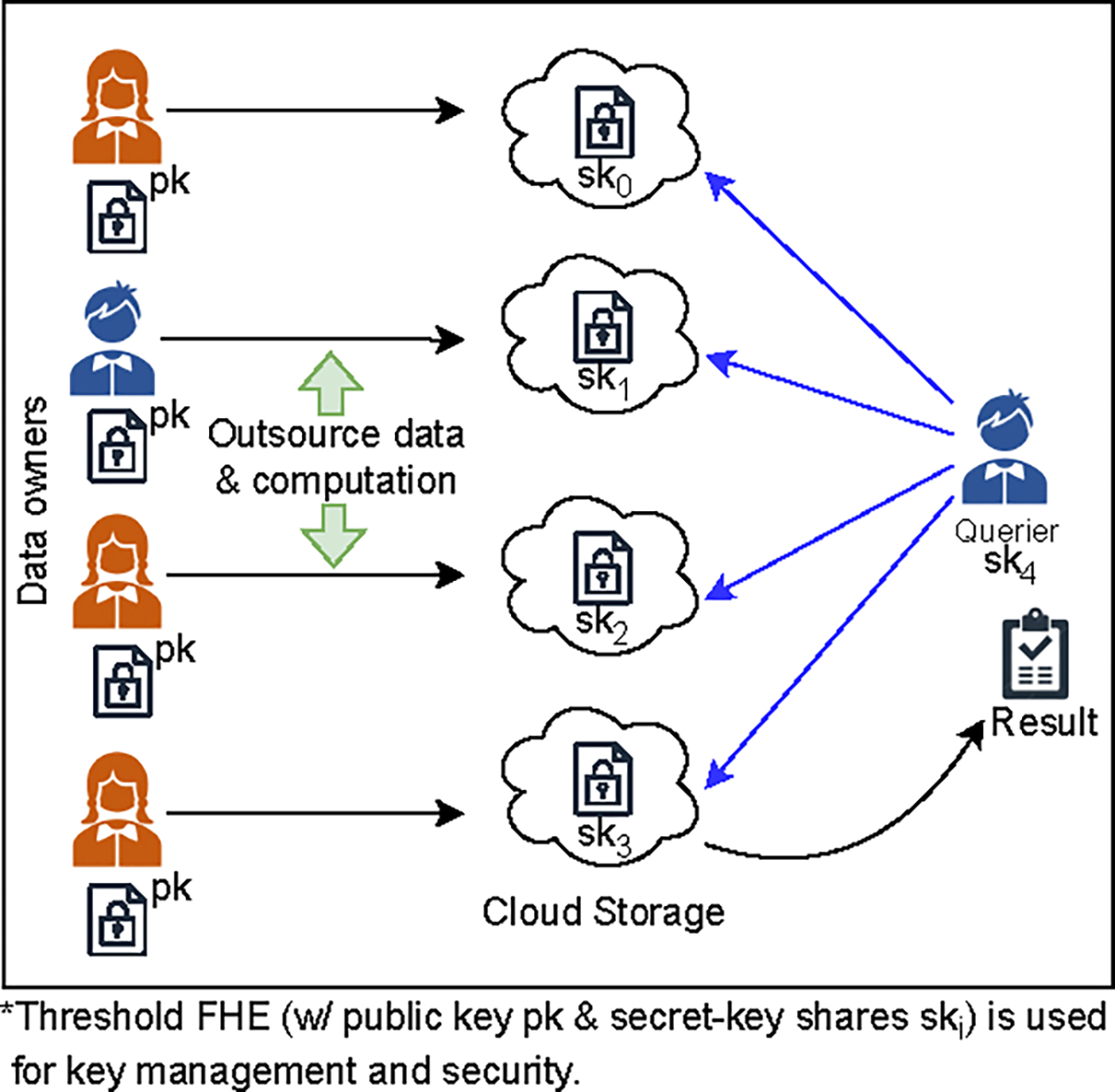 Figure 1
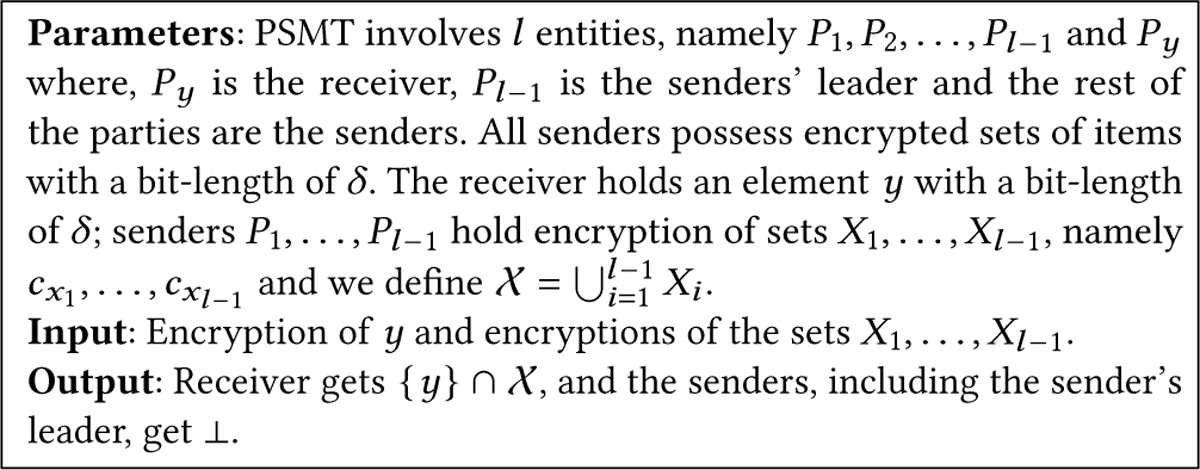 Figure 2
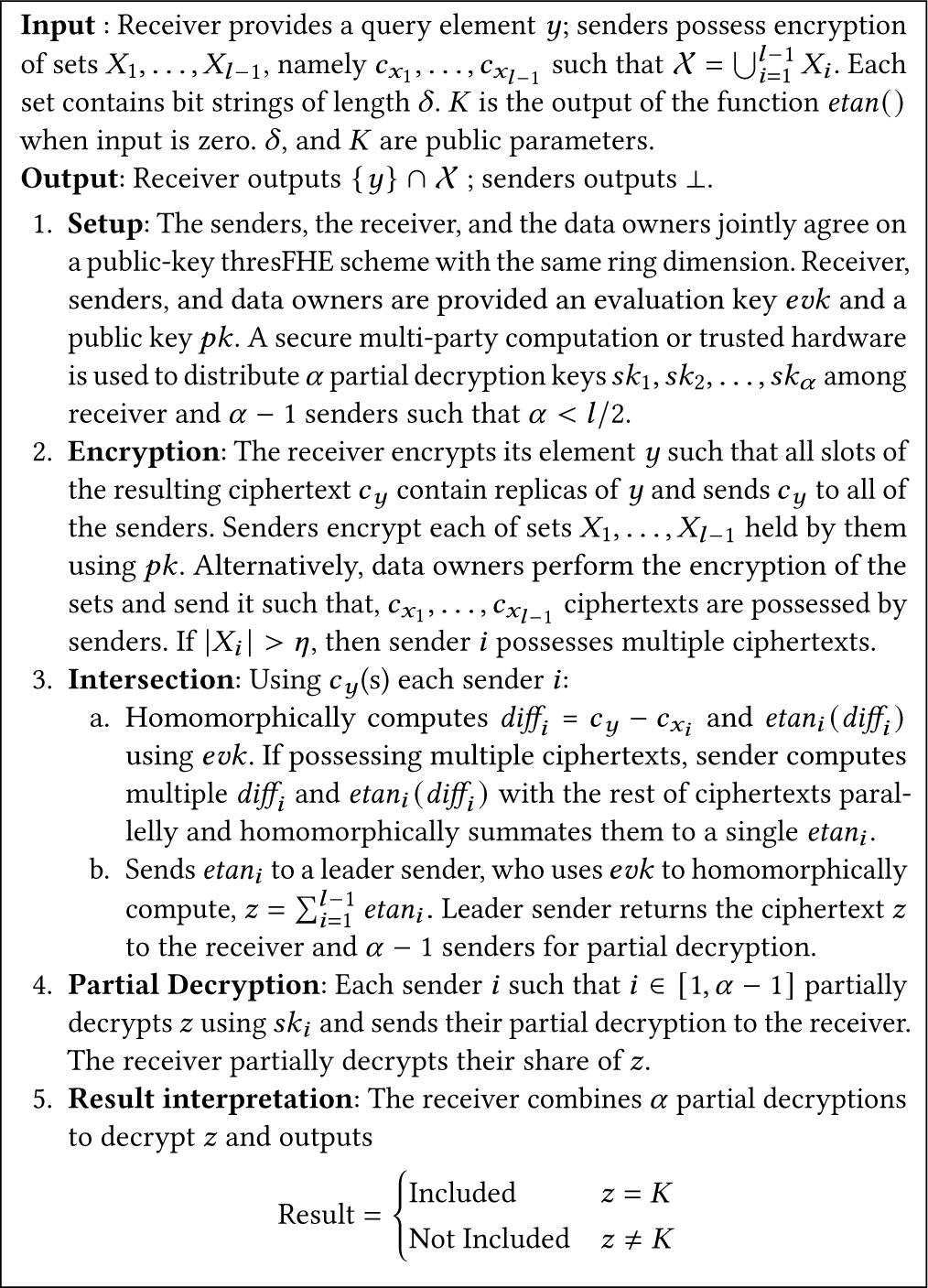 Figure 3
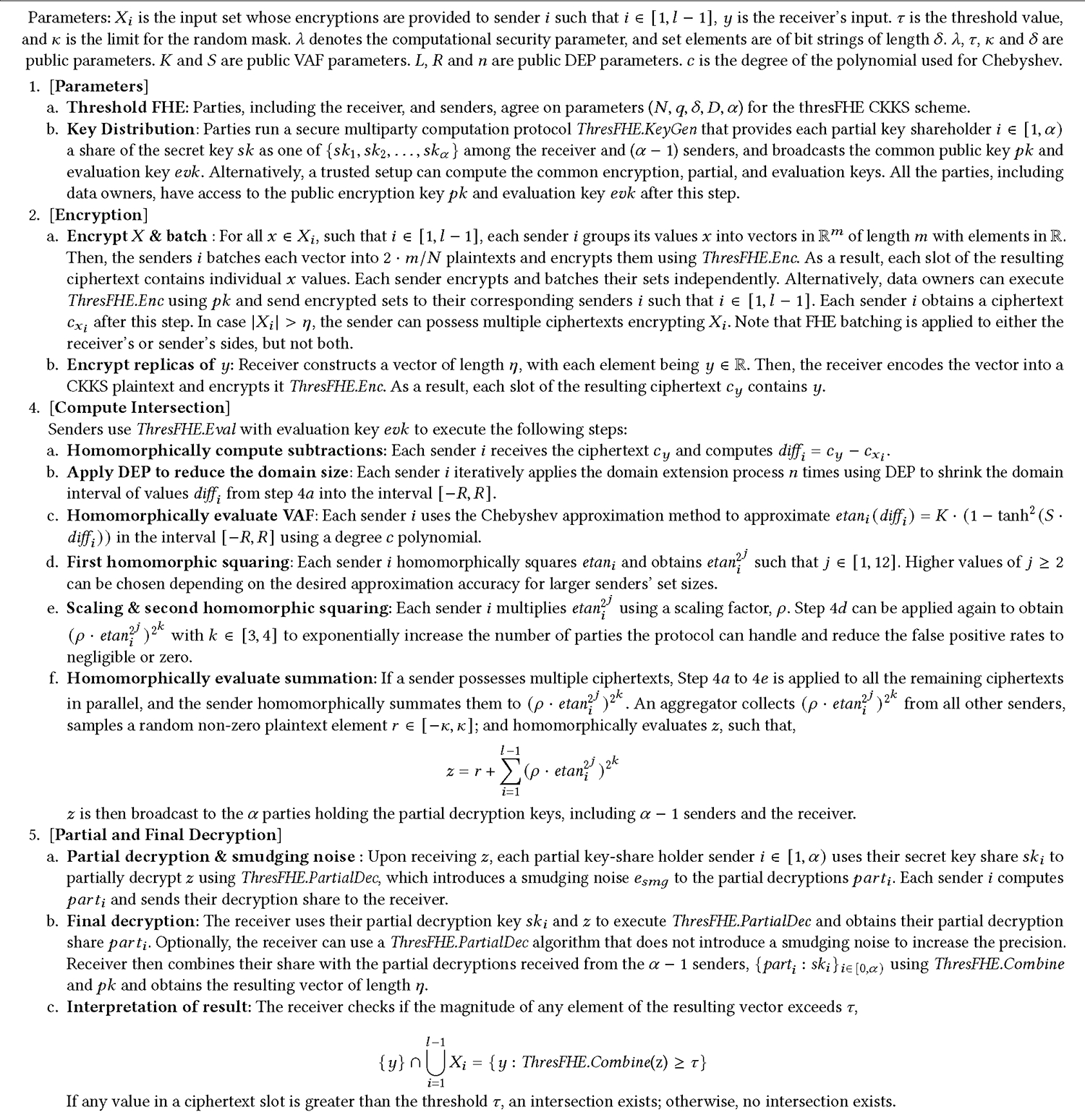 Figure 4
 Figure 5
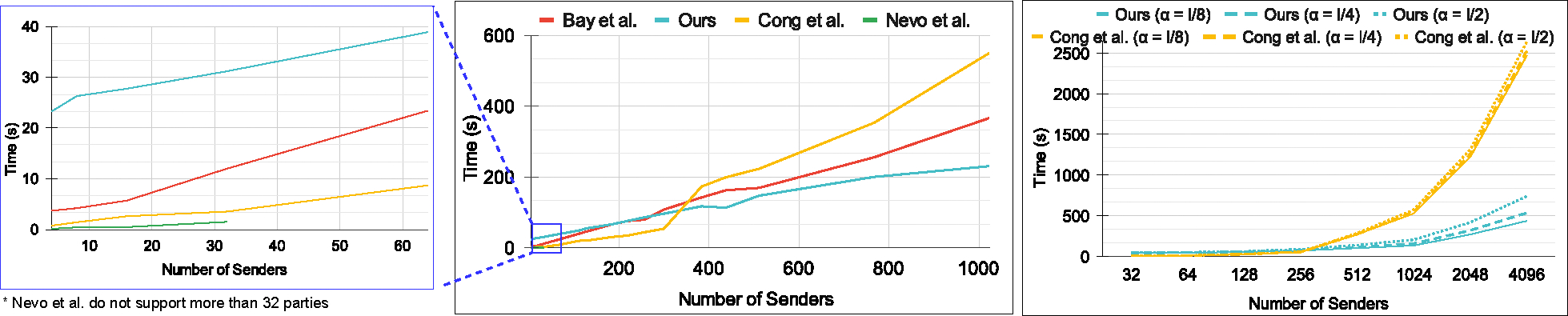 Figure 6
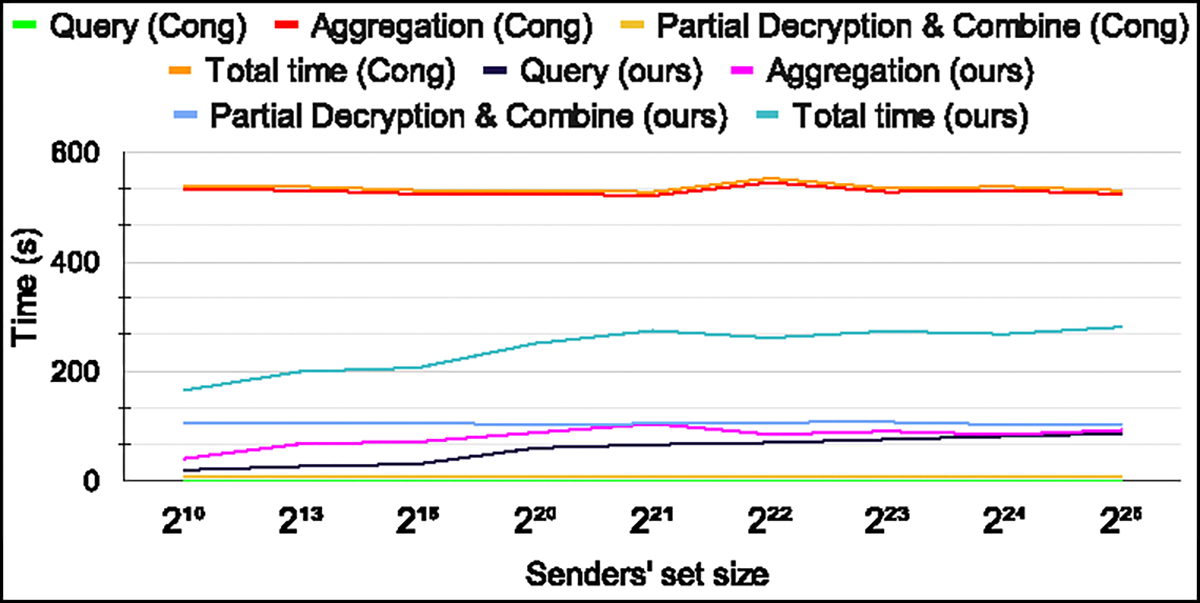 Figure 7
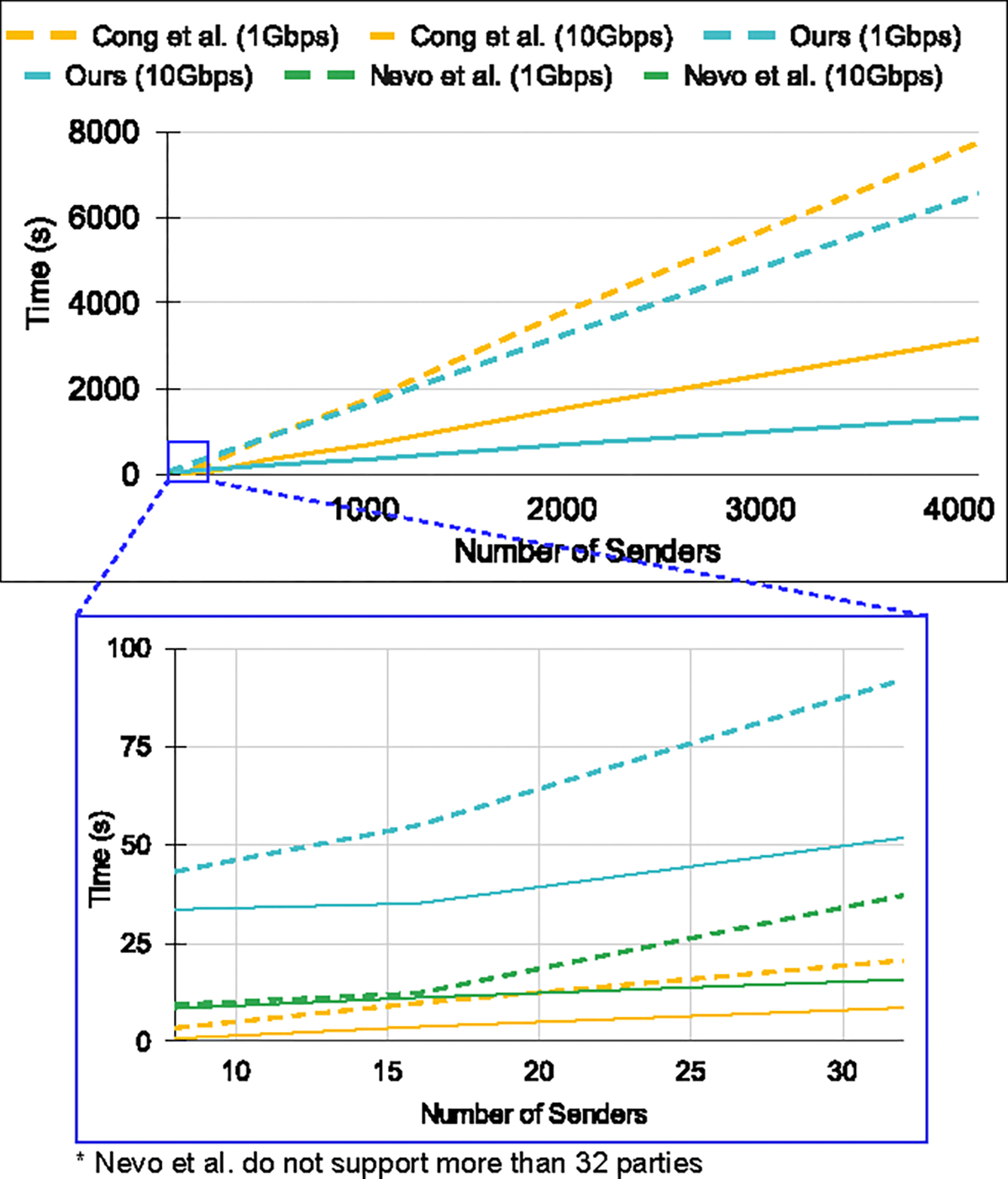 Figure 8
Peer Reviews
No public reviews on file for this paper yet. If you reviewed it on a platform where reviews are public (OpenReview, ICLR, NeurIPS, ICML), you can paste yours below so the community can read it here.
Videos
No videos yet. Explain this paper in a talk, walkthrough, or lecture? Add one.
Taxonomy
TopicsCryptography and Data Security · Privacy-Preserving Technologies in Data · Security in Wireless Sensor Networks