Community-led intensive trapping reduces abundance of key plague reservoir and flea vector
Marcela P. A. Espinaze, Soanandrasana Rahelinirina, Todisoa Radovimiandrinifarany, Fehivola Mandanirina Andriamiarimanana, Alain Berthin Andrianarisoa, Voahangy Soarimalala, Kathryn Scobie, Mireille Harimalala, Minoarisoa Rajerison, Steven R. Belmain, Sandra Telfer

TL;DR
Community-led daily trapping in Madagascar homes effectively reduced plague-carrying rodents and fleas without increasing other flea populations.
Contribution
Demonstrates that sustained, community-based rodent trapping can effectively control plague vectors in rural settings.
Findings
Intensive trapping reduced the main rodent reservoir (Rattus rattus) and indoor flea vector (Xenopsylla cheopis) of plague.
Abundance of the outdoor flea vector (Synopsyllus fonquerniei) did not increase after trapping.
Community-led trapping is a feasible and effective plague mitigation strategy in rural Madagascar.
Abstract
Zoonotic pathogens transmitted by rodents are highly prevalent in low-middle income countries and effective control measures that are easily implemented are urgently needed. Whilst rodent control seems sensible as a mitigation strategy, there is a risk that disease prevalence in reservoir populations can increase following control due to impacts on movement and demographics. Additionally, removing rodents from the population does not necessarily lead to reductions in abundance as populations can compensate for removal through increased breeding and immigration. In a previous study of intermittent control within houses, we showed that reduction in rodent abundance was only very short-term. Working in rural settings within the plague-endemic area of Madagascar, this study explores whether community-led daily intensive rodent trapping within houses can effectively reduce long-term rodent…
Genes, proteins, chemicals, diseases, species, mutations and cell lines named across the full text — each resolved to its canonical identifier and authoritative record.
Click any figure to enlarge with its caption.
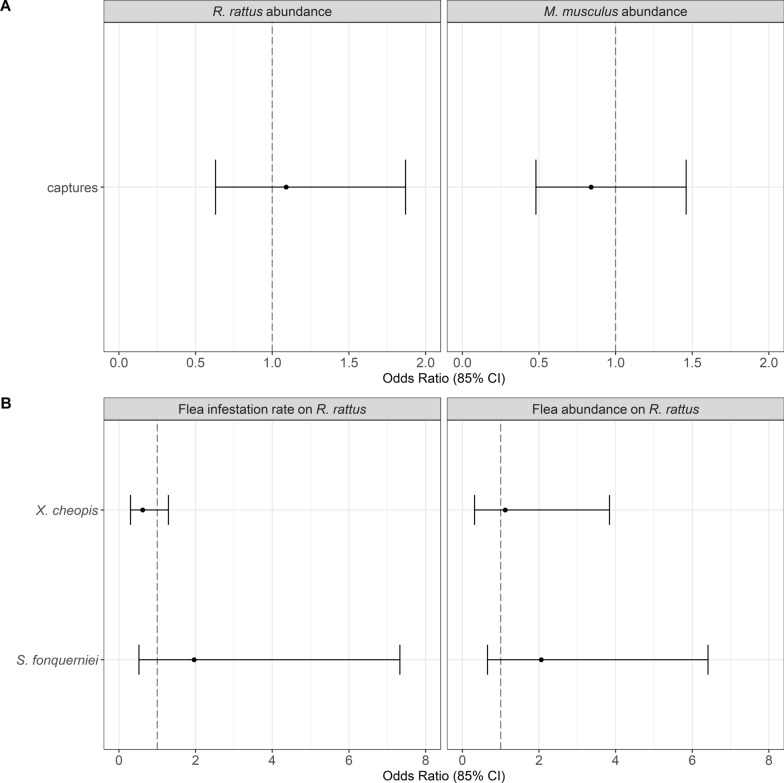 Figure 1
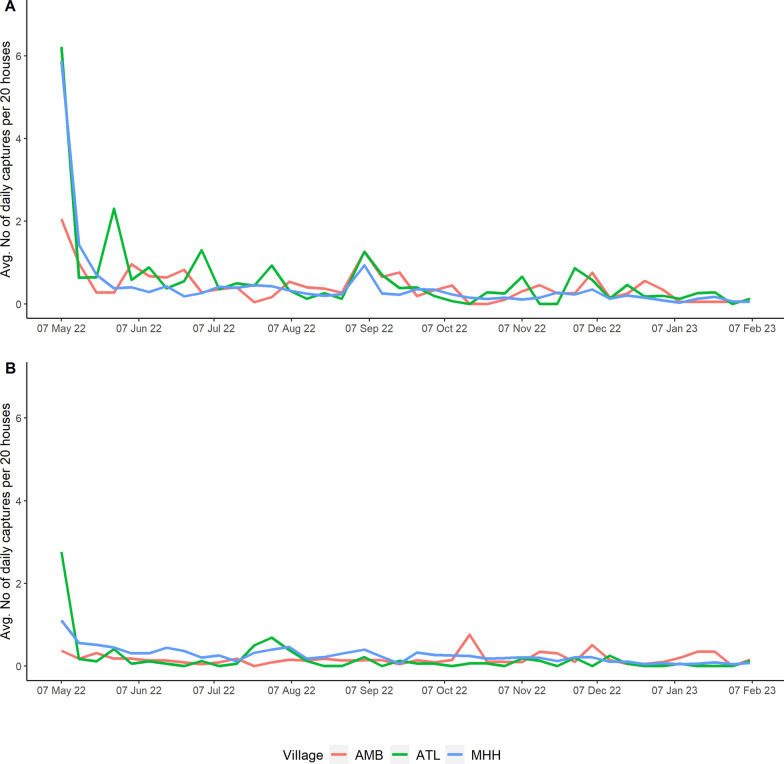 Figure 2
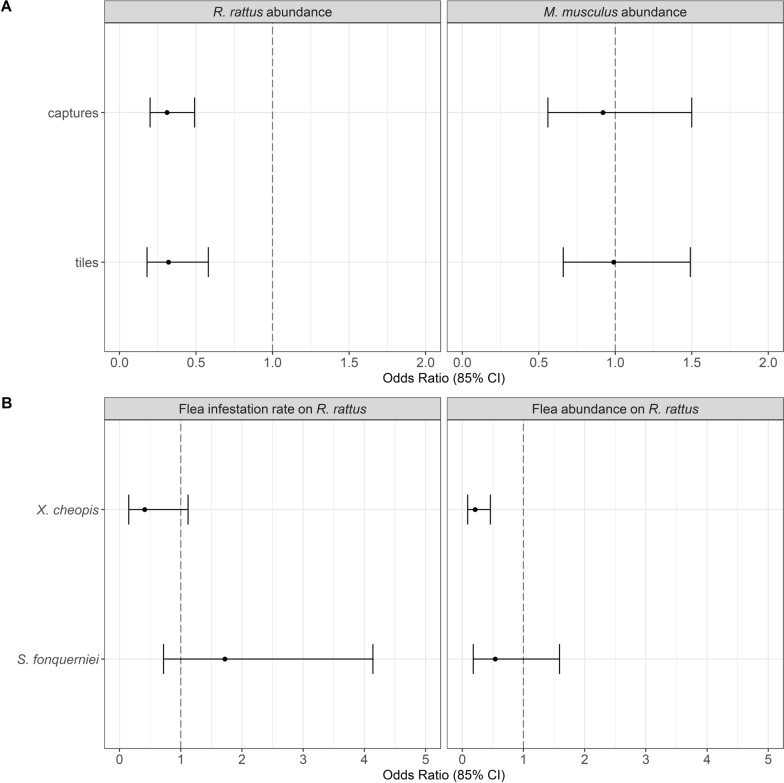 Figure 3
Peer Reviews
No public reviews on file for this paper yet. If you reviewed it on a platform where reviews are public (OpenReview, ICLR, NeurIPS, ICML), you can paste yours below so the community can read it here.
Videos
No videos yet. Explain this paper in a talk, walkthrough, or lecture? Add one.
Taxonomy
TopicsYersinia bacterium, plague, ectoparasites research · Animal Ecology and Behavior Studies · Zoonotic diseases and public health