“Every Time I Go in There, It Gives Me Time to Reflect”: A Qualitative Study of Patient Perspectives on Substance Use, Medications for Opioid Use Disorder, and Harm Reduction Following Hospitalization for Serious Injection-Related Infection
Thisara Jayasinghe, Mari-Lynn Drainoni, Alexander Walley, Christine Grella, Adam Majeski, Andrew Rolles, Ally Cogan, Guhan Venkatesan, Michael D Stein, Marc Larochelle, Jeffrey H Samet, Simeon D Kimmel

TL;DR
Hospitalizations for serious injection-related infections can lead to reflection on substance use and harm reduction, but challenges remain with medications for opioid use disorder.
Contribution
This study provides new qualitative insights into patient perspectives on substance use and addiction care following hospitalization for SIRIs.
Findings
Hospitalization for SIRIs often leads to reduced substance use and adoption of harm reduction practices.
Patients expressed mixed views on medications for opioid use disorder, with lingering stigma and negative experiences.
Hospitalization is seen as a chance for reflection on health and substance use behaviors.
Abstract
Serious injection-related infections (SIRIs) have high morbidity and mortality, in part from incomplete antibiotic treatment, ongoing substance use and reinfection. Understanding how hospitalizations for SIRIs affect patient perspectives on substance use, harm reduction, and medications for opioid use disorder (MOUD) in the era of hospital-based addiction services will inform efforts to improve care. We conducted qualitative interviews at Boston Medical Center with individuals hospitalized with SIRIs between 2020 and 2024. To ensure diverse experiences, we recruited qualifying participants based on record of SIRI International Classification of Diseases, 10th Revision, codes, presence on the outpatient parenteral antibiotic program list, during hospitalizations, and from a drop-in harm reduction program. Interviews were transcribed, coded inductively, and analyzed for key themes.…
Genes, proteins, chemicals, diseases, species, mutations and cell lines named across the full text — each resolved to its canonical identifier and authoritative record.
Click any figure to enlarge with its caption.
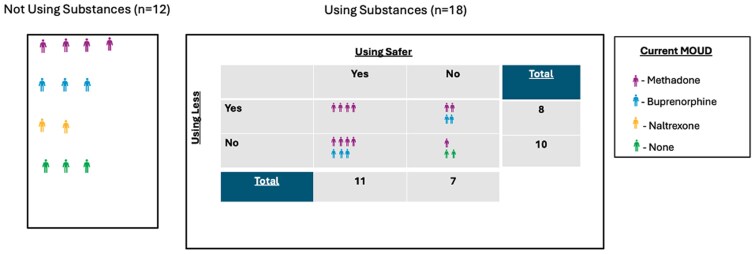 Figure 1
Peer Reviews
No public reviews on file for this paper yet. If you reviewed it on a platform where reviews are public (OpenReview, ICLR, NeurIPS, ICML), you can paste yours below so the community can read it here.
Videos
No videos yet. Explain this paper in a talk, walkthrough, or lecture? Add one.
Taxonomy
TopicsHIV, Drug Use, Sexual Risk · Opioid Use Disorder Treatment · Diabetes Management and Education