Disentangling the role of different resting-state neural markers of adolescent behavioral inhibition and social anxiety
Madison Politte-Corn, Sarah Myruski, Bridget Cahill, Koraly Pérez-Edgar, Kristin A. Buss

TL;DR
This study explores how brain activity patterns relate to social anxiety in adolescents with behavioral inhibition.
Contribution
The study identifies distinct neural markers that may influence social anxiety in behaviorally inhibited adolescents.
Findings
Stronger delta-beta coupling (DBC) was directly linked to higher social anxiety symptoms.
Frontal alpha asymmetry interacted with behavioral inhibition to predict social avoidance and distress.
DBC may indicate general vulnerability to social anxiety, while frontal alpha asymmetry may increase risk in behaviorally inhibited youth.
Abstract
One of the most reliable predictors of adolescent social anxiety is the temperamental profile of behavioral inhibition (BI), but there is considerable heterogeneity in this association. Resting-state EEG-based neural markers, namely frontal alpha asymmetry and delta-beta coupling (DBC), hold promise for improving our understanding of the relation between BI and social anxiety symptoms during adolescence. The current study aimed to (1) clarify the relation between these neural markers, BI, and social anxiety and (2) examine the moderating role, individually, of frontal alpha asymmetry and DBC on the BI-social anxiety link. Participants were 97 adolescents (Mage = 14.29 years, SDage = .98; 84.4 % White, 3.1 % Black, 12.5 % multiracial; 54.6 % female) and their parents. Parents reported on adolescent BI and adolescents self-reported social anxiety symptoms. Additionally, adolescents…
Genes, proteins, chemicals, diseases, species, mutations and cell lines named across the full text — each resolved to its canonical identifier and authoritative record.
Click any figure to enlarge with its caption.
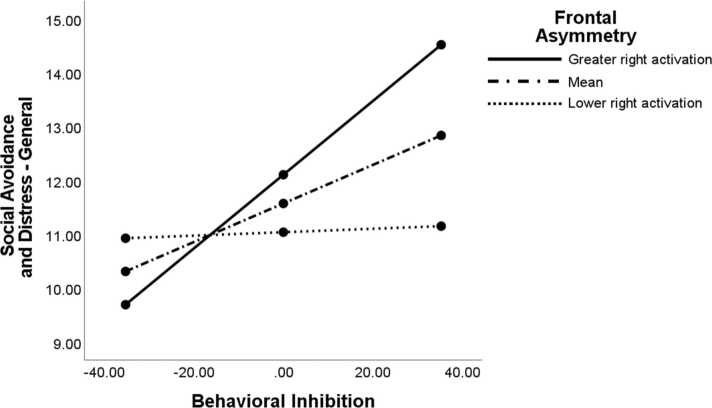 Figure 1
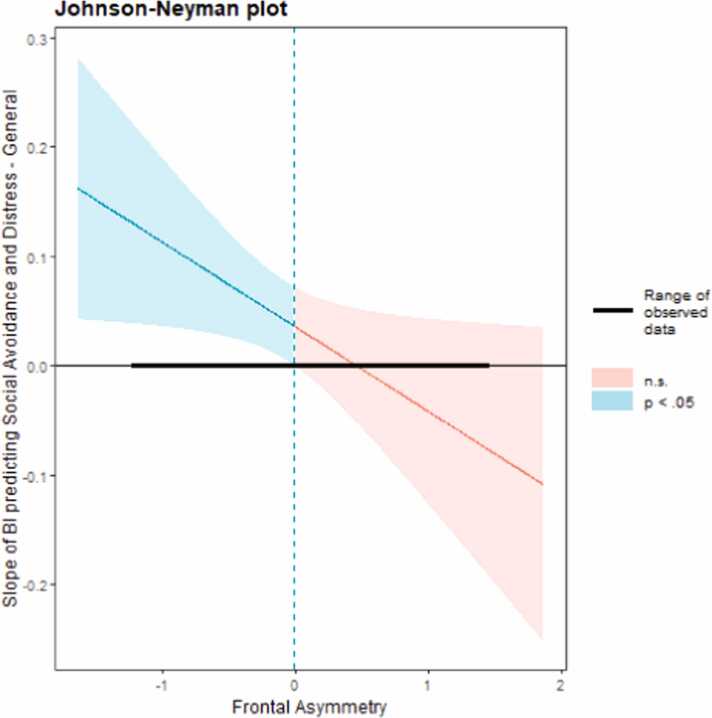 Figure 2
Peer Reviews
No public reviews on file for this paper yet. If you reviewed it on a platform where reviews are public (OpenReview, ICLR, NeurIPS, ICML), you can paste yours below so the community can read it here.
Videos
No videos yet. Explain this paper in a talk, walkthrough, or lecture? Add one.
Taxonomy
TopicsNeuroendocrine regulation and behavior · Memory and Neural Mechanisms · Neural dynamics and brain function