Association between urinary polycyclic aromatic hydrocarbon metabolites and premature menopause: a nationally representative cross-sectional study in the United States
Qian Yang, Lingling Zeng, Jinfa Huang, Jianxiong Wuliu, Hai Liang, Kaixian Deng

TL;DR
This study found that higher levels of certain urinary polycyclic aromatic hydrocarbon metabolites are linked to an increased risk of premature menopause in U.S. women.
Contribution
The study is the first large-scale population-based analysis linking urinary PAH metabolites to premature menopause.
Findings
Elevated levels of 1-NAP, 2-NAP, and 3-FLU were significantly associated with increased premature menopause risk.
Nonlinear relationships were observed between several PAH metabolites and premature menopause risk.
White participants showed greater susceptibility to the effects of UPAHMs.
Abstract
Premature menopause, defined as natural menopause before age 40, is associated with diminished ovarian reserve. Despite growing concerns regarding environmental pollutants, no large-scale population-based studies have systematically examined the association between urinary polycyclic aromatic hydrocarbon metabolites (UPAHMs) and premature menopause. This cross-sectional study analyzed 2001–2020 NHANES data, including urinary levels of six PAH metabolites: 1-naphthol (1-NAP), 2-naphthol (2-NAP), 3-fluorene (3-FLU), 2-fluorene (2-FLU), 1-phenanthrene (1-PHE), and 1-pyrene (1-PYR). Premature menopause was self-reported as natural menopause occurring before age 40. Multivariable logistic regression assessed UPAHMs’ association with premature menopause, with restricted cubic splines (RCS) evaluating nonlinear trends. Subgroup analyses examined demographic interactions. Among 2,565…
Genes, proteins, chemicals, diseases, species, mutations and cell lines named across the full text — each resolved to its canonical identifier and authoritative record.
Click any figure to enlarge with its caption.
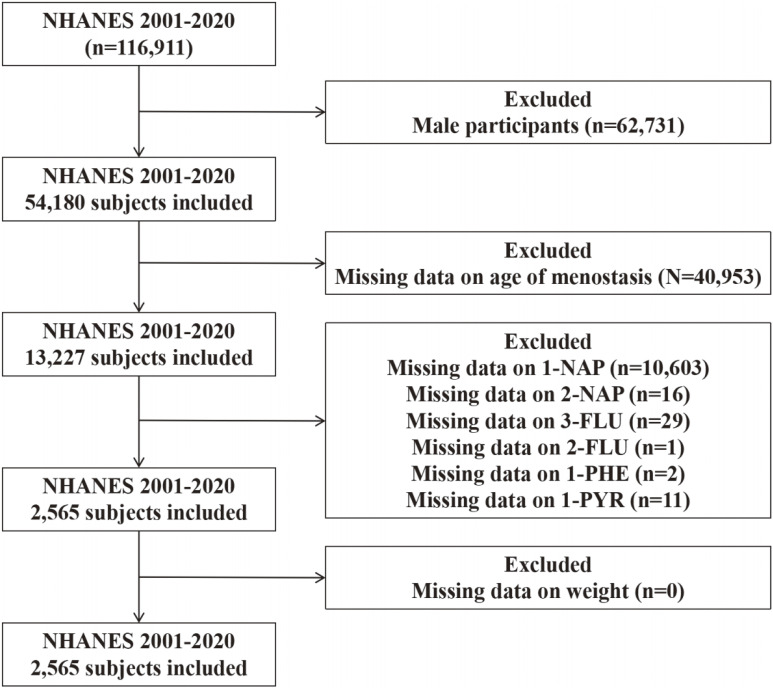 Figure 1
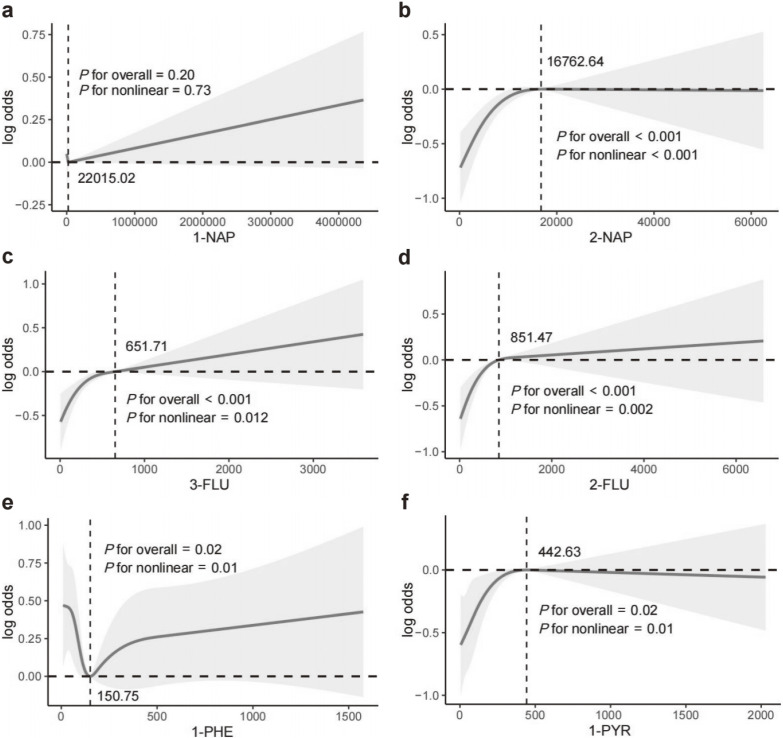 Figure 2
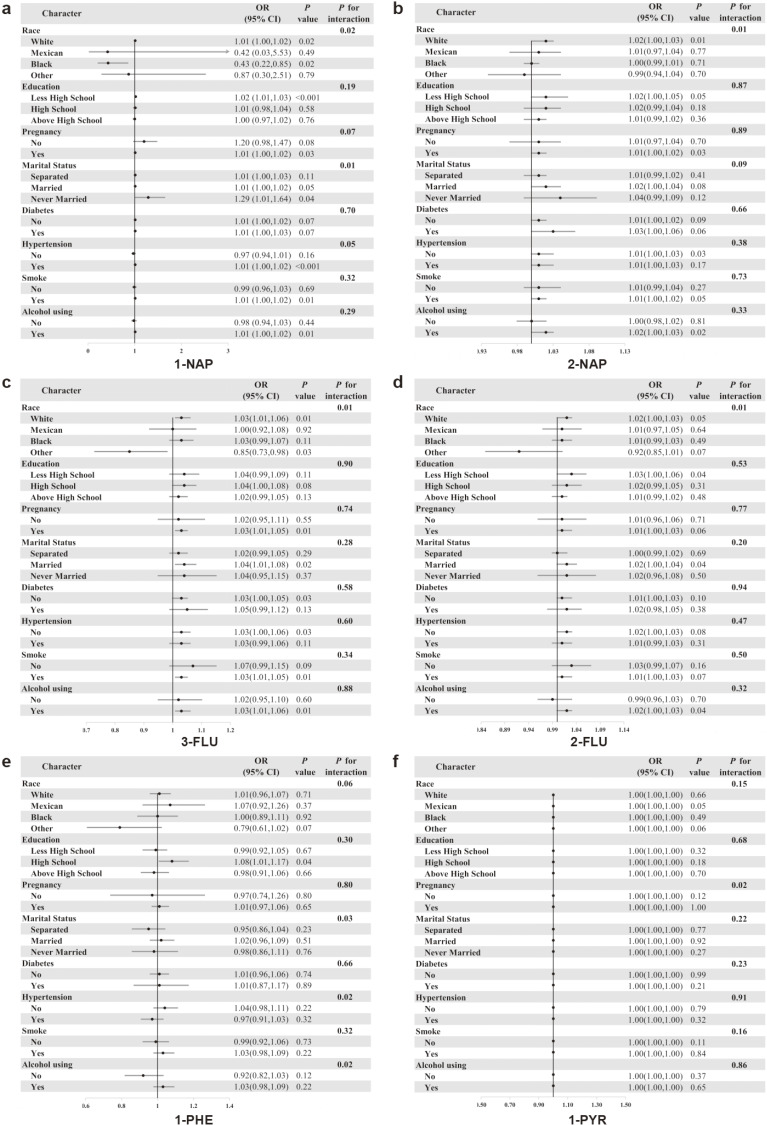 Figure 3
Peer Reviews
No public reviews on file for this paper yet. If you reviewed it on a platform where reviews are public (OpenReview, ICLR, NeurIPS, ICML), you can paste yours below so the community can read it here.
Videos
No videos yet. Explain this paper in a talk, walkthrough, or lecture? Add one.
Taxonomy
TopicsEffects and risks of endocrine disrupting chemicals · Toxic Organic Pollutants Impact · Carcinogens and Genotoxicity Assessment