Implementation of the Extension for Community Healthcare Outcomes Model for Hypertension Education of Frontline Health Care Workers in the Federal Capital Territory, Nigeria: Explanatory Sequential Mixed Methods Evaluation
Abigail S Baldridge, Adaora Odukwe, Olabisi Dabiri, L Nneka Mobisson, Maria Moosa Munnee, Ayoposi Ogboye, Dorothy Naa Korkoi Aryee, Rodrick Mwale, Jonas Akpakli, Ikechukwu A Orji, Rosemary C B Okoli, Nanna R Ripiye, Dike B Ojji, Mark D Huffman, Namratha R Kandula

TL;DR
A hypertension education program for Nigerian healthcare workers was evaluated and found to improve knowledge and be useful, though challenges like connectivity and workload were noted.
Contribution
The study evaluates the implementation of a hypertension ECHO program for community health workers in Nigeria using mixed methods.
Findings
1407 participants attended the ECHO sessions, with over 97% finding the sessions useful.
Postsession knowledge scores increased by 2.3%-10.5%, indicating moderate effectiveness.
Most healthcare workers applied the learned information to patient care, but barriers like network connectivity and clinical demands were reported.
Abstract
The Extension for Community Healthcare Outcomes (ECHO) model was adapted for hypertension education of community health extension workers in the Federal Capital Territory, Nigeria, and delivered as a 7-part series. This study aims to evaluate implementation outcomes of the hypertension ECHO series mapped to the first 3 levels of the Kirkpatrick model. Outcomes included reach, appropriateness (level 1), effectiveness (level 2), and penetration (level 3). From August 2022 to April 2023, 7 hypertension ECHO sessions were delivered via Zoom (Zoom Video Communications, Inc) to a health care worker audience including targeted community health extension workers at 12 primary health centers (PHCs) in the Hypertension Treatment in Nigeria Program. Health care workers provided demographic information, engaged in pre- and postsession knowledge quizzes, and shared feedback during live sessions.…
Genes, proteins, chemicals, diseases, species, mutations and cell lines named across the full text — each resolved to its canonical identifier and authoritative record.
Click any figure to enlarge with its caption.
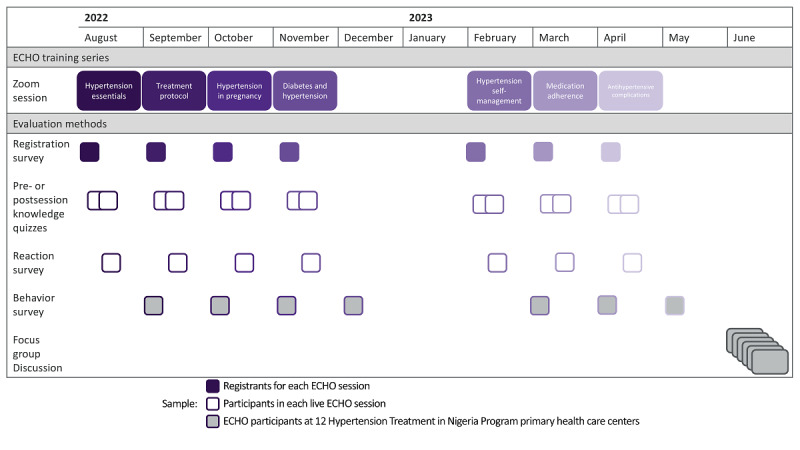 Figure 1
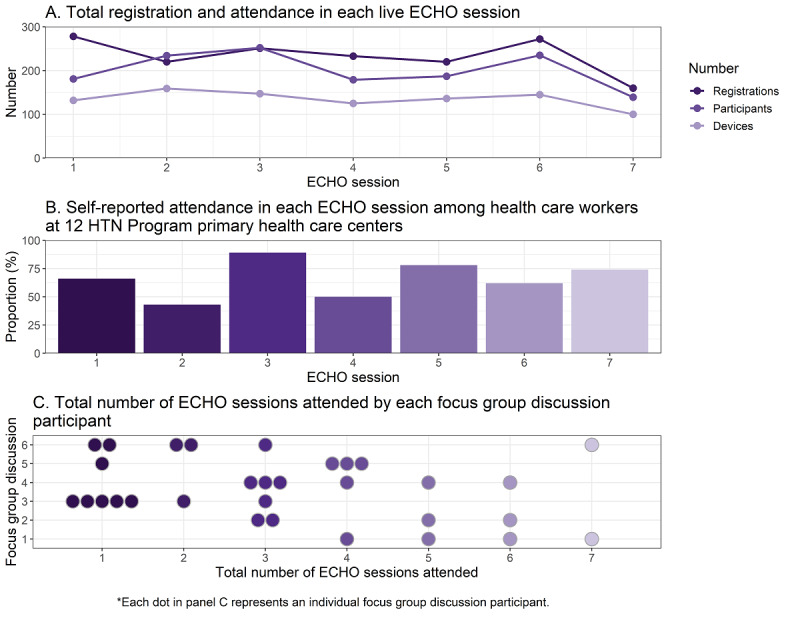 Figure 2
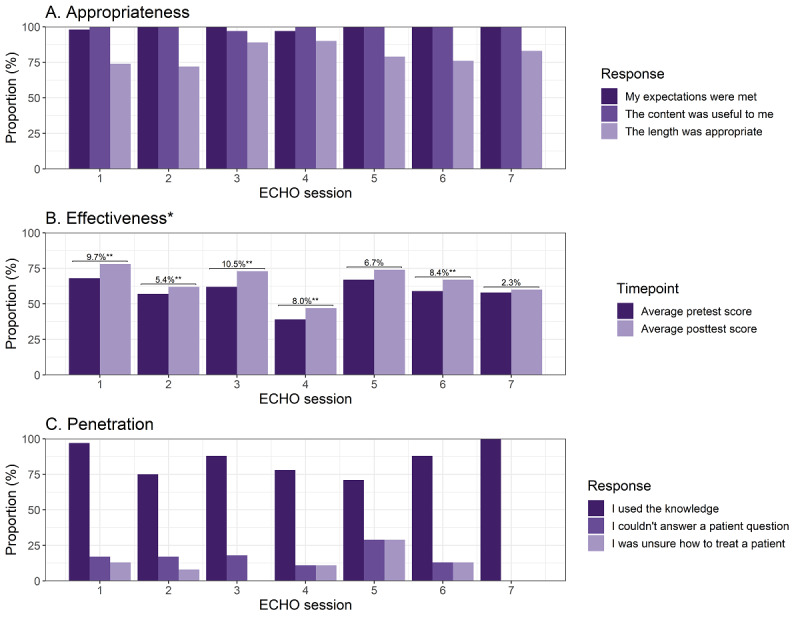 Figure 3
 Figure 4
Peer Reviews
No public reviews on file for this paper yet. If you reviewed it on a platform where reviews are public (OpenReview, ICLR, NeurIPS, ICML), you can paste yours below so the community can read it here.
Videos
No videos yet. Explain this paper in a talk, walkthrough, or lecture? Add one.
Taxonomy
TopicsPrimary Care and Health Outcomes · Health Sciences Research and Education · Global Maternal and Child Health