Identification of metastasis-associated protein 1 (MTA1) as a new molecular marker for canine urothelial carcinoma
Gisella Campanelli, Noah Waxner, Nema Parkhomovsky, Chun Kuen Mak, Ji-Hang Yin, Susanne Je-Han Lin, Raphael Vanderstichel, Ching Yang, Anait S. Levenson

TL;DR
This study identifies MTA1 as a potential marker for aggressive canine bladder cancer and suggests it could be a target for treatment.
Contribution
MTA1 is newly identified as a molecular marker associated with aggressive features in canine urothelial carcinoma.
Findings
MTA1 and COX2 are overexpressed in canine UC compared to normal bladder tissue.
MTA1 correlates with high tumor grade, invasion, and metastasis in canine UC.
E-cad levels are higher in normal bladder and unexpectedly in metastatic tumor cells.
Abstract
Although metastasis-associated protein 1 (MTA1) is known to play a role in cancer invasion and metastasis of various cancers, the clinical significance of its expression in canine urothelial carcinoma (UC) has not been explored. We sought to evaluate the expression of MTA1, cyclooxygenase 2 (COX2) and E-cadherin (E-cad) in association with clinicopathological parameters in clinical samples of canine UC. We retrospectively analyzed UC tissues from 28 canine patients using immunohistochemistry for Ki67, CD31, MTA1, COX2, and E-cad staining. Statistical significance for marker staining intensities was evaluated by ANOVA or Student’s t-test. The correlation between molecular markers in canine UC samples detected by IHC and clinicopathological features was calculated by the Wilcoxon (Mann–Whitney) and Kruskal-Wallis tests. Western blot analysis was performed for detection of EMT markers in…
Genes, proteins, chemicals, diseases, species, mutations and cell lines named across the full text — each resolved to its canonical identifier and authoritative record.
Click any figure to enlarge with its caption.
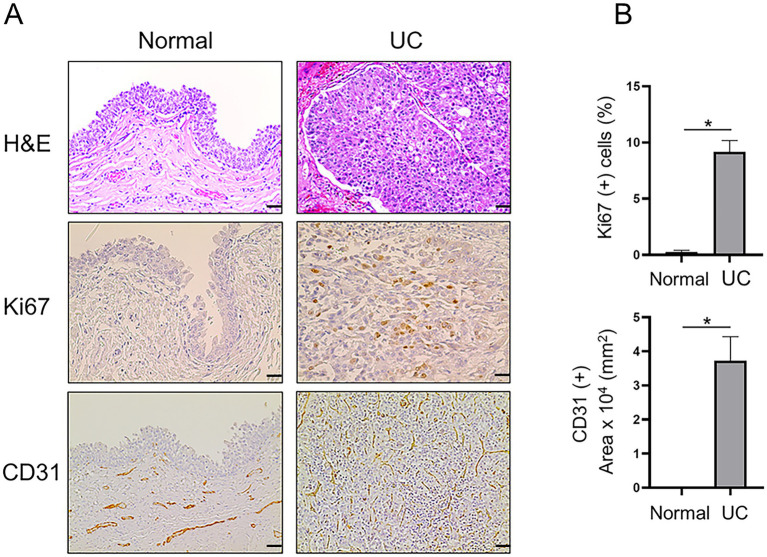 Figure 1
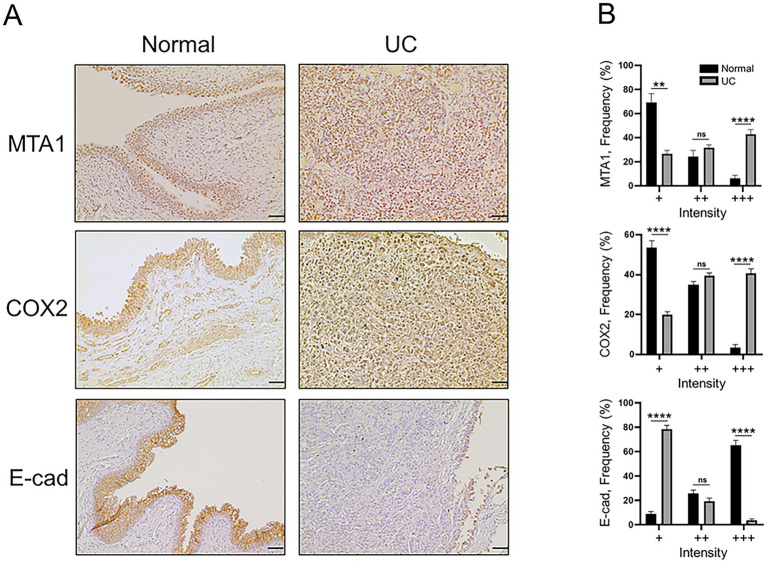 Figure 2
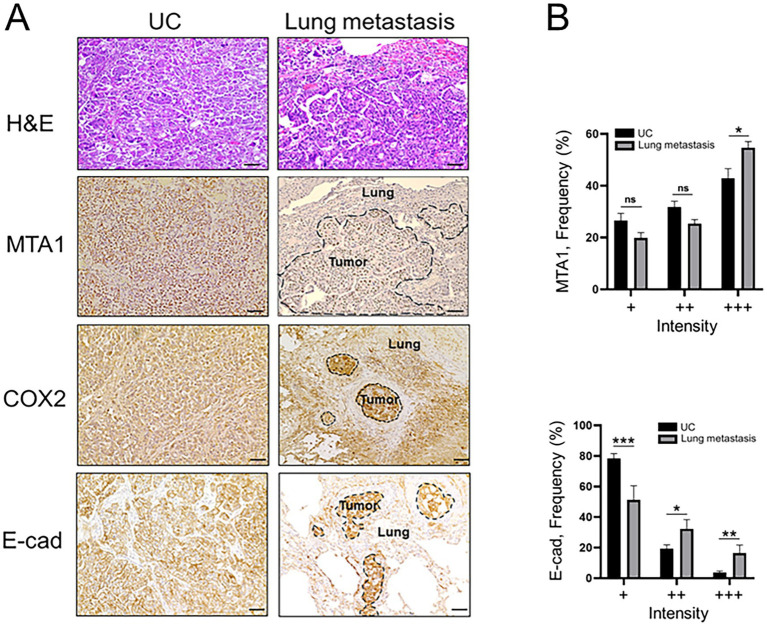 Figure 3
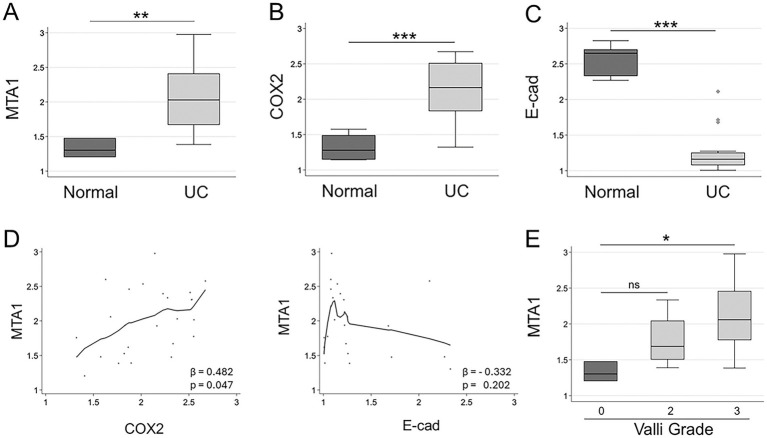 Figure 4
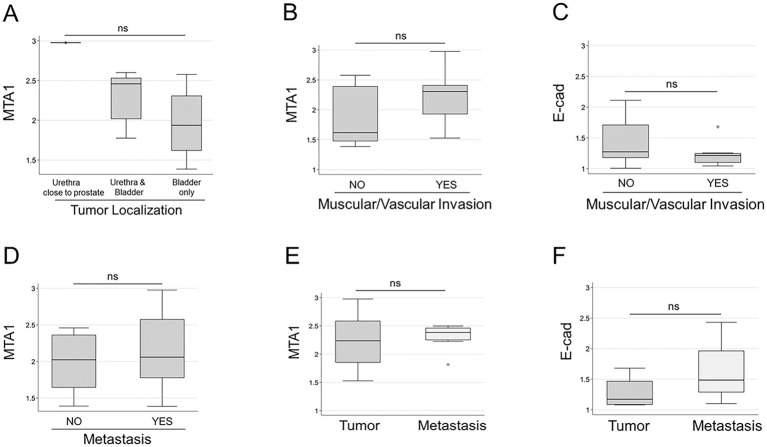 Figure 5
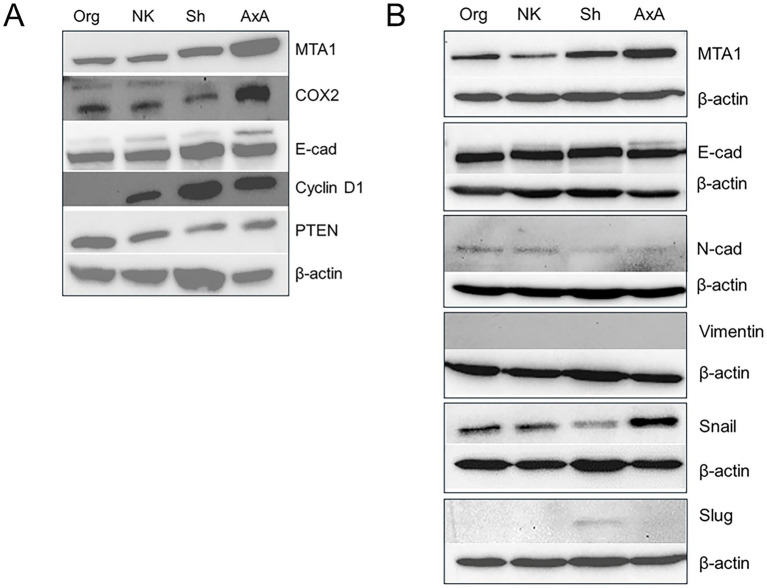 Figure 6
Peer Reviews
No public reviews on file for this paper yet. If you reviewed it on a platform where reviews are public (OpenReview, ICLR, NeurIPS, ICML), you can paste yours below so the community can read it here.
Videos
No videos yet. Explain this paper in a talk, walkthrough, or lecture? Add one.
Taxonomy
TopicsVeterinary Oncology Research · Cancer, Stress, Anesthesia, and Immune Response · Polyamine Metabolism and Applications