Sensitivity of Three Impact Assessment Methodologies in Adjusting Preventive Chemotherapy Treatment Decisions for Schistosomiasis Elimination in Ondo State, Nigeria
Uwem F. Ekpo, Francisca O. Olamiju, Hammed O. Mogaji, Samuel N. Ovia, Olanike O. Oladipupo, Alice Y. Kehinde, Fatai O. Oyediran, Moses Aderogba, Louise K. Makau-Barasa

TL;DR
This study compares three methods for assessing the impact of preventive chemotherapy on schistosomiasis in Nigeria, finding that the practical method is more sensitive in guiding treatment decisions.
Contribution
The paper evaluates the sensitivity of three impact assessment methods for adjusting schistosomiasis treatment decisions in Nigeria.
Findings
Significant reductions in schistosomiasis prevalence were observed in Ese-Odo and Ile-Oluiji, but not in Irele.
The practical method yielded higher prevalence estimates compared to sentinel and cluster methods.
Sentinel and cluster methods suggested stopping PC, while the practical method suggested continuing it in Irele.
Abstract
Efforts to eliminate schistosomiasis in Africa have advanced, with most countries evaluating the impact of preventive chemotherapy (PC) on disease burden. WHO has recommended eight distinct methodologies for such assessment. We, therefore, investigated the sensitivity of three prominent methodologies—sentinel, cluster, and practical, each varying in site selection, sampling approach, and data interpretation. We conducted a cross-sectional study among 2,093 children across 45 schools in Ese-Odo, Ile-Oluiji, and Irele local government areas (LGAs) of Ondo, Nigeria. Fresh stool and urine samples were processed using Kato–Katz and urine filtration techniques to estimate prevalence, which was compared with 2014 baseline estimates. Findings showed significant prevalence reductions in Ese-Odo from 1.3% (95% CI: 0.5–3.3) at baseline to 0.1% (95% CI: 0.01–0.95) at impact (d = −92.3%, P = 0.03)…
Genes, proteins, chemicals, diseases, species, mutations and cell lines named across the full text — each resolved to its canonical identifier and authoritative record.
Click any figure to enlarge with its caption.
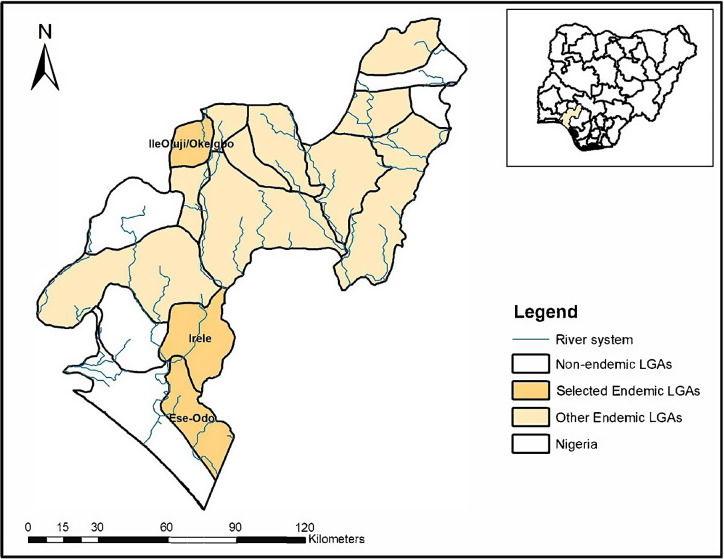 Figure 1
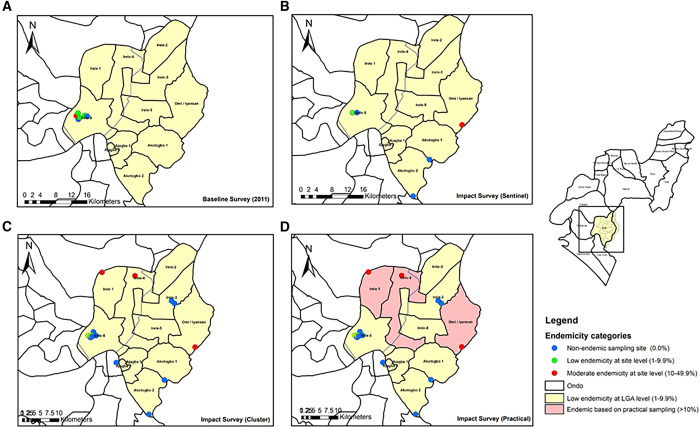 Figure 2
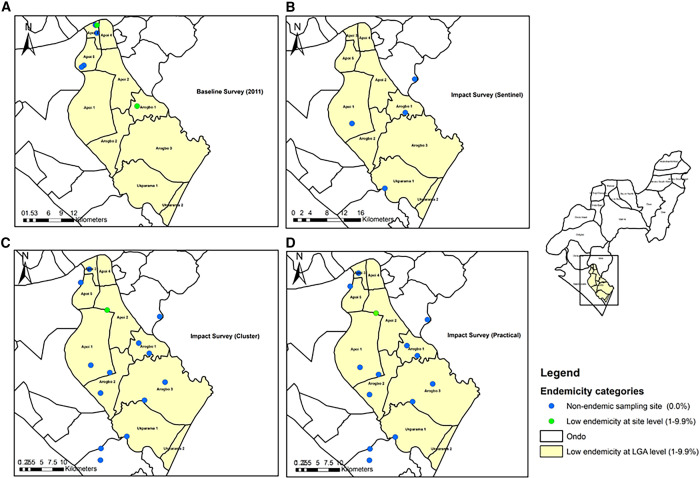 Figure 3
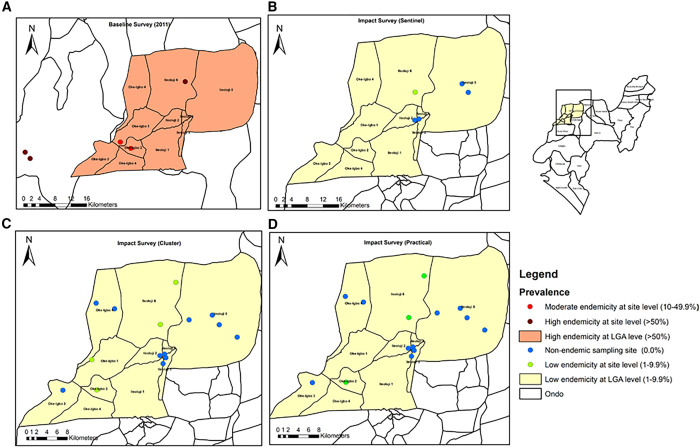 Figure 4
Peer Reviews
No public reviews on file for this paper yet. If you reviewed it on a platform where reviews are public (OpenReview, ICLR, NeurIPS, ICML), you can paste yours below so the community can read it here.
Videos
No videos yet. Explain this paper in a talk, walkthrough, or lecture? Add one.
Taxonomy
TopicsParasites and Host Interactions · Global Maternal and Child Health · Global Health Workforce Issues