Self-regulatory Sex Motives Scale in Online Dating: Exploratory Factor Analysis and Internal Consistency
Fatemeh Fereidooni, Judith K. Daniels, Miriam J. J. Lommen

TL;DR
This study introduces a new scale to measure sex motives in online dating and finds that these motives are linked to risky sexual behavior.
Contribution
The SSOD scale is a novel tool for assessing sex motives in online dating contexts.
Findings
The SSOD demonstrated high internal consistency.
An exploratory factor analysis supported a one-factor structure for the SSOD.
Higher sex motives were associated with more frequent first-date sex.
Abstract
Risky sex behavior is common among online dating users. Understanding the motives behind risky sex behavior might help identify suitable targets for prevention. We developed the Self-regulatory Sex Motives Scale in Online Dating (SSOD) to assess sex motives for casual sex in online dating users. This study evaluated the psychometric properties of the SSOD and examined the relationship between sex motives indexed by the SSOD and risky sex behavior. The new scale showed high internal consistency. Exploratory factor analysis suggested a one-factor solution. Sex motives were related to a higher frequency of having sex on the first date.
Genes, proteins, chemicals, diseases, species, mutations and cell lines named across the full text — each resolved to its canonical identifier and authoritative record.
Click any figure to enlarge with its caption.
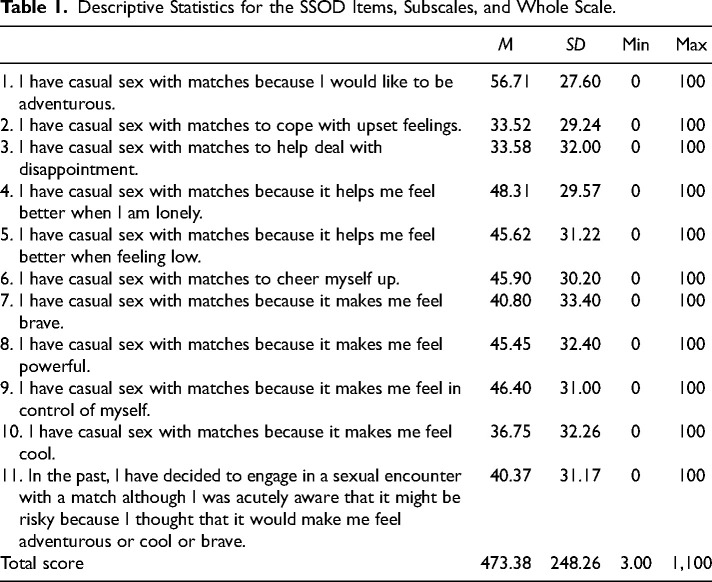 Figure 1
 Figure 2
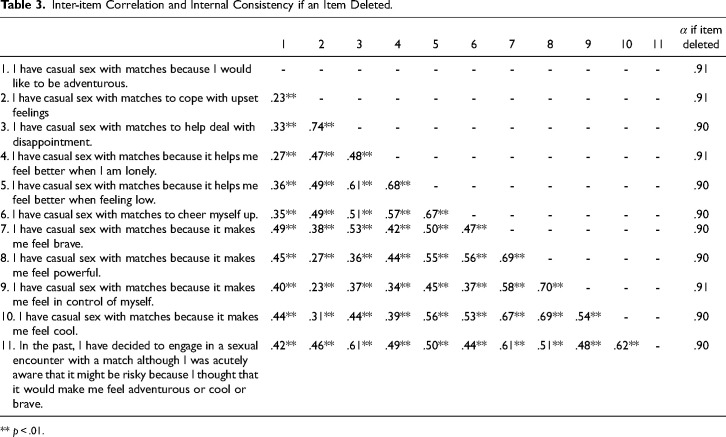 Figure 3
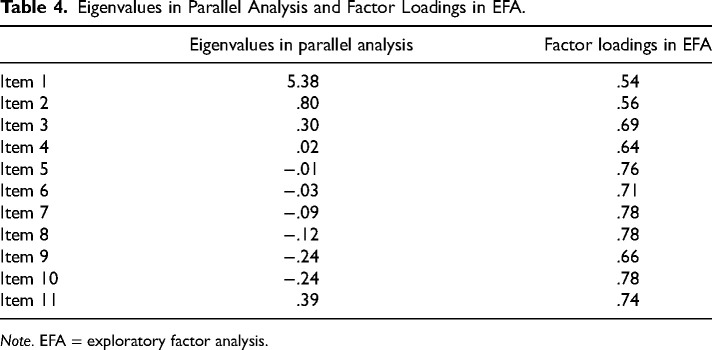 Figure 4
Peer Reviews
No public reviews on file for this paper yet. If you reviewed it on a platform where reviews are public (OpenReview, ICLR, NeurIPS, ICML), you can paste yours below so the community can read it here.
Videos
No videos yet. Explain this paper in a talk, walkthrough, or lecture? Add one.
Taxonomy
TopicsSexuality, Behavior, and Technology · Gender, Feminism, and Media · Evolutionary Psychology and Human Behavior