Reconstruction of the X and Y haplotypes in the genetically improved Abbassa nile tilapia genome assembly
Graham Etherington, Adam Ciezarek, Tarang Mehta, Tom Barker, Alex Durrant, Fiona Fraser, Suzanne Henderson, Naomi Irish, Gemy Kaithakottil, Vanda Knitlhoffer, Shimaa Ali, Trinh Trong, Chris Watkins, David Swarbreck, Karim Gharbi, John Benzie, Wilfried Haerty

TL;DR
This paper presents a high-quality genome assembly of a genetically improved Nile tilapia strain and identifies its sex determination system.
Contribution
The study provides a new genome assembly for the Abbassa Nile tilapia and reconstructs X and Y haplotypes, revealing its shared sex determination system with another strain.
Findings
A high-quality genome assembly was generated for the Abbassa Nile tilapia using PacBio HiFi and Omni-C Illumina sequencing.
Both X and Y haplotypes were reconstructed, identifying amhY and amhΔy on LG23.
The Abbassa strain shares the same sex determination system as GIFT, differing from the existing reference genome.
Abstract
The success of the Nile tilapia (Oreochromis niloticus) as an aquaculture species is partly the result of continuous selective breeding leading to high performing strains. These elite strains have been derived from breeding populations of diverse origins and crosses with other Oreochromis species. Owing to the complex and unique evolutionary histories of each strain, existing reference genomes of wild populations are unsuitable to implement genomic selection for beneficial traits such as growth or environmental resilience in aquaculture programmes. Here we generated a high-quality genome assembly and annotation of the WorldFish Genetically Improved Abbassa Nile tilapia (GIANT) elite strain using a combination of PacBio HiFi, and Omni-C Illumina sequencing. As a male Abbassa Nile tilapia was used for the generation of the genome assembly, we reconstructed both X and Y haplotypes,…
Genes, proteins, chemicals, diseases, species, mutations and cell lines named across the full text — each resolved to its canonical identifier and authoritative record.
Click any figure to enlarge with its caption.
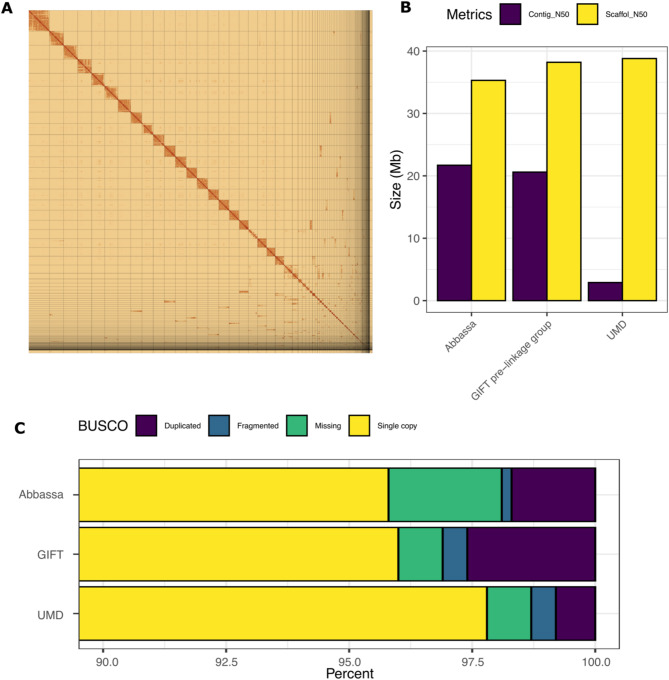 Figure 1
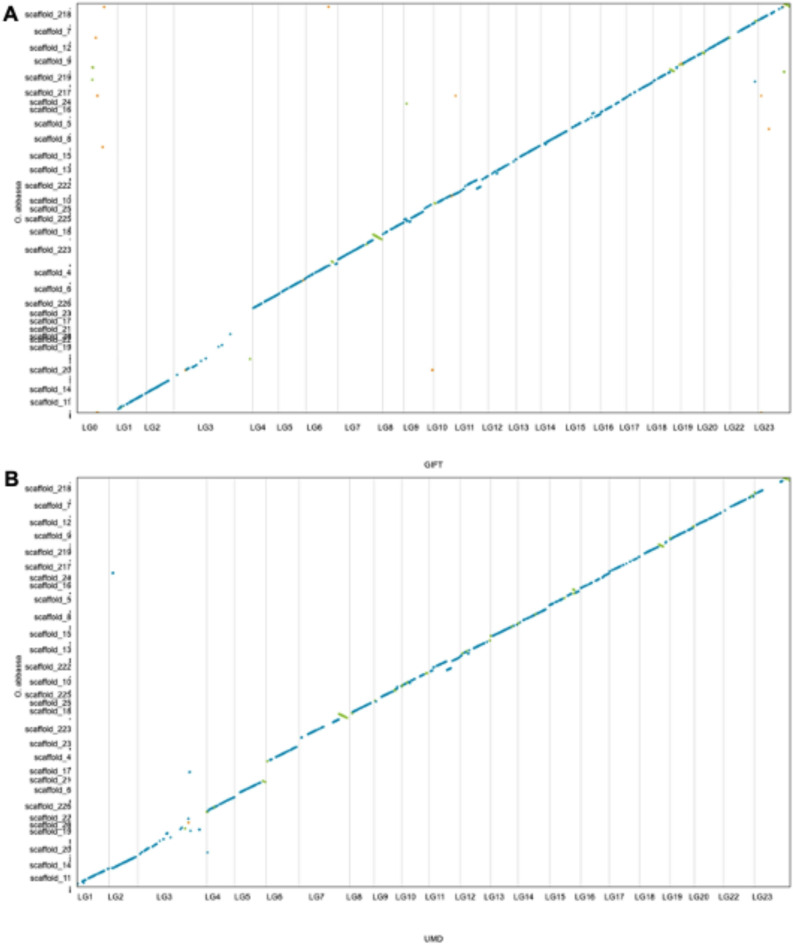 Figure 2
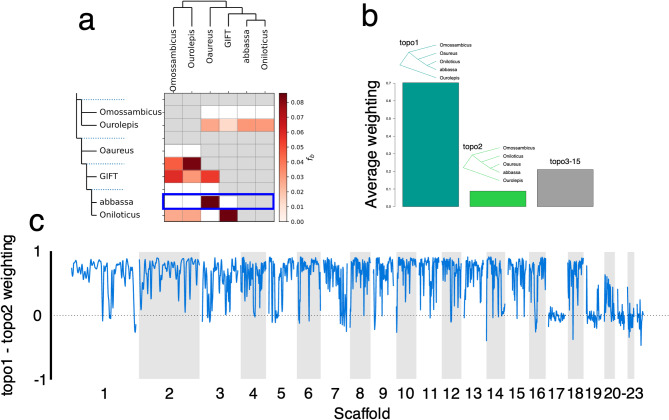 Figure 3
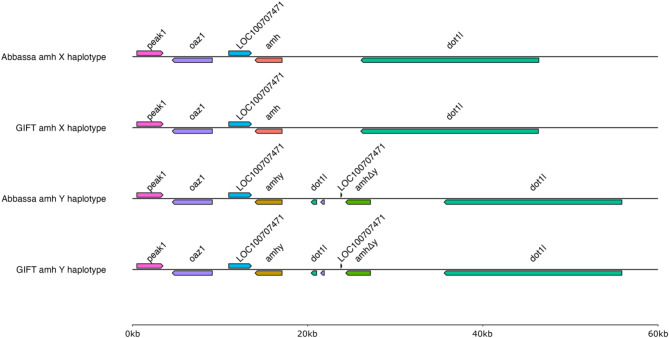 Figure 4
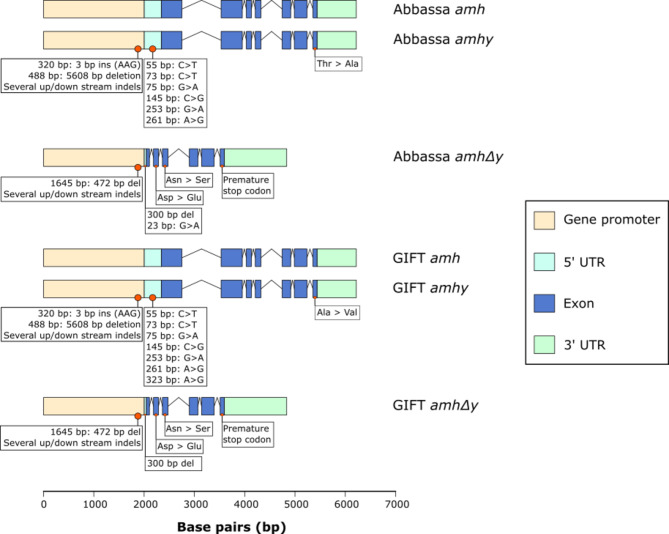 Figure 5
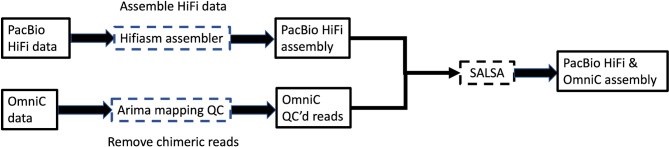 Figure 6
Peer Reviews
No public reviews on file for this paper yet. If you reviewed it on a platform where reviews are public (OpenReview, ICLR, NeurIPS, ICML), you can paste yours below so the community can read it here.
Videos
No videos yet. Explain this paper in a talk, walkthrough, or lecture? Add one.
Taxonomy
TopicsChromosomal and Genetic Variations · Genetic and Clinical Aspects of Sex Determination and Chromosomal Abnormalities · Genetic diversity and population structure