Chromatin state origins of uterine leiomyoma
Maritta Räisänen, Eevi Kaasinen, Maija Jäntti, Aurora Taira, Emma Siili, Ralf Bützow, Oskari Heikinheimo, Annukka Pasanen, Auli Karhu, Oskari Heikinheimo, Oskari Heikinheimo, Niko Välimäki, Lauri A. Aaltonen, Davide G. Berta, Niko Välimäki, Lauri A. Aaltonen

TL;DR
This study explores how chromatin states in uterine tissue contribute to the development of uterine leiomyomas, using regulatory genomics and genome-wide data.
Contribution
The study introduces chromatin annotations for myometrium and leiomyomas, linking disease-associated genetic variants to specific chromatin states.
Findings
Chromatin states in myometrium and leiomyomas reveal bivalent regions important in neoplastic processes.
Disease association loci are enriched at active chromatin, particularly enhancers.
Risk genotypes at the SATB2 locus affect chromatin states even in normal tissue.
Abstract
Aberrations in the regulatory genome play a pivotal role in population-level disease predisposition. Annotation of the regulatory regions using appropriate primary tissues - instead of cell lines affected by selection and other confounding factors - could shed new light into mechanisms underlying common conditions. We test this approach in uterine leiomyomas, highly prevalent benign neoplasms of the myometrium, by creating 15-state chromatin annotations for myometrium and uterine leiomyomas. Integration with RNA-seq, ATAC-seq, HiChIP and methylation data enables us to compare the epigenomes of myometrium and ULs with distinct driver mutations, highlighting the role of bivalent regions in the neoplastic process. Subsequently, a genome wide association study meta-analysis is performed, using three different cohorts. Disease association loci are enriched at active chromatin, especially at…
Genes, proteins, chemicals, diseases, species, mutations and cell lines named across the full text — each resolved to its canonical identifier and authoritative record.
Click any figure to enlarge with its caption.
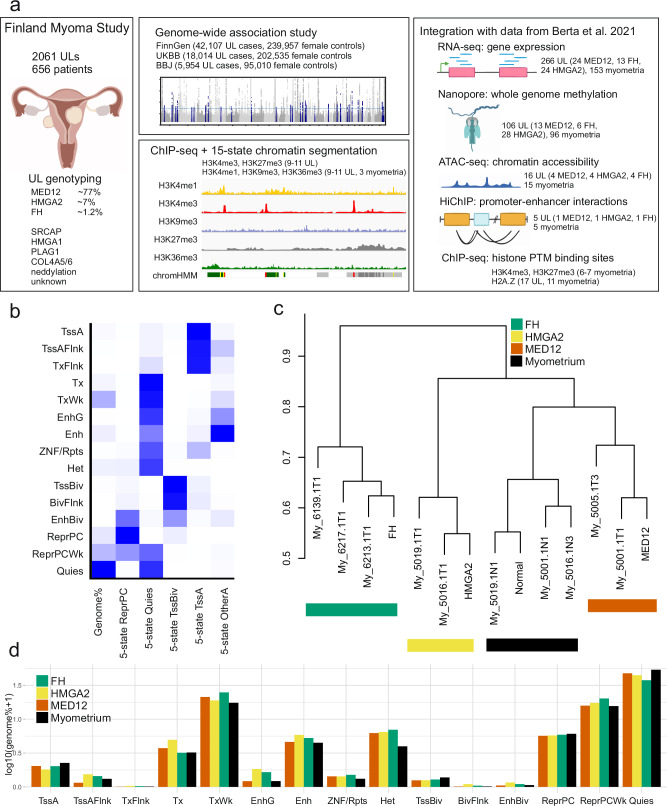 Figure 1
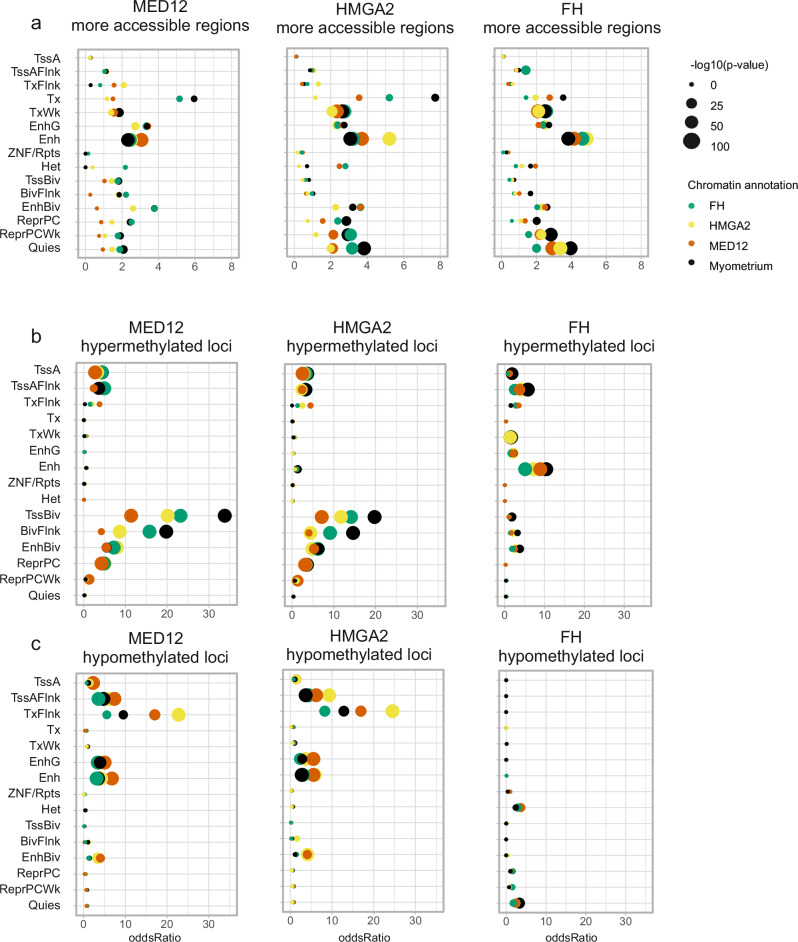 Figure 2
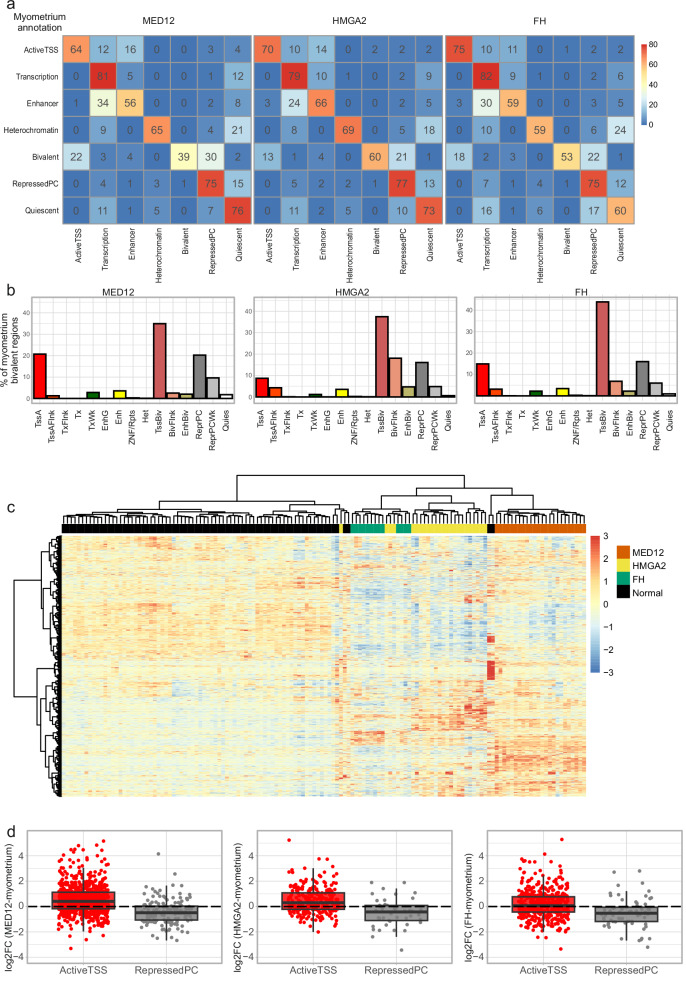 Figure 3
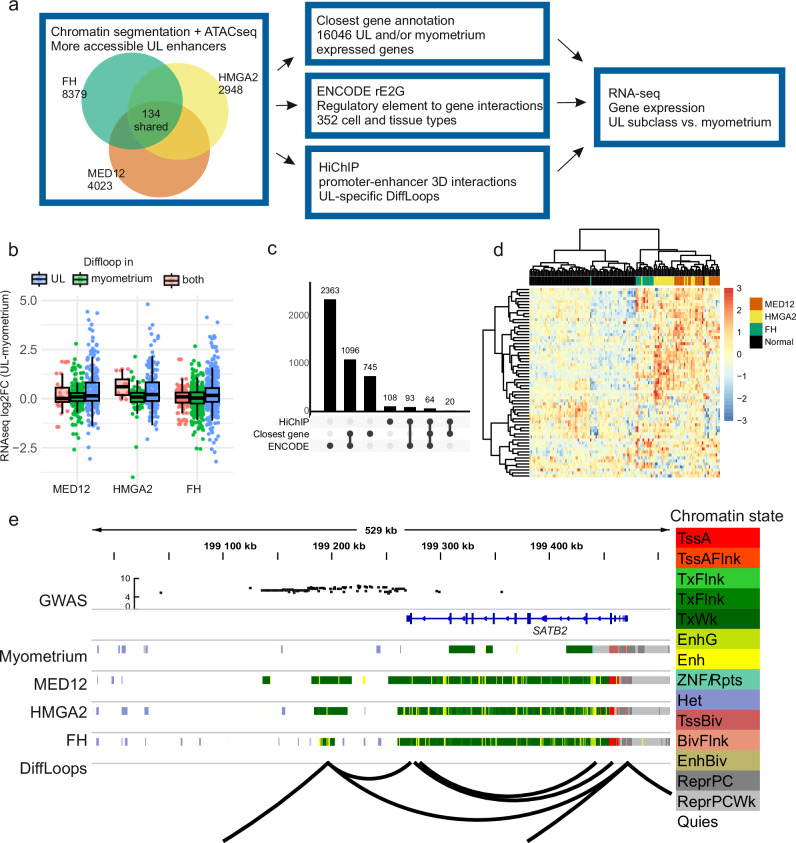 Figure 4
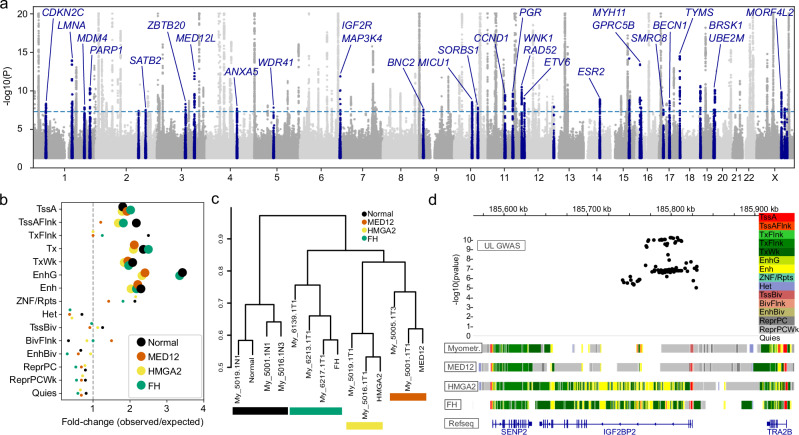 Figure 5
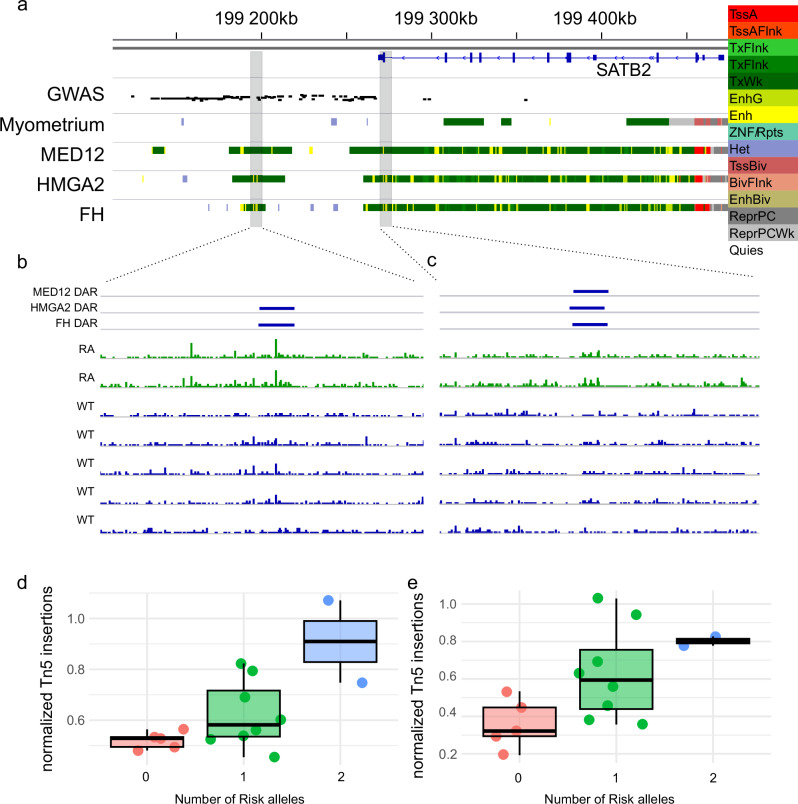 Figure 6
Peer Reviews
No public reviews on file for this paper yet. If you reviewed it on a platform where reviews are public (OpenReview, ICLR, NeurIPS, ICML), you can paste yours below so the community can read it here.
Videos
No videos yet. Explain this paper in a talk, walkthrough, or lecture? Add one.
Taxonomy
TopicsUterine Myomas and Treatments · Endometriosis Research and Treatment · Ovarian cancer diagnosis and treatment