A novel hybrid method based on task-related component and canonical correlation analyses (H-TRCCA) for enhancing SSVEP recognition
Amin Besharat, Nasser Samadzadehaghdam, Tahereh Ghadiri

TL;DR
This paper introduces a new method for improving brain-computer interfaces by combining two techniques to better recognize brain signals with minimal training.
Contribution
A novel hybrid method (H-TRCCA) is proposed, combining task-related component and canonical correlation analyses for SSVEP recognition with limited calibration data.
Findings
H-TRCCA achieved 91.44% accuracy with only two training trials per frequency in Dataset I.
The method outperformed existing techniques using fewer training trials while maintaining high information transfer rates.
It showed robust performance with maximum average information transfer rates of 188.36 bits/min and 139.96 bits/min for two datasets.
Abstract
Brain-computer interfaces (BCIs) based on steady-state visual evoked potentials (SSVEP) rely on the brain’s response to visual stimuli. However, accurately recognizing target frequencies using training-based methods remains challenging due to the time-consuming calibration sessions required by subject-specific training methods. To address this limitation, this study proposes a novel hybrid method called Hybrid task-related component and canonical correlation analysis (H-TRCCA). In the training phase, four spatial filters are derived using canonical correlation analysis (CCA) to maximize the correlation between the training data and reference signals. Additionally, a spatial filter is also computed using task-related component analysis (TRCA). In the test phase, correlation coefficients obtained from the CCA method are clustered using the k-means++ clustering algorithm. The cluster with…
Genes, proteins, chemicals, diseases, species, mutations and cell lines named across the full text — each resolved to its canonical identifier and authoritative record.
Click any figure to enlarge with its caption.
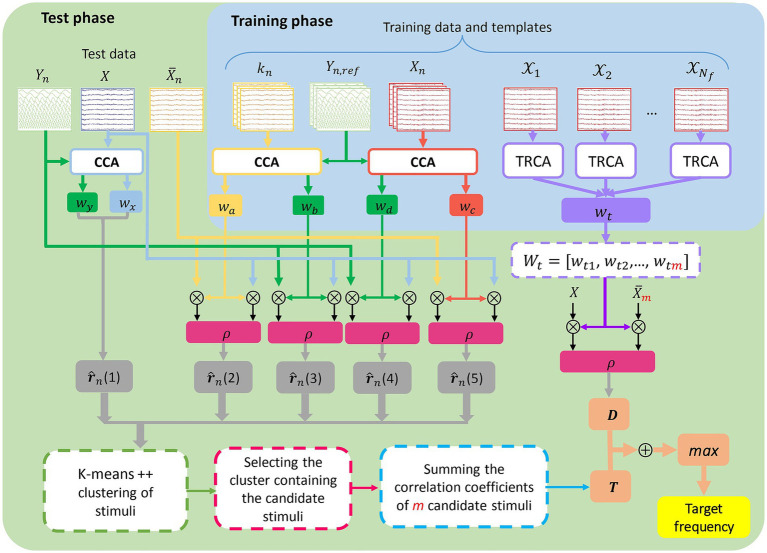 Figure 1
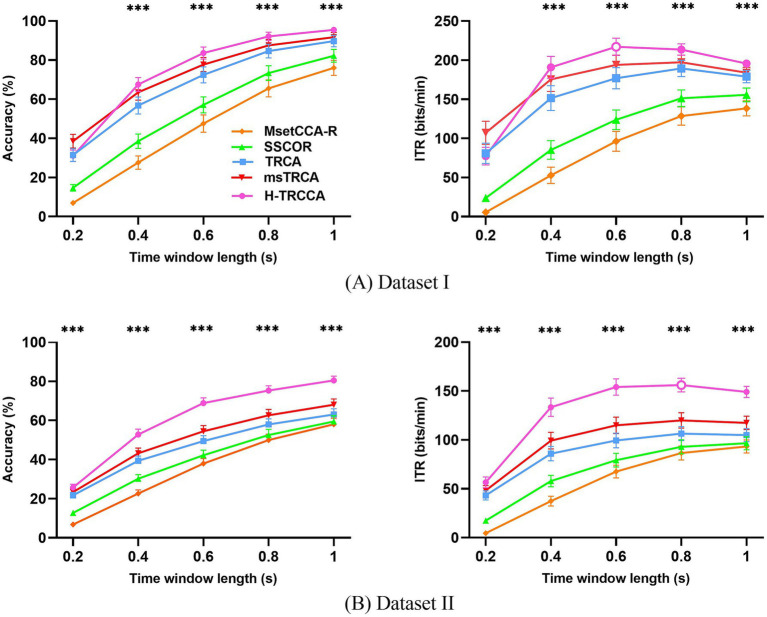 Figure 2
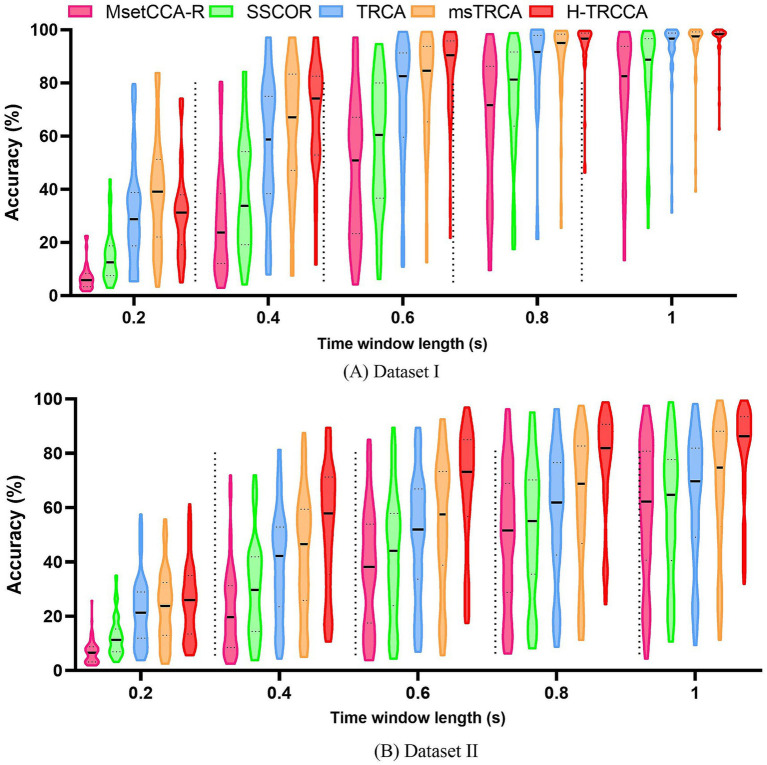 Figure 3
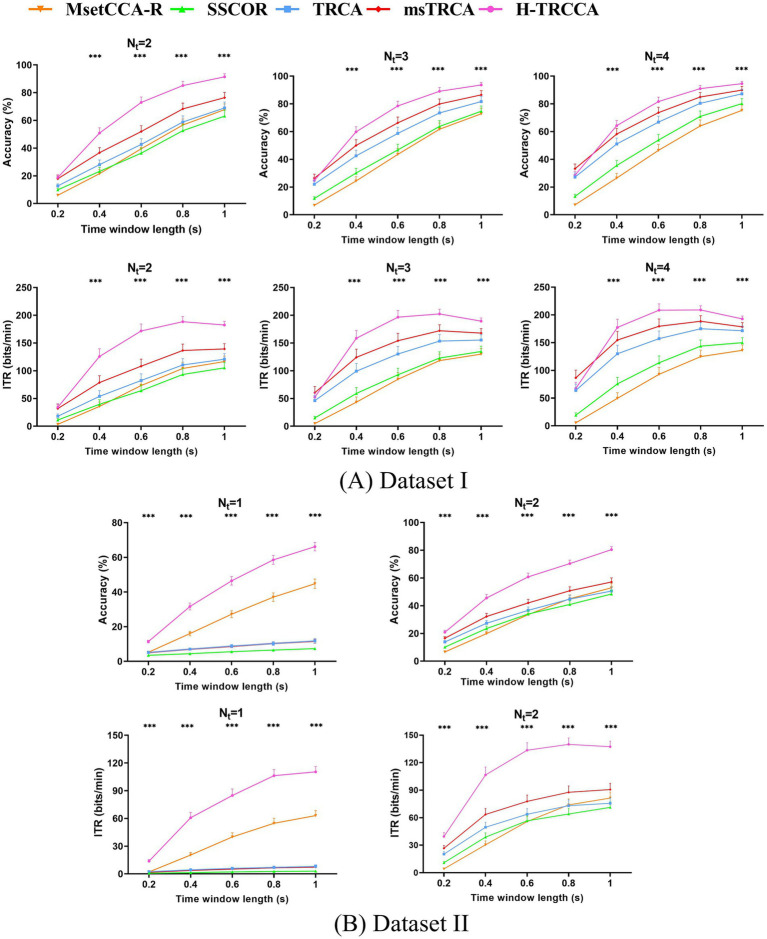 Figure 4
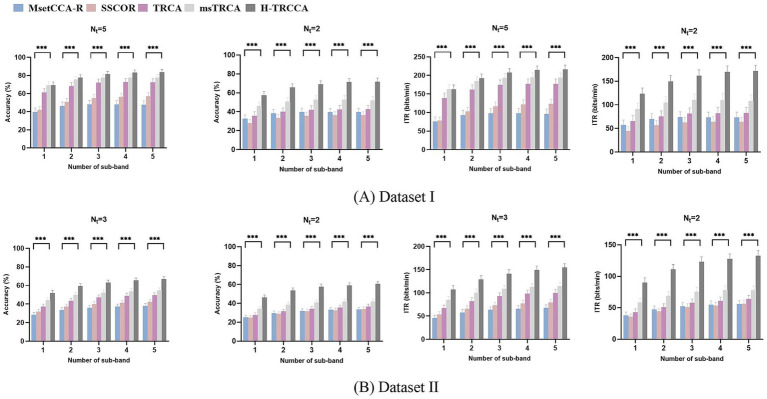 Figure 5
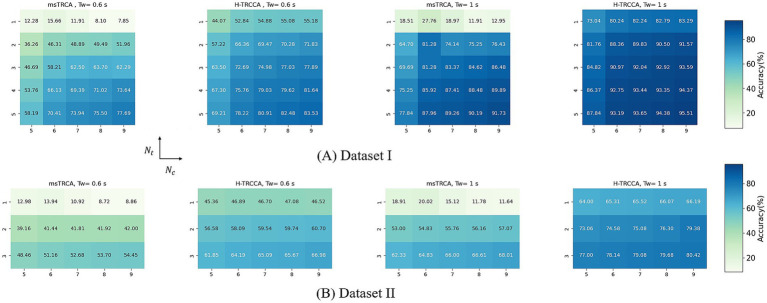 Figure 6
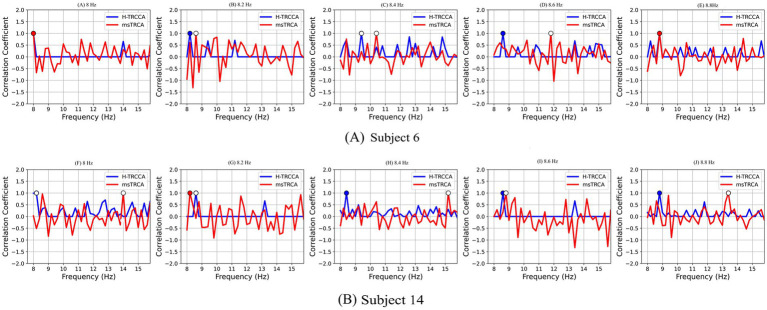 Figure 7
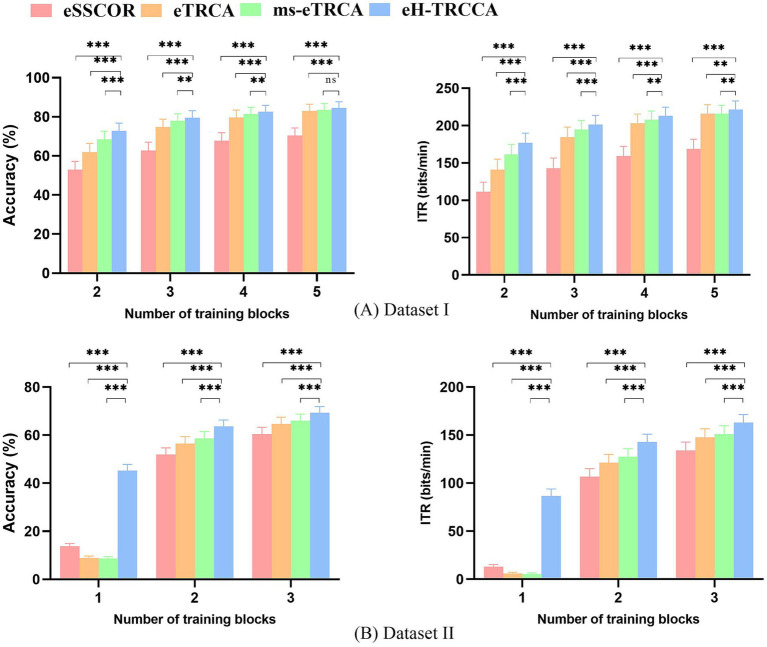 Figure 8
Peer Reviews
No public reviews on file for this paper yet. If you reviewed it on a platform where reviews are public (OpenReview, ICLR, NeurIPS, ICML), you can paste yours below so the community can read it here.
Videos
No videos yet. Explain this paper in a talk, walkthrough, or lecture? Add one.
Taxonomy
TopicsEEG and Brain-Computer Interfaces · ECG Monitoring and Analysis · Non-Invasive Vital Sign Monitoring