The innexin 7 gap junction protein contributes to synchronized activity in the Drosophila antennal lobe and regulates olfactory function
Nicolás Fuenzalida-Uribe, Sergio Hidalgo, Bryon Silva, Saurin Gandhi, David Vo, Parham Zamani, Todd C. Holmes, Sercan Sayin, Ilona C. Grunwald Kadow, Dafni Hadjieconomou, Diane K. O’Dowd, Jorge M. Campusano

TL;DR
This study shows that the Inx7 gap junction protein helps synchronize neural activity in fruit fly antennal lobes and is important for processing smell-related information.
Contribution
The study identifies a novel role for the Inx7 gap junction protein in modulating olfactory function in Drosophila.
Findings
RNAi knockdown of Inx7 in cultured neurons blocks calcium transient synchronization.
In vivo Inx7 downregulation impairs both calcium responses and behavioral responses to vinegar.
Inx7-encoded gap junctions coordinate projection neuron activity in the Drosophila antennal lobe.
Abstract
In the mammalian olfactory bulb (OB), gap junctions coordinate synchronous activity among mitral and tufted cells to process olfactory information. In insects, gap junctions are also present in the antennal lobe (AL), a structure homologous to the mammalian OB. The invertebrate gap junction protein ShakB contributes to electrical synapses between AL projection neurons (PNs) in Drosophila. Other gap junction proteins, including innexin 7 (Inx7), are also expressed in the Drosophila AL, but little is known about their contribution to intercellular communication during olfactory information processing. In this study, we report spontaneous calcium transients in PNs grown in cell culture that are highly synchronous when these neurons are physically connected. RNAi-mediated knockdown of Inx7 in cultured PNs blocks calcium transient neuronal synchronization. In vivo, downregulation of Inx7 in…
Genes, proteins, chemicals, diseases, species, mutations and cell lines named across the full text — each resolved to its canonical identifier and authoritative record.
Click any figure to enlarge with its caption.
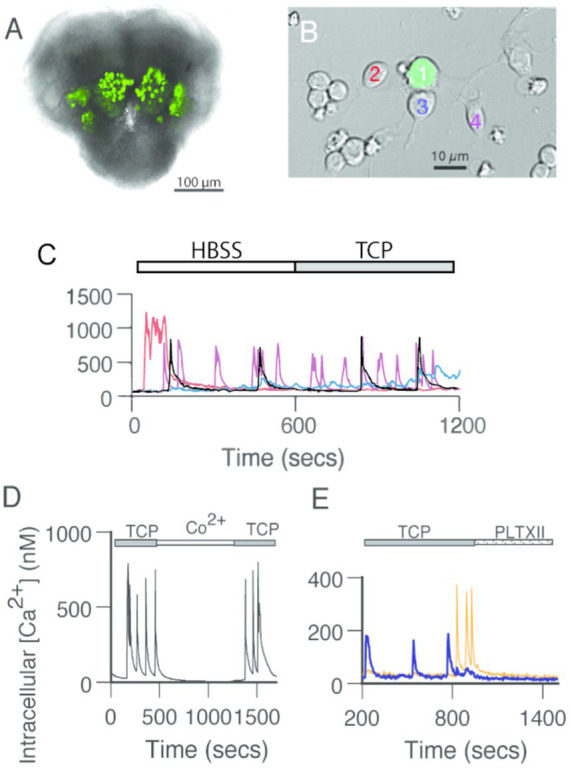 Figure 1
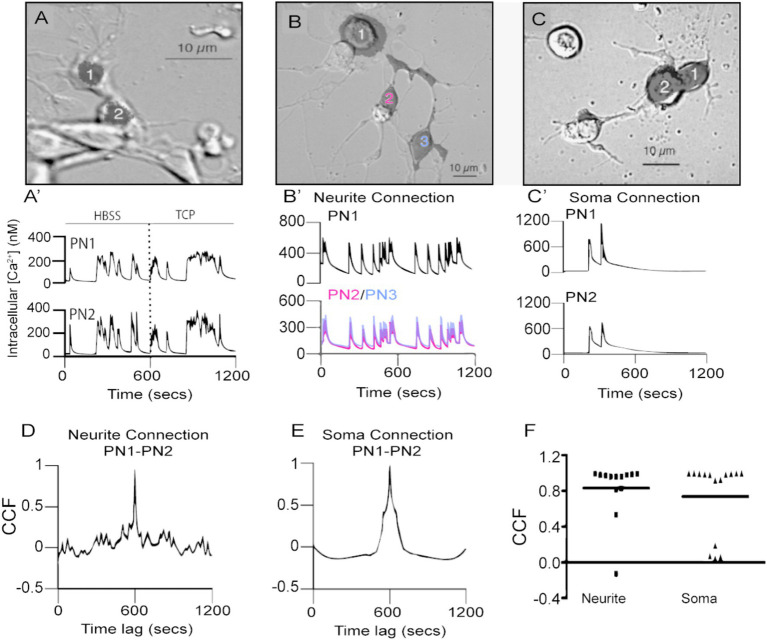 Figure 2
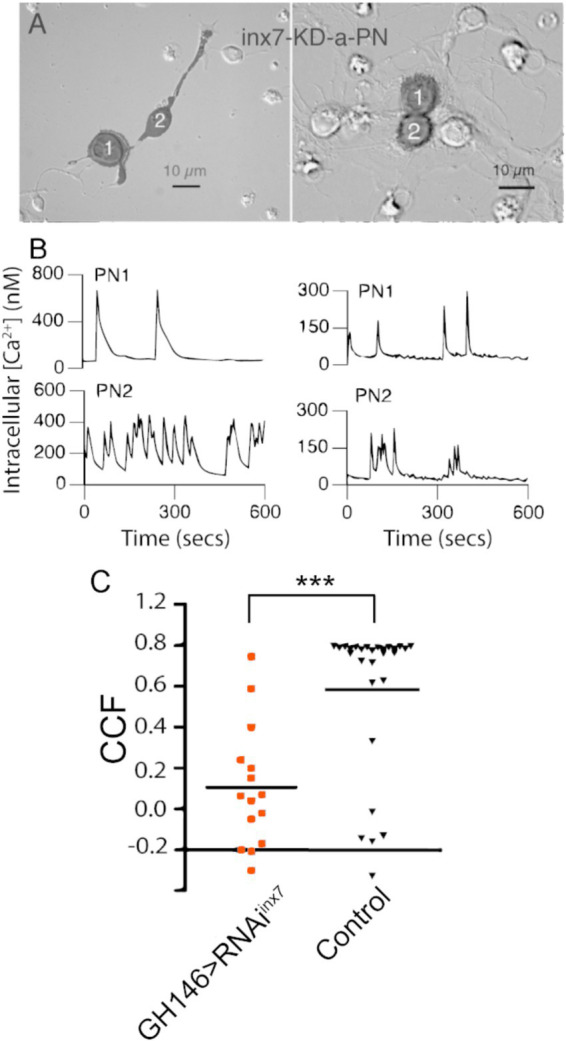 Figure 3
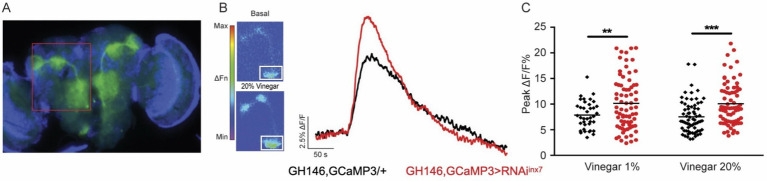 Figure 4
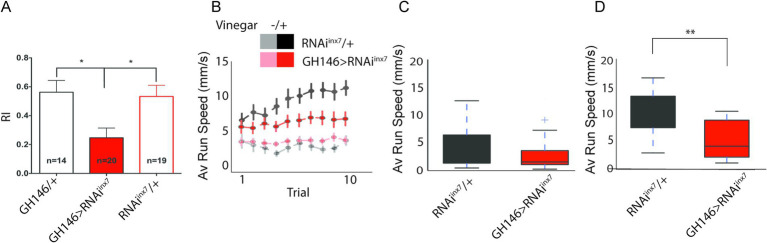 Figure 5
Peer Reviews
No public reviews on file for this paper yet. If you reviewed it on a platform where reviews are public (OpenReview, ICLR, NeurIPS, ICML), you can paste yours below so the community can read it here.
Videos
No videos yet. Explain this paper in a talk, walkthrough, or lecture? Add one.
Taxonomy
TopicsNeurobiology and Insect Physiology Research · Physiological and biochemical adaptations · Insect and Arachnid Ecology and Behavior