Voluntary running partially prevents photoreceptor cell death in retinitis pigmentosa
Stephen K. Agadagba, Ying Liang, Kristine N. Dalton, Benjamin Thompson, Suk-Yu Yau

TL;DR
Voluntary running helps protect photoreceptor cells in a mouse model of retinitis pigmentosa, possibly through increased adiponectin levels.
Contribution
The study shows voluntary exercise can partially prevent photoreceptor cell death in RP and identifies adiponectin as a potential therapeutic target.
Findings
Voluntary running preserved photoreceptor nuclei and outer segment lengths in RP mice.
Exercise increased serum adiponectin levels in RP mice but did not affect AMPK or PGC-1α protein levels.
Retinal adiponectin levels were elevated in RP mice regardless of exercise.
Abstract
Retinitis pigmentosa (RP) is a progressive retinal degenerative disorder characterized by photoreceptor cell death, leading to vision loss. Current treatments are limited, and there is a need for non-invasive interventions. This study evaluates the neuroprotective effects of voluntary exercise in an RP mouse model and explores the role of the adiponectin signaling pathway in mediating these effects. Pregnant Pde6brd10 (rd10) mice, a transgenic model of RP, and wild-type C57BL/6J mice were divided into sedentary or voluntary running groups (n = 4 per group). Offspring were analyzed at 6 weeks for photoreceptor nuclei counts, outer segment lengths, serum and retinal adiponectin levels, and expression of AMPK and PGC-1α proteins using immunohistochemistry, ELISA, and Western blotting. Voluntary exercise significantly preserved photoreceptor nuclei (97 ± 16 vs. 32 ± 5 in sedentary rd10…
Genes, proteins, chemicals, diseases, species, mutations and cell lines named across the full text — each resolved to its canonical identifier and authoritative record.
Click any figure to enlarge with its caption.
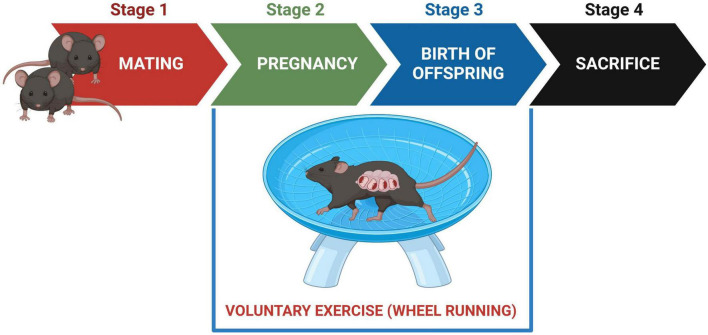 Figure 1
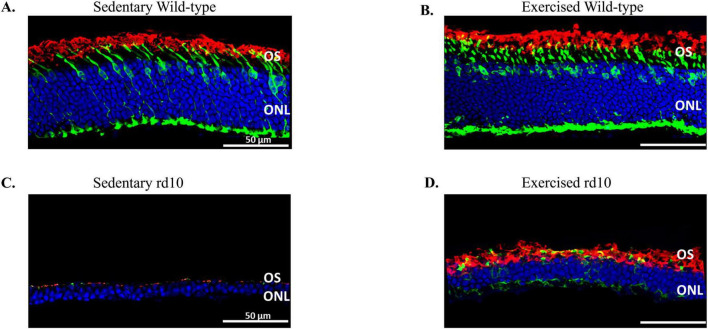 Figure 2
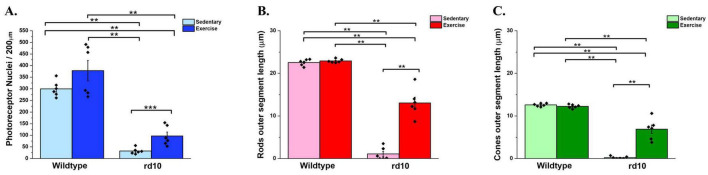 Figure 3
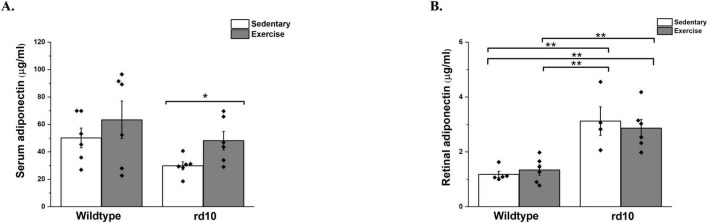 Figure 4
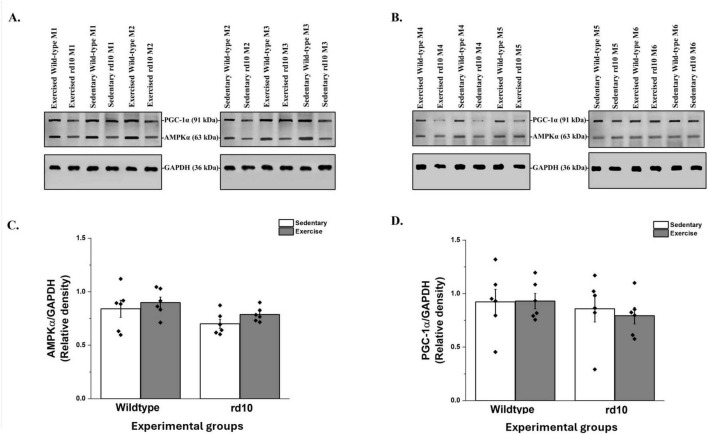 Figure 5
Peer Reviews
No public reviews on file for this paper yet. If you reviewed it on a platform where reviews are public (OpenReview, ICLR, NeurIPS, ICML), you can paste yours below so the community can read it here.
Videos
No videos yet. Explain this paper in a talk, walkthrough, or lecture? Add one.
Taxonomy
TopicsRetinal Development and Disorders · Retinopathy of Prematurity Studies · Neuroscience and Neural Engineering