Diabetes alters cardiorespiratory dynamics: insights from short-term recurrence quantification analysis of pulse-respiration quotient
José Javier Reyes-Lagos, Kioko Guzmán-Ramos, Joel Lomelí, Adriana Cristina Pliego-Carrillo, Miguel Ángel Peña-Castillo, Pedro López-Sánchez, Virgilio Eduardo Trujillo-Condes, Laura Ivoone Garay-Jiménez, Juan Carlos Echeverría, María Fernanda Villegas-Zarco

TL;DR
This study shows that diabetes affects how the heart and lungs work together, making their interaction less flexible.
Contribution
The study introduces short-term recurrence quantification analysis of PRQ to detect subtle cardiorespiratory dysautonomia in T2DM.
Findings
T2DM participants showed higher recurrence rates and prolonged recurrence time in PRQ during paced breathing.
RQA metrics were more effective than linear indices in distinguishing T2DM from controls.
Entropy-based mutual information revealed distinct compensatory patterns in T2DM during specific tasks.
Abstract
The Pulse-Respiration Quotient (PRQ) is considered a powerful tool for assessing dynamic interactions between cardiac and respiratory rhythms. Type 2 diabetes mellitus (T2DM) disrupts autonomic control, potentially compromising the complexity and adaptability of cardiorespiratory dynamics. In this cross-sectional, exploratory study, we investigated whether T2DM alters cardiorespiratory dynamics by analyzing short-term PRQ signals using conventional linear indices and Recurrence Quantification Analysis (RQA). Thirty-eight participants (20 T2DM and 18 controls) completed four standardized tasks—supine rest, orthostatic challenge, paced breathing, and the Valsalva maneuver—while electrocardiographic and respiratory signals were continuously recorded. From these signals, R-to-R peak interval (RRI) and breath-to-breath (BB) time series were derived, allowing us to compute the PRQ time…
Genes, proteins, chemicals, diseases, species, mutations and cell lines named across the full text — each resolved to its canonical identifier and authoritative record.
Click any figure to enlarge with its caption.
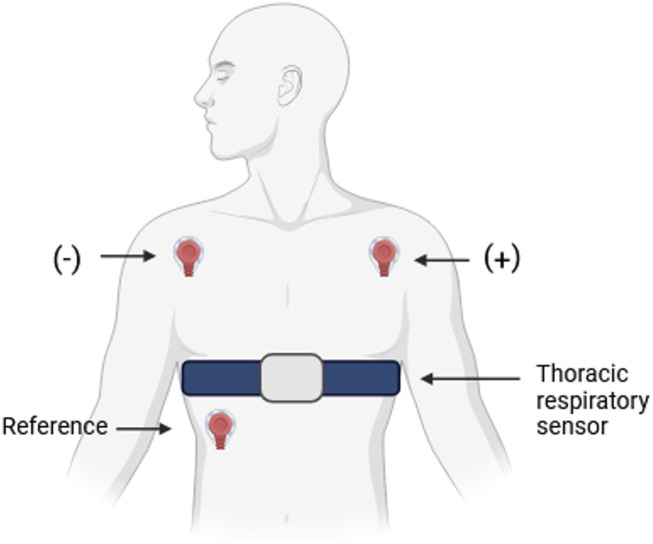 Figure 1
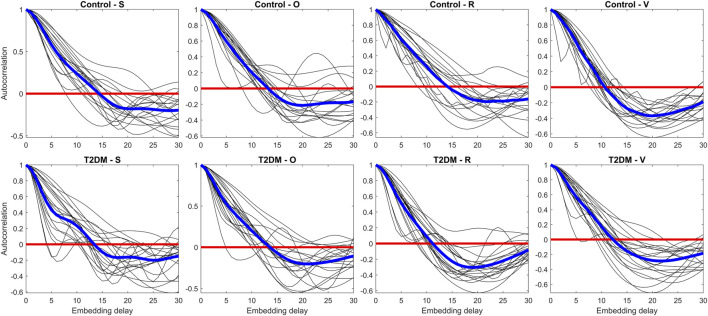 Figure 2
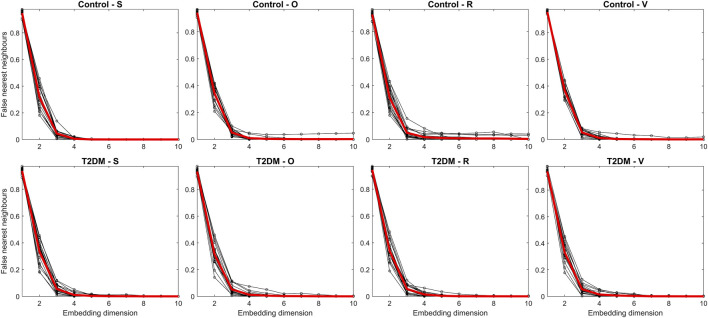 Figure 3
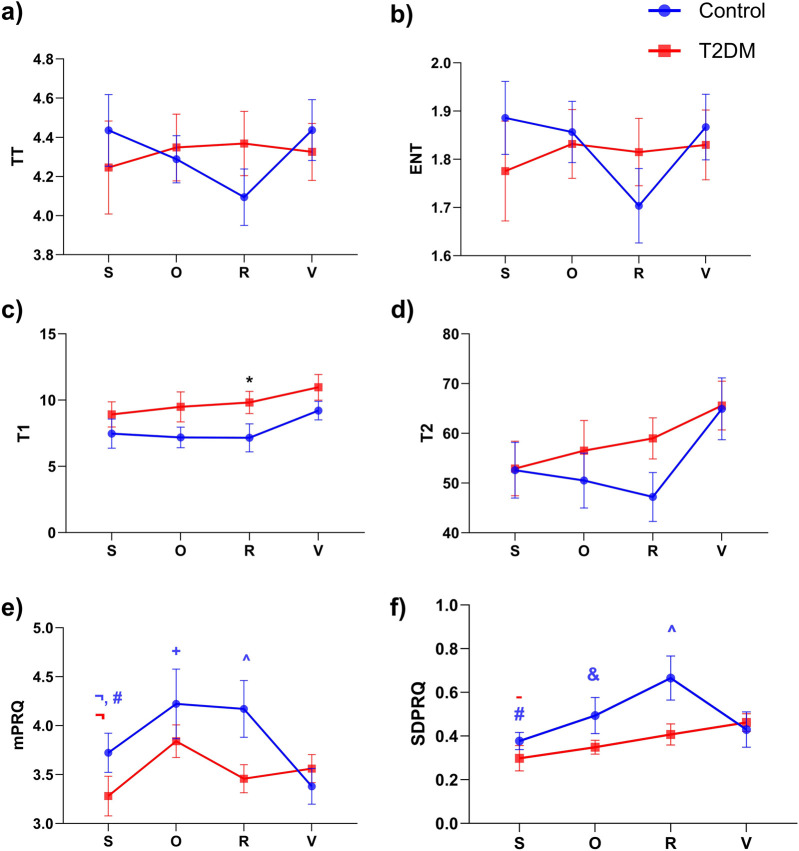 Figure 4
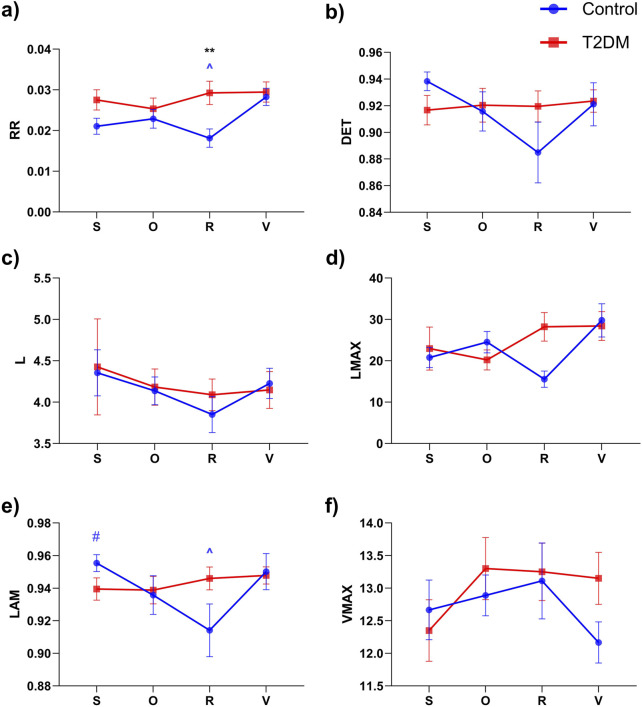 Figure 5
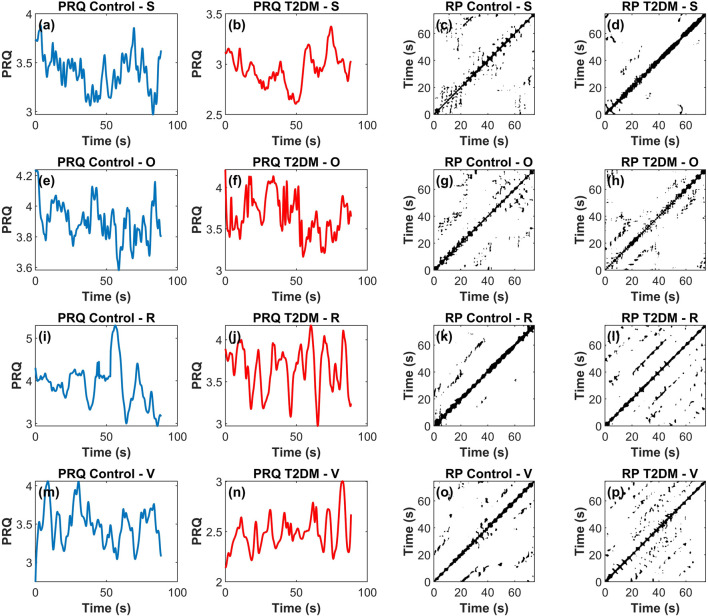 Figure 6
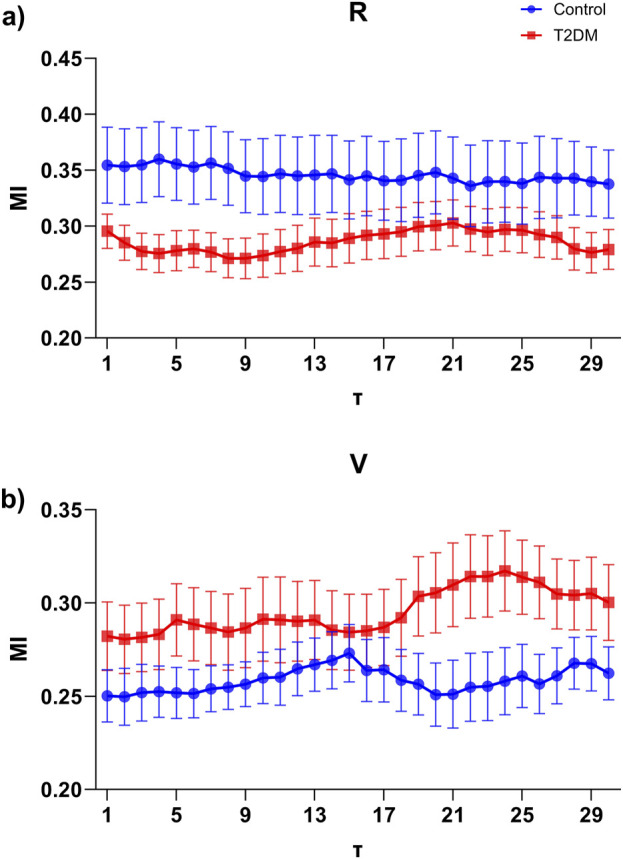 Figure 7
Peer Reviews
No public reviews on file for this paper yet. If you reviewed it on a platform where reviews are public (OpenReview, ICLR, NeurIPS, ICML), you can paste yours below so the community can read it here.
Videos
No videos yet. Explain this paper in a talk, walkthrough, or lecture? Add one.
Taxonomy
TopicsHeart Rate Variability and Autonomic Control · Non-Invasive Vital Sign Monitoring · Cardiovascular and exercise physiology