Survival of patients with 2014 FIGO stage IIIC high-grade serous ovarian cancer who were treated with platin-based adjuvant chemotherapy
Mehmet ÜNSAL, Meltem YÜCESOY, Okan OKTAR, Yeşim UÇAR, Gülşah TİRYAKİ GÜNER, Okan AYTEKİN, A. Alp TOKALIOĞLU, Hande Esra KOCA YILDIRIM, Fatih KILIÇ, Burak ERSAK, Caner ÇAKIR, Dilek YÜKSEL, Çiğdem KILIÇ, Sevgi KOÇ, Günsu KİMYON CÖMERT, Özlem MORALOĞLU TEKİN, Yaprak ENGİN ÜSTÜN

TL;DR
This study examines survival and prognostic factors in patients with advanced ovarian cancer treated with platinum-based chemotherapy.
Contribution
The study identifies optimal and maximal cytoreduction as key prognostic factors for survival in stage IIIC high-grade serous ovarian cancer.
Findings
The five-year progression-free survival rate was 27% and the five-year disease-specific survival rate was 76%.
Optimal cytoreduction was an independent prognostic factor for survival.
Maximal cytoreduction improved both progression-free and disease-specific survival.
Abstract
Epithelial ovarian cancer is the second most prevalent type of gynecological cancer. We aimed to investigate prognostic factors related to survival in patient with 2014 FIGO stage IIIC high-grade serous ovarian cancer (HGSOC). Two hundred fifty eight patients were evaluated retrospectively. The absence of a visible tumor was determined as maximum cytoreduction, and a residual tumor size of 1 cm or less was determined as optimal cytoreduction. Patients who underwent cytoreduction followed by a combination of platinum and taxane adjuvant chemotherapy were included. Exclusion criteria for the study were patients taking neoadjuvant chemotherapy and those with suboptimal surgery. Optimal cytoreduction was performed in 107 and maximal cytoreduction was performed in 151 patients. The five-year PFS rate was 27% and the five-year DSS rate was 76%. While high ascites volume and optimal…
Genes, proteins, chemicals, diseases, species, mutations and cell lines named across the full text — each resolved to its canonical identifier and authoritative record.
Click any figure to enlarge with its caption.
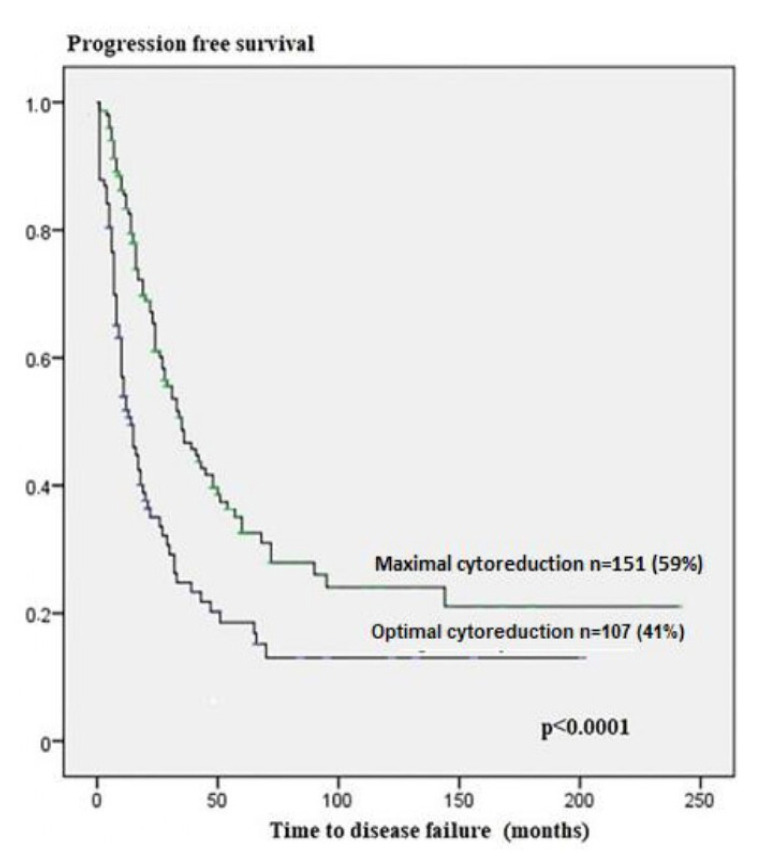 Figure 1
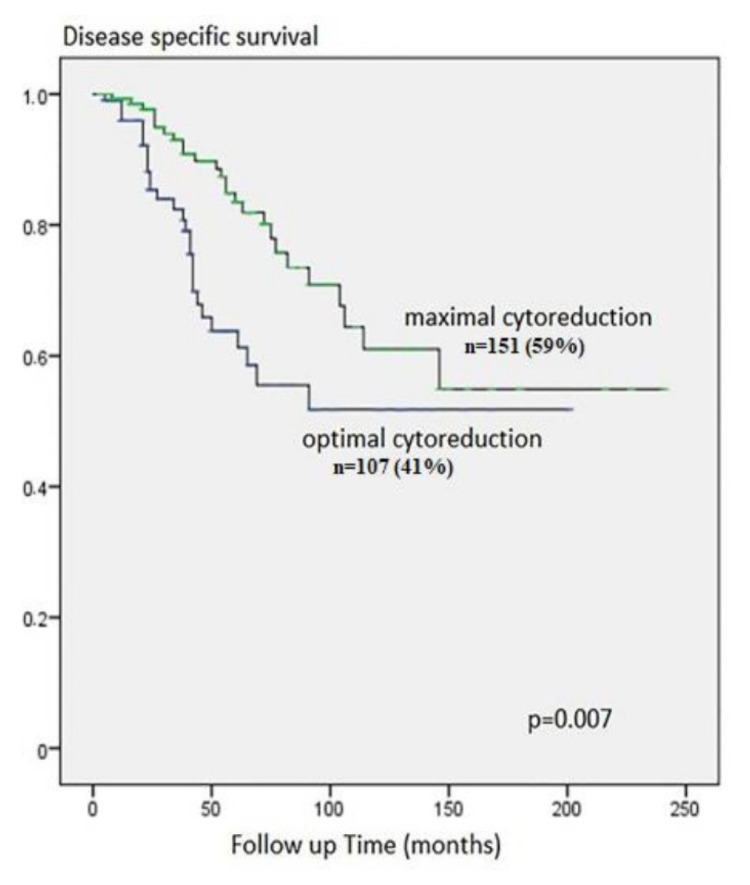 Figure 2
Peer Reviews
No public reviews on file for this paper yet. If you reviewed it on a platform where reviews are public (OpenReview, ICLR, NeurIPS, ICML), you can paste yours below so the community can read it here.
Videos
No videos yet. Explain this paper in a talk, walkthrough, or lecture? Add one.
Taxonomy
TopicsOvarian cancer diagnosis and treatment