Arsenic exposure is associated with elevated sweat chloride concentration and airflow obstruction among adults in Bangladesh: A cross-sectional study
Mi-Sun S. Lee, Crystal M. North, Irada Choudhuri, Subrata K. Biswas, Abby F. Fleisch, Afifah Farooque, Diane Bao, Sakila Afroz, Sadia Mow, Nazmul Husain, Fuadul Islam, Md Golam Mostofa, Partha Pratim Biswas, David S. Ludwig, Subba R. Digumarthy, Christopher Hug

TL;DR
High arsenic exposure in Bangladesh is linked to higher sweat chloride levels and lung function issues, suggesting a new biomarker for arsenic toxicity.
Contribution
Sweat chloride concentration is proposed as a novel biomarker for arsenic exposure and lung effects.
Findings
Higher arsenic exposure correlates with elevated sweat chloride levels in adults from Bangladesh.
Toenail arsenic concentration is associated with increased odds of airway obstruction.
Sweat chloride does not mediate the effect of arsenic on lung function.
Abstract
Arsenic is associated with lung disease and experimental models suggest that arsenic-induced degradation of the chloride channel CFTR (cystic fibrosis transmembrane conductance regulator) is a mechanism of arsenic toxicity. We examined associations between arsenic exposure, sweat chloride concentration (measure of CFTR function), and pulmonary function among 269 adults in Bangladesh. Participants with sweat chloride ≥ 60 mmol/L had higher arsenic exposures than those with sweat chloride < 60 mmol/L (water: median 77.5 µg/L versus 34.0 µg/L, p = 0.025; toenails: median 4.8 µg/g versus 3.7 µg/g, p = 0.024). In linear regression models, a one-unit µg/g increment in toenail arsenic was associated with a 0.59 mmol/L higher sweat chloride concentration, p < 0.001. Among the entire study population, after adjusting for covariates including age, sex, smoking, education, and height, toenail…
Genes, proteins, chemicals, diseases, species, mutations and cell lines named across the full text — each resolved to its canonical identifier and authoritative record.
Click any figure to enlarge with its caption.
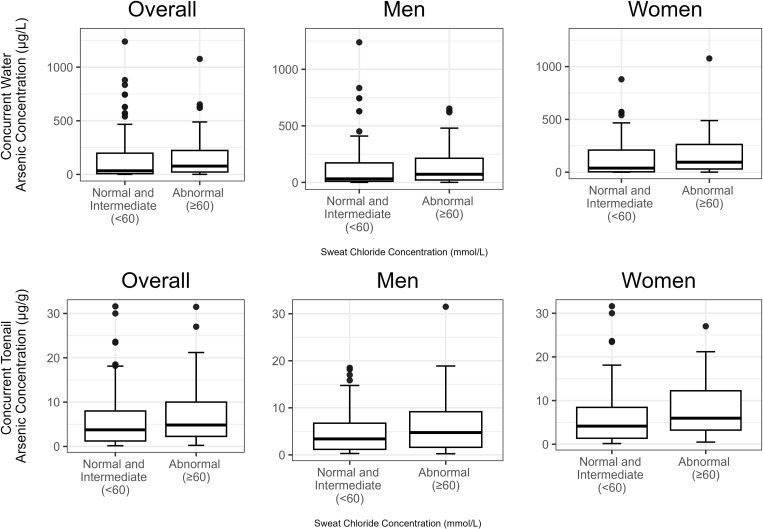 Figure 1
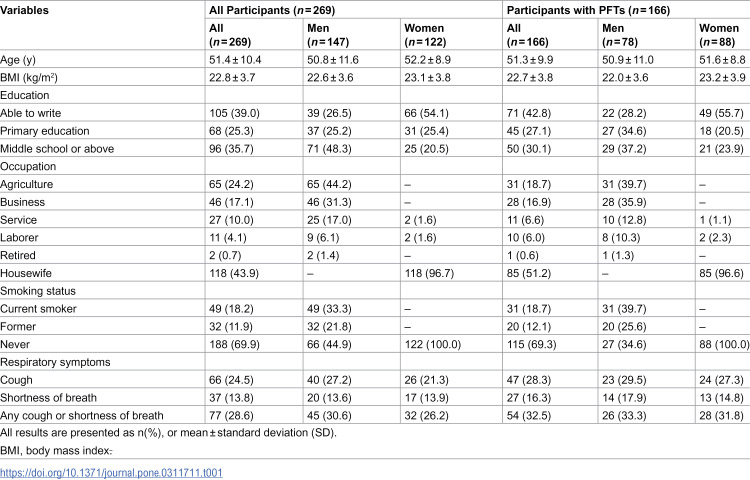 Figure 2
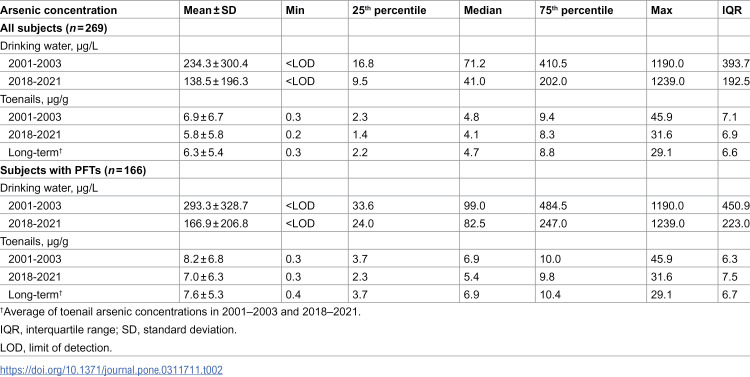 Figure 3
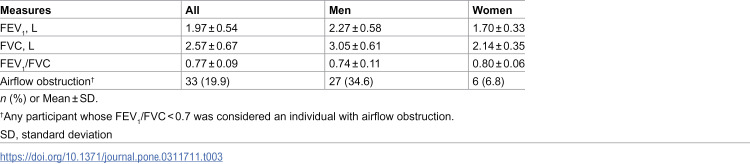 Figure 4
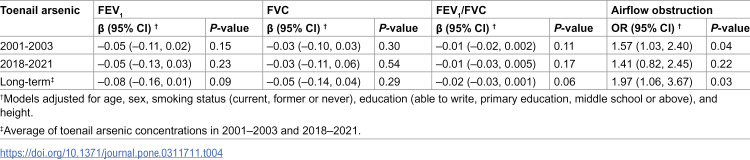 Figure 5
Peer Reviews
No public reviews on file for this paper yet. If you reviewed it on a platform where reviews are public (OpenReview, ICLR, NeurIPS, ICML), you can paste yours below so the community can read it here.
Videos
No videos yet. Explain this paper in a talk, walkthrough, or lecture? Add one.
Taxonomy
TopicsCystic Fibrosis Research Advances · Water Treatment and Disinfection · Air Quality and Health Impacts