Inositol-Requiring Enzyme 1 pathway and autophagy drive sequential response of endothelial cells to febrile range hyperthermia
Julie Vorbe, Florence Massey, Corinne Rocher, Océane Morales, Nihal Brikci, Marie Le Borgne, Caligiuri Giuseppina, Antonino Nicoletti, Grégory Franck, Stéphane Illiano

TL;DR
The study shows how heart artery cells respond to fever-like temperatures by activating stress and recycling pathways, which could explain how fevers affect blood vessel health during infections.
Contribution
The study identifies the IRE1α-autophagy pathway as a novel mechanism linking fever-range hyperthermia to endothelial dysfunction in coronary artery cells.
Findings
Prolonged fever-range temperatures impair human coronary artery endothelial cell function and junction integrity.
Hyperthermia activates the IRE1α pathway and autophagy, which degrade cell junctions and increase permeability.
Pharmacological inhibition of IRE1α reduces autophagy and protects endothelial cell structure and function.
Abstract
Fever is an evolutionarily conserved and adaptive response during infections. However, prolonged fever has numerous systemic metabolic and functional side effects. In the heart, prolonged fever associated with infection is linked to fatal adverse effects, particularly involving impaired coronary circulation. Yet, the direct relationship between elevated temperature and coronary microcirculation dysfunction, remains to be fully demonstrated. In this study, we aimed to explore the specific responses of human coronary artery endothelial cells (HCAECs) to fever-range hyperthermia. HCAECs were cultured at either 37°C or 40°C for up to 24 hours. Transcriptomic and proteomic profiles were obtained through microarray and mass spectrometry after 6, 12, and 24 hours of exposure. Key signaling pathways, upstream regulators, and candidate mechanisms were identified and validated at the mRNA and…
Genes, proteins, chemicals, diseases, species, mutations and cell lines named across the full text — each resolved to its canonical identifier and authoritative record.
Click any figure to enlarge with its caption.
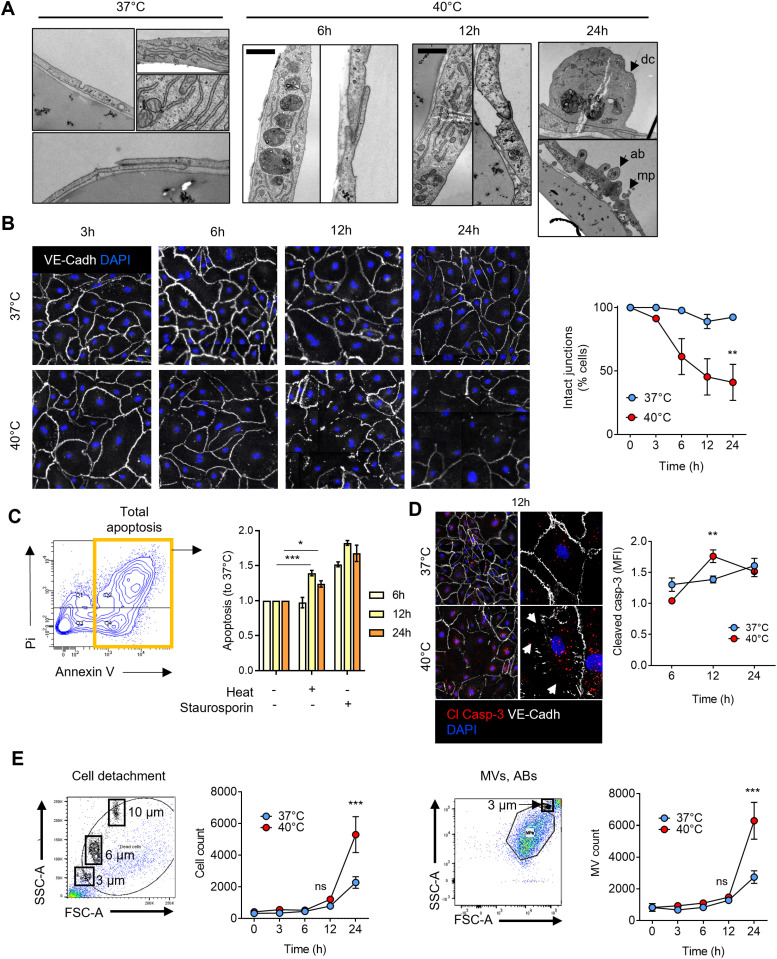 Figure 1
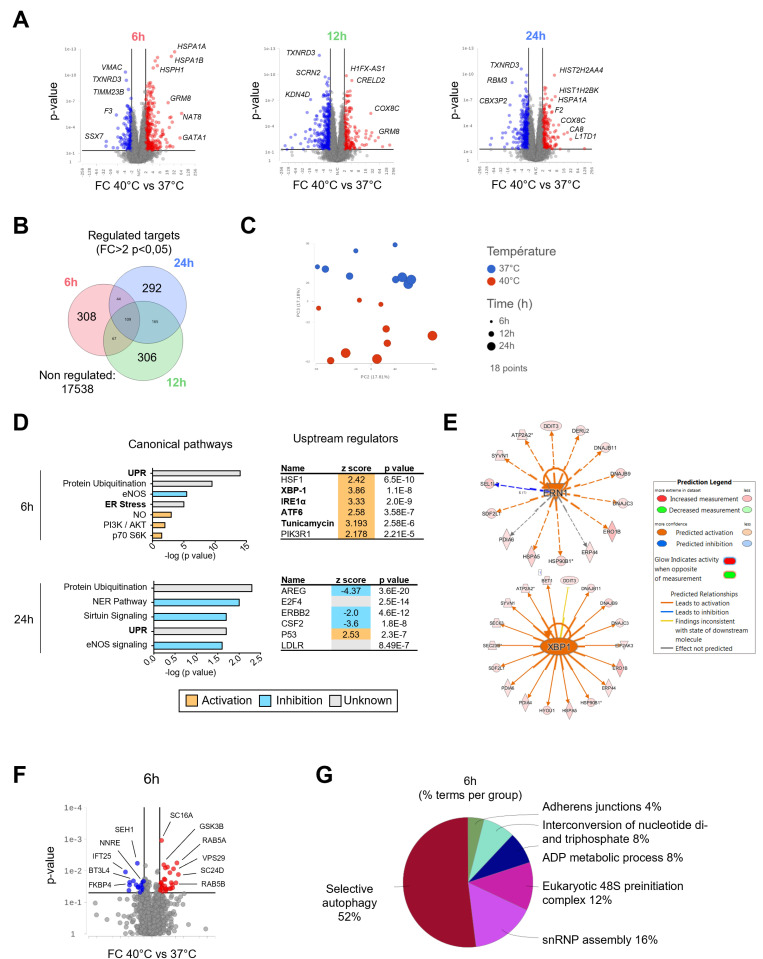 Figure 2
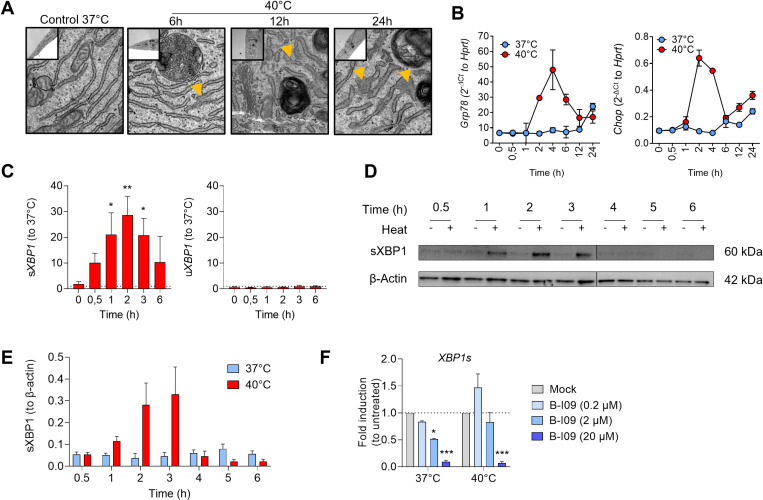 Figure 3
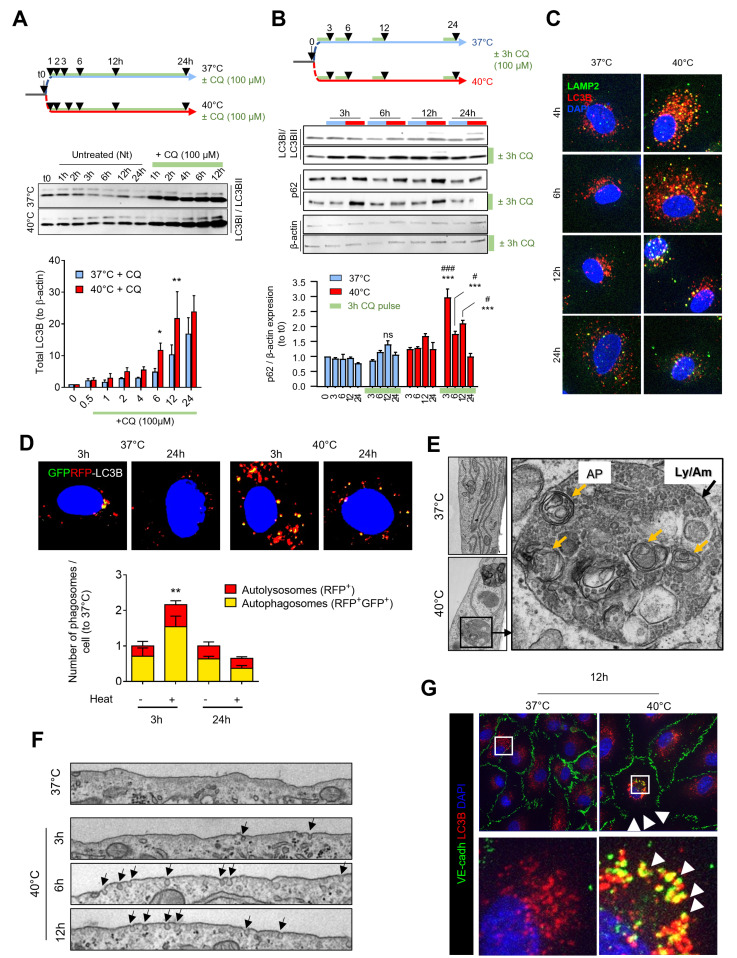 Figure 4
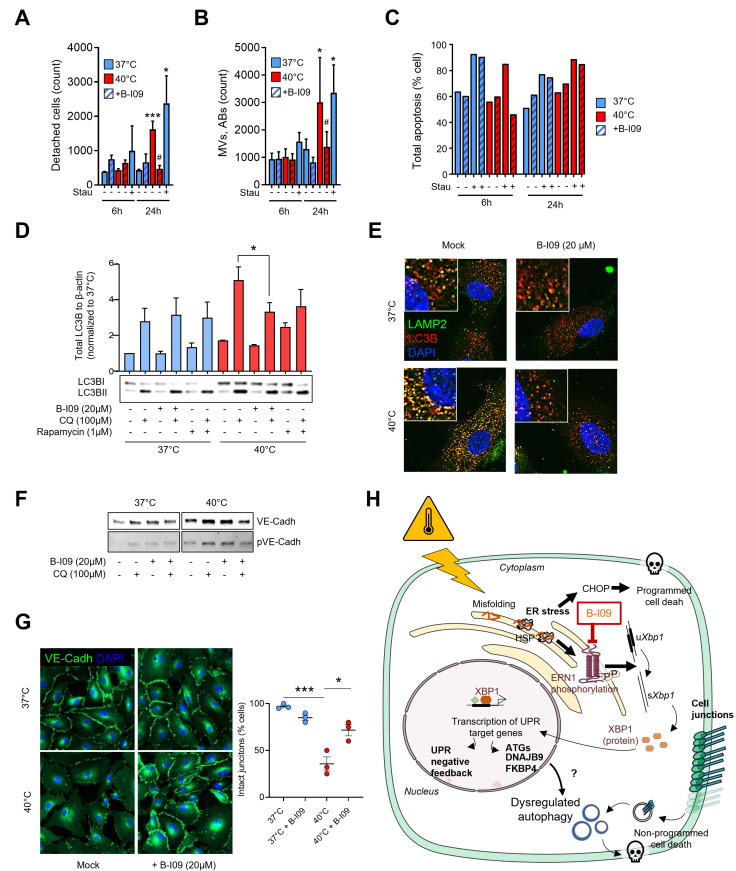 Figure 5
Peer Reviews
No public reviews on file for this paper yet. If you reviewed it on a platform where reviews are public (OpenReview, ICLR, NeurIPS, ICML), you can paste yours below so the community can read it here.
Videos
No videos yet. Explain this paper in a talk, walkthrough, or lecture? Add one.
Taxonomy
TopicsAutophagy in Disease and Therapy · Heme Oxygenase-1 and Carbon Monoxide · Extracellular vesicles in disease