Karst-environments of the southeastern Yucatan Peninsula: Hotspots for modern freshwater microbialites
Alfredo Yanez-Montalvo, Bernardo Águila, Arit S. de León-Lorenzana, Arturo Bayona, Nuria Torrescano-Valle, Pavel Popoca, Luisa I. Falcón, Yizhi Sheng, Yizhi Sheng, Yizhi Sheng, Yizhi Sheng

TL;DR
This study explores microbialites in the Yucatan Peninsula, revealing their unique microbial and mineral composition and highlighting their importance for environmental conservation.
Contribution
The study identifies potential new Cyanobacteriota families and highlights Cenote Azul as a biodiverse hotspot for microbialites.
Findings
Microbialites in Cenote Azul showed the highest biodiversity and distinct microbial composition.
Calcite, magnesian calcite, and gypsum were the primary minerals in the microbialites.
Hydrogeochemical conditions varied among sites despite their connectivity.
Abstract
Modern microbialites are sedimentary structures that offer a window into Earth’s geologic history and the intricate interplay between geology and microorganisms. Microbialites are formed by the interaction between microbial communities and the environment leading to mineral precipitation. This study provides a comprehensive analysis of the bacterial and archaeal composition (using the V4 region of the 16S rRNA), along with mineralogy, geochemistry, and hydrogeochemical characterizations of microbialites of five aquatic systems (Bacalar, Muyil, Chichancanab, Azul and Cenote Azul) in southeastern Yucatan Peninsula, México. Dominant taxa were distributed within Pseudomonadota, Cyanobacteriota, Bacillota, Bacteroidota, Chloroflexota, and Planctomycetota, while NB1-j, Myxoscoccota, Verrucomicrobiota, Acidobacteriota, and Crenarchaeota (Archaea) were less abundant. Microbialites from Cenote…
Genes, proteins, chemicals, diseases, species, mutations and cell lines named across the full text — each resolved to its canonical identifier and authoritative record.
Click any figure to enlarge with its caption.
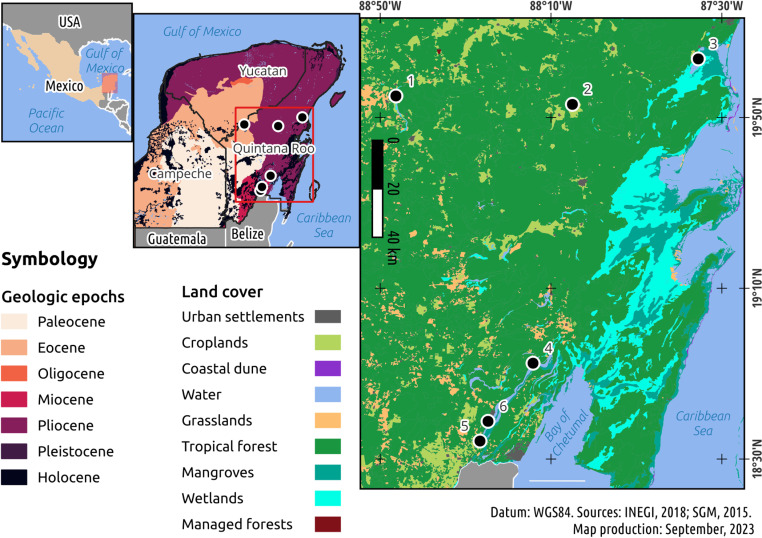 Figure 1
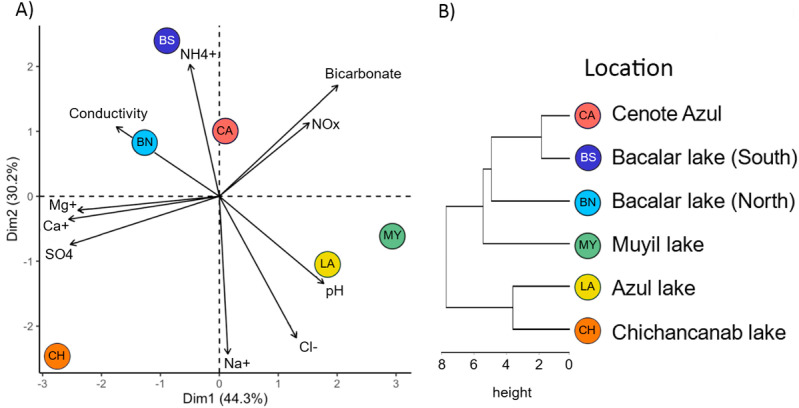 Figure 2
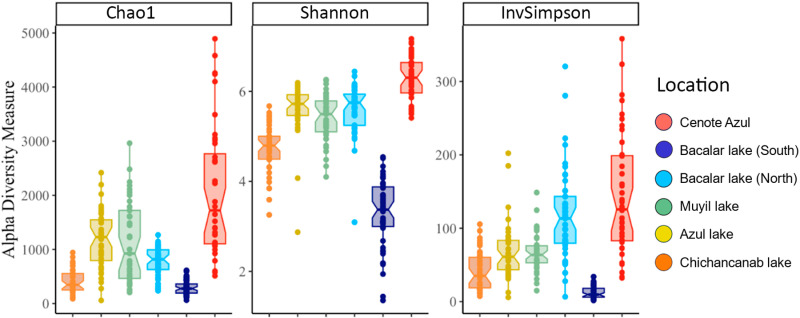 Figure 3
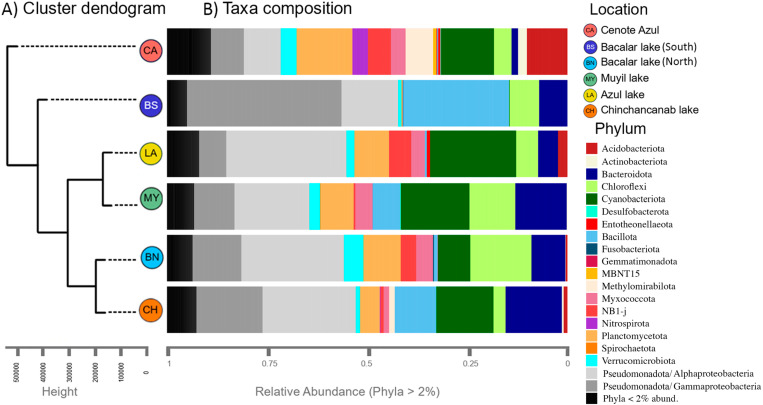 Figure 4
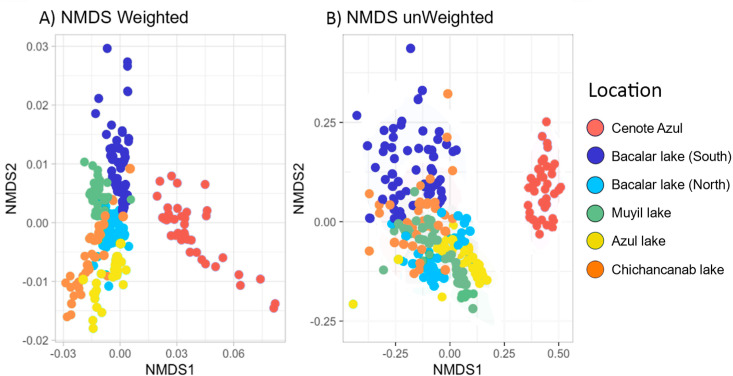 Figure 5
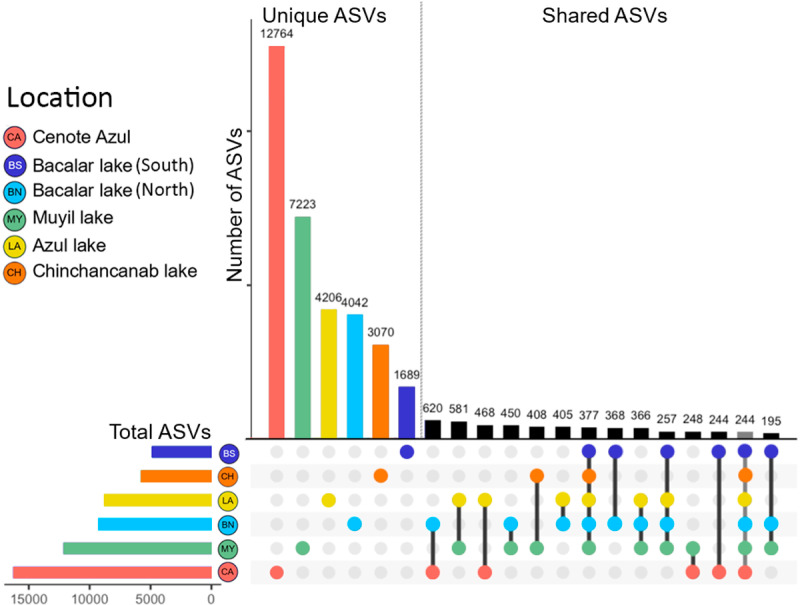 Figure 6
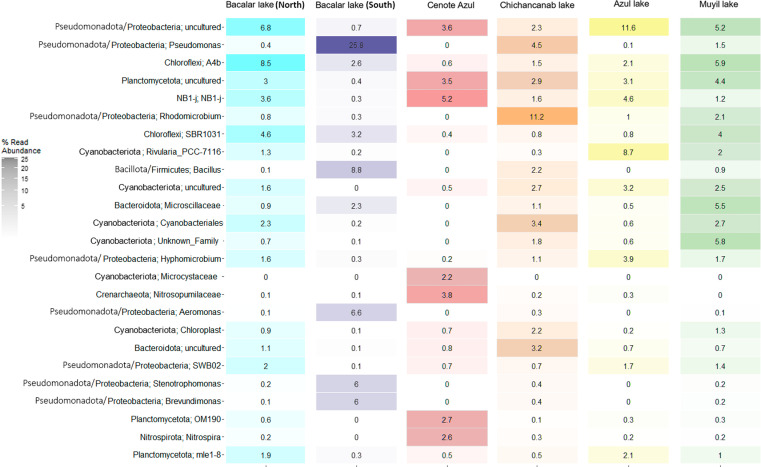 Figure 7
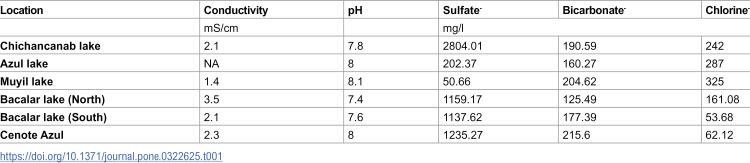 Figure 8
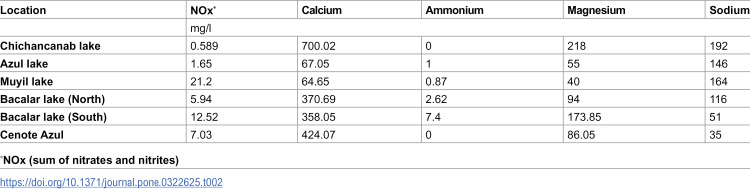 Figure 9
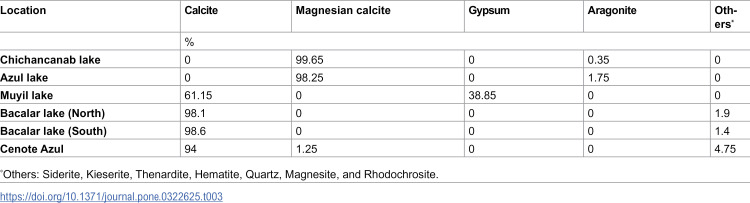 Figure 10
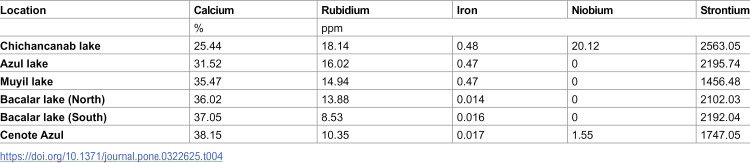 Figure 11
Peer Reviews
No public reviews on file for this paper yet. If you reviewed it on a platform where reviews are public (OpenReview, ICLR, NeurIPS, ICML), you can paste yours below so the community can read it here.
Videos
No videos yet. Explain this paper in a talk, walkthrough, or lecture? Add one.
Taxonomy
TopicsMicrobial Community Ecology and Physiology · Paleontology and Stratigraphy of Fossils · Geochemistry and Elemental Analysis