Characterizing fermentable carbohydrate foods in the diets of children with abdominal pain-related disorders of gut-brain interaction and healthy children
Vishnu Narayana, Jocelyn Chang, Ann R. McMeans, Tasha Murphy, Rona L. Levy, Robert J. Shulman, Bruno P. Chumpitazi, Edwin Hlangwani, Edwin Hlangwani, Edwin Hlangwani

TL;DR
This study compares the consumption of fermentable carbohydrates in children with gut-brain interaction disorders and healthy children, finding that a less restrictive FODMAP diet would limit most of the foods consumed by those with the disorder.
Contribution
The study is the first to characterize high FODMAP food consumption in children with gut-brain interaction disorders compared to healthy children.
Findings
Children with DGBI consume fewer high FODMAP foods and carbohydrates than healthy children.
Fructans are the most consumed FODMAP carbohydrate in both groups.
A FODMAP Gentle Diet would restrict most high FODMAP foods consumed by children with DGBI.
Abstract
Restricting dietary fermentable oligosaccharides, disaccharides, monosaccharides, and polyols (FODMAPs) can alleviate symptoms in children with disorders of gut-brain interaction (DGBI). Due to the restrictions of a low FODMAP diet (LFD), a less restrictive FODMAP Gentle diet (FGD) has been suggested. However, the types and amounts of high FODMAP foods and carbohydrates commonly consumed by children have not been studied. We aimed to identify the high FODMAP foods and proportions of FODMAP carbohydrates consumed by children with DGBI and healthy children (HC) and to determine which usually ingested FODMAPs would be restricted on the FGD. Three-day diet records from both children with DGBI and HC were analyzed and compared to assess the type and amount of high FODMAP foods and carbohydrates ingested. Additionally, the ingested FODMAPs that would be restricted on the FGD were determined.…
Genes, proteins, chemicals, diseases, species, mutations and cell lines named across the full text — each resolved to its canonical identifier and authoritative record.
Click any figure to enlarge with its caption.
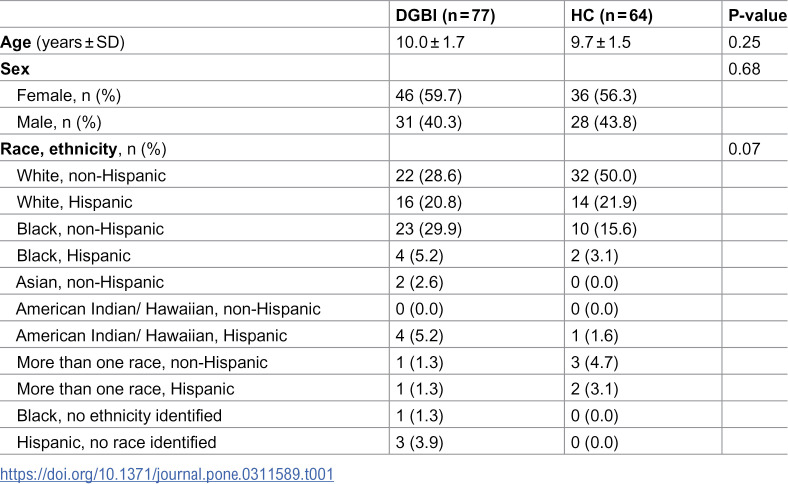 Figure 1
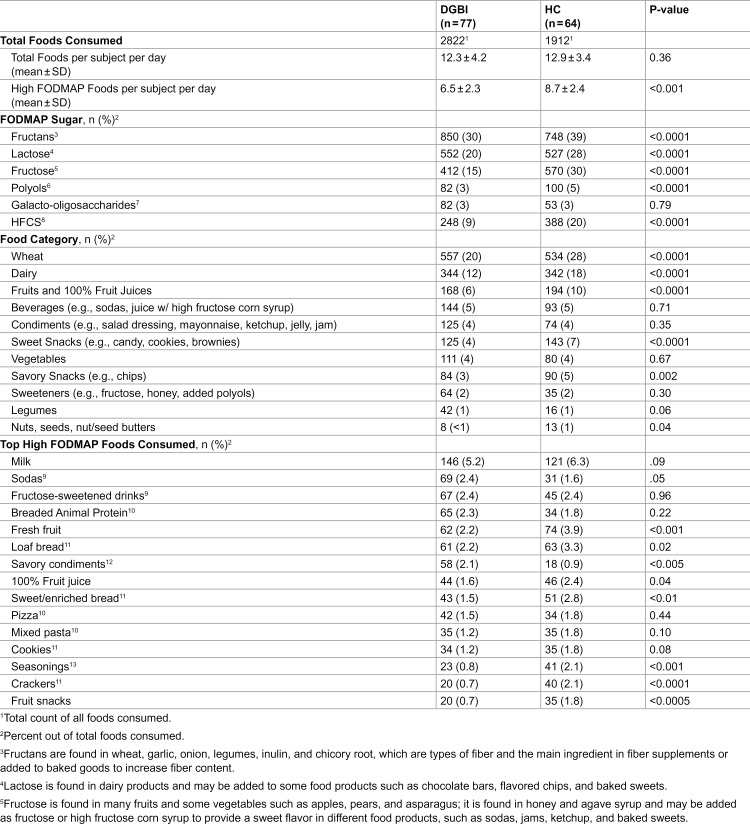 Figure 2
Peer Reviews
No public reviews on file for this paper yet. If you reviewed it on a platform where reviews are public (OpenReview, ICLR, NeurIPS, ICML), you can paste yours below so the community can read it here.
Videos
No videos yet. Explain this paper in a talk, walkthrough, or lecture? Add one.
Taxonomy
TopicsGastrointestinal motility and disorders · Diet and metabolism studies · Child Nutrition and Feeding Issues