A controller of robot constant force grinding based on proximal policy optimization algorithm
Qichao Wang, Linlin Chen, Qun Sun, Chong Wang, Yanxia Wei

TL;DR
This paper introduces a robot controller using a reinforcement learning algorithm to maintain constant force during grinding, improving adaptability without needing detailed environmental models.
Contribution
The novel contribution is a robot constant force grinding controller based on proximal policy optimization, which reduces reliance on environmental models.
Findings
The controller uses proximal policy optimization to train a model for grinding force compensation.
Simulation results show the controller achieves constant force grinding without prior environmental modeling.
The method demonstrates environmental adaptability in robot grinding tasks.
Abstract
In order to solve the problems of high dependence on the accuracy of environmental model and poor environmental adaptability of traditional control methods, the robot constant force grinding controller that based on proximal policy optimization was proposed. Training the controller model between grinding force difference and end-effector compensation displacement using the proximal policy optimization algorithm. Complete compensation using robot inverse kinematics. In order to validate the algorithm, a simulation model of the grinding robot with perceivable force information is established. The simulation results demonstrate that the controller trained using this algorithm can achieve constant force grinding without setting up the environment model in advance and has some environmental adaptability.
Genes, proteins, chemicals, diseases, species, mutations and cell lines named across the full text — each resolved to its canonical identifier and authoritative record.
Click any figure to enlarge with its caption.
 Figure 1
 Figure 2
 Figure 3
 Figure 4
 Figure 5
 Figure 6
 Figure 7
 Figure 8
 Figure 9
 Figure 10
 Figure 11
 Figure 12
 Figure 13
 Figure 14
 Figure 15
 Figure 16
 Figure 17
 Figure 18
 Figure 19
 Figure 20
 Figure 21
 Figure 22
 Figure 23
 Figure 24
 Figure 25
 Figure 26
 Figure 27
 Figure 28
 Figure 29
 Figure 30
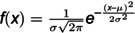 Figure 31
 Figure 32
 Figure 33
 Figure 34
 Figure 35
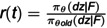 Figure 36
 Figure 37
 Figure 38
 Figure 39
 Figure 40
 Figure 41
 Figure 42
 Figure 43
 Figure 44
 Figure 45
 Figure 46
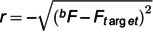 Figure 47
 Figure 48
 Figure 49
 Figure 50
Peer Reviews
No public reviews on file for this paper yet. If you reviewed it on a platform where reviews are public (OpenReview, ICLR, NeurIPS, ICML), you can paste yours below so the community can read it here.
Videos
No videos yet. Explain this paper in a talk, walkthrough, or lecture? Add one.
Taxonomy
TopicsRobotic Mechanisms and Dynamics · Iterative Learning Control Systems · Robot Manipulation and Learning