Adropin exerts neuroprotection in an experimental rat model of Parkinson’s disease
Ayse Ozkan, Hande Parlak, Osman Sinen, Mehmet Bulbul, Mutay Aydin Aslan, Aysel Agar

TL;DR
Adropin protects brain cells in a rat model of Parkinson's disease by boosting dopamine levels and activating a specific signaling pathway.
Contribution
This study identifies adropin's neuroprotective role in Parkinson’s disease via VEGFR2 signaling and dopamine preservation.
Findings
Adropin improved motor performance and protected dopaminergic neurons in Parkinson's rats.
Adropin increased dopamine levels and activated VEGFR2 in the substantia nigra.
Adropin's effect was not linked to changes in GPR19 or GSK3β phosphorylation.
Abstract
This study was planned to elucidate the mechanism of the protective effect of adropin in an experimental rat model of Parkinson’s Disease (PD). Three-month-old male Wistar rats were randomly divided into four groups: i) Control, ii) Sham, iii) PD, and iv) PD+Adropin. The performance tests were performed seven days after the 6-Hydroxydopamine hydrochloride (6-OHDA) injection into the striatum. The immunoreactivities for tyrosine hydroxylase (TH), G protein-coupled receptor 19 (GPR19), and vascular endothelial growth factor receptor 2 (VEGFR2) were detected by immunohistochemistry (IHC) in the substantia nigra (SN). Dopamine levels were measured by mass spectrometry. Glycogen synthase kinase 3β (GSK3β) and pGSK3β (Ser9) protein levels were evaluated by western blot analysis. Our study demonstrated that motor performances were significantly improved by adropin treatment. Central adropin…
Genes, proteins, chemicals, diseases, species, mutations and cell lines named across the full text — each resolved to its canonical identifier and authoritative record.
Click any figure to enlarge with its caption.
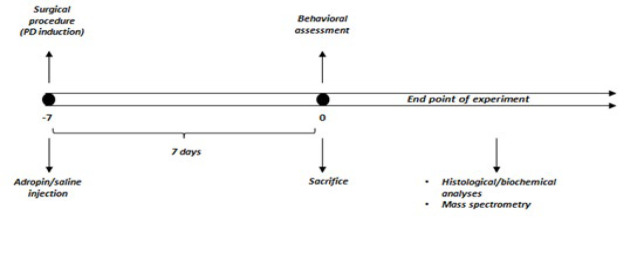 Figure 1
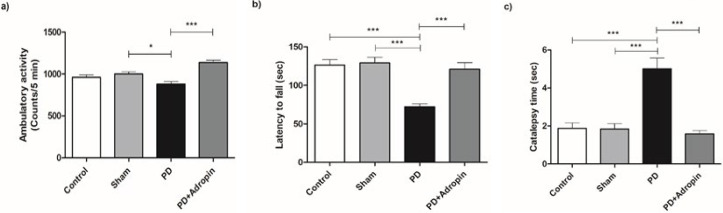 Figure 2
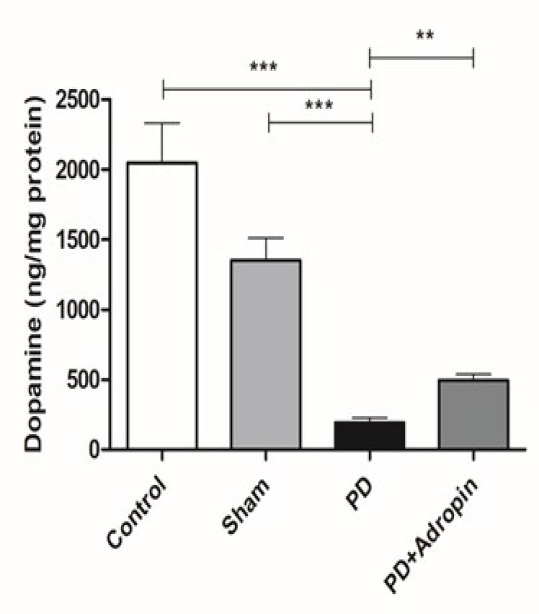 Figure 3
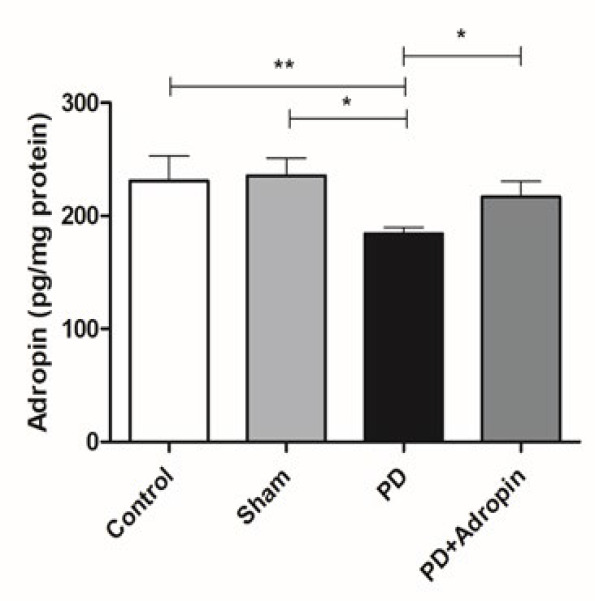 Figure 4
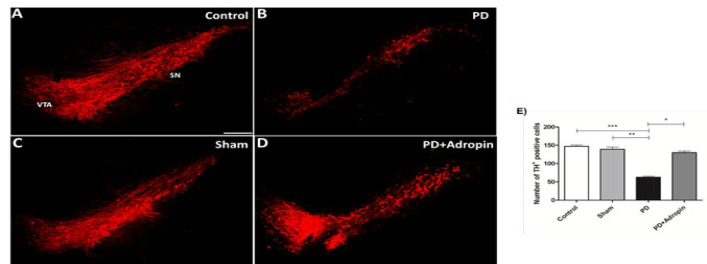 Figure 5
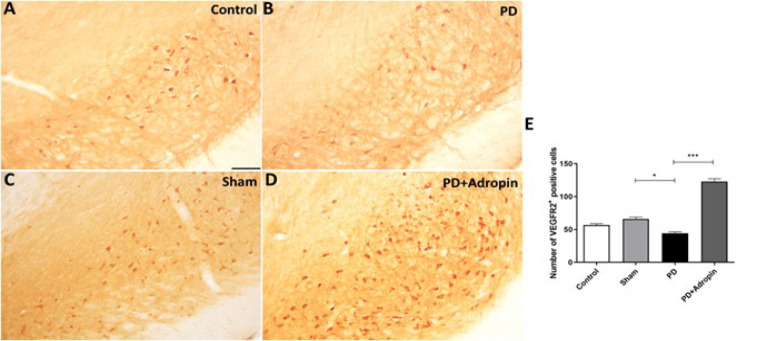 Figure 6
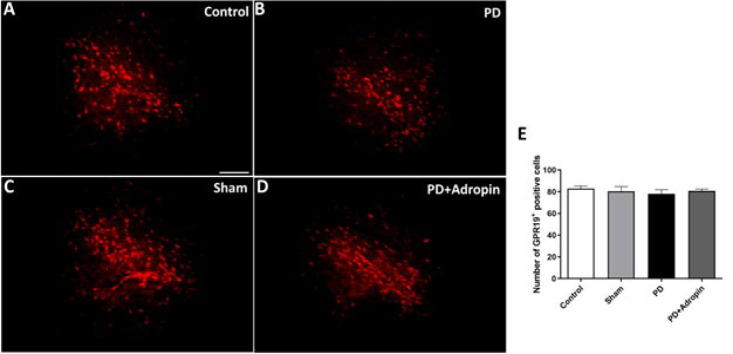 Figure 7
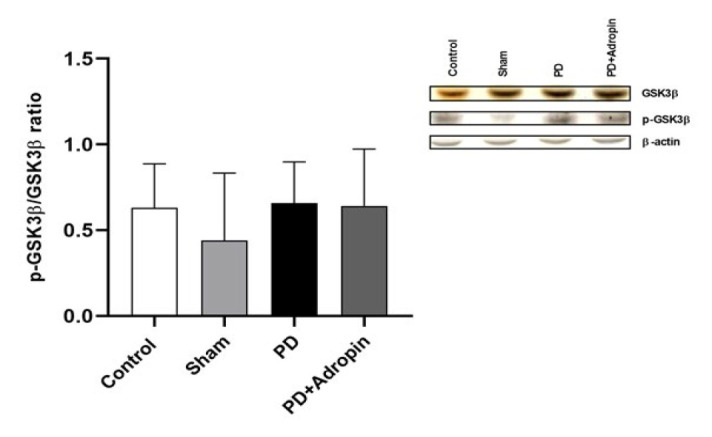 Figure 8
Peer Reviews
No public reviews on file for this paper yet. If you reviewed it on a platform where reviews are public (OpenReview, ICLR, NeurIPS, ICML), you can paste yours below so the community can read it here.
Videos
No videos yet. Explain this paper in a talk, walkthrough, or lecture? Add one.
Taxonomy
TopicsAdipose Tissue and Metabolism · Sirtuins and Resveratrol in Medicine · Biochemical effects in animals